Suro Senen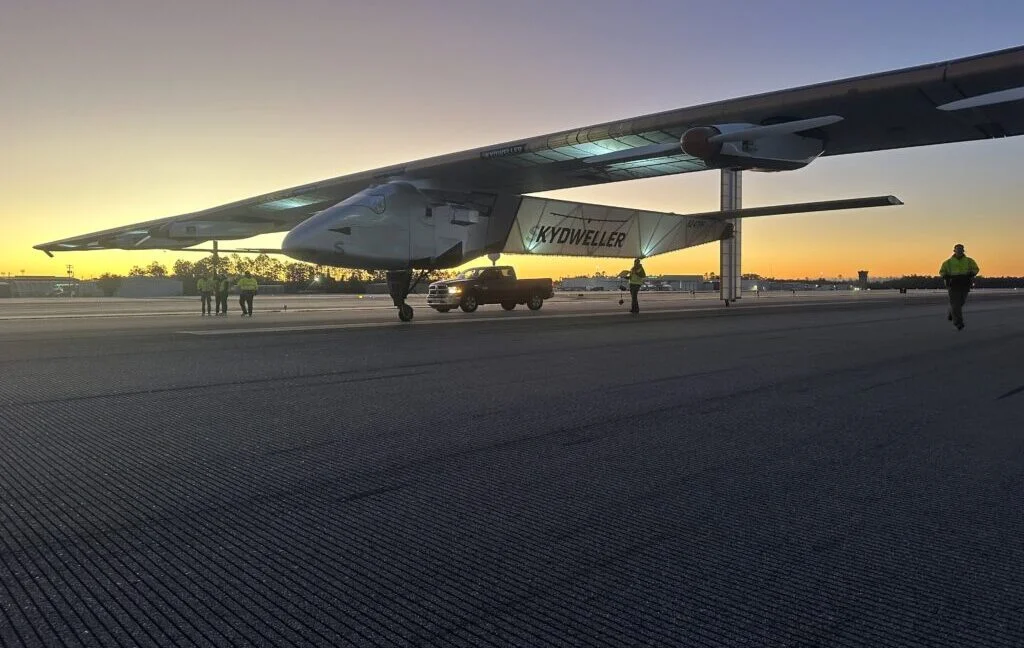
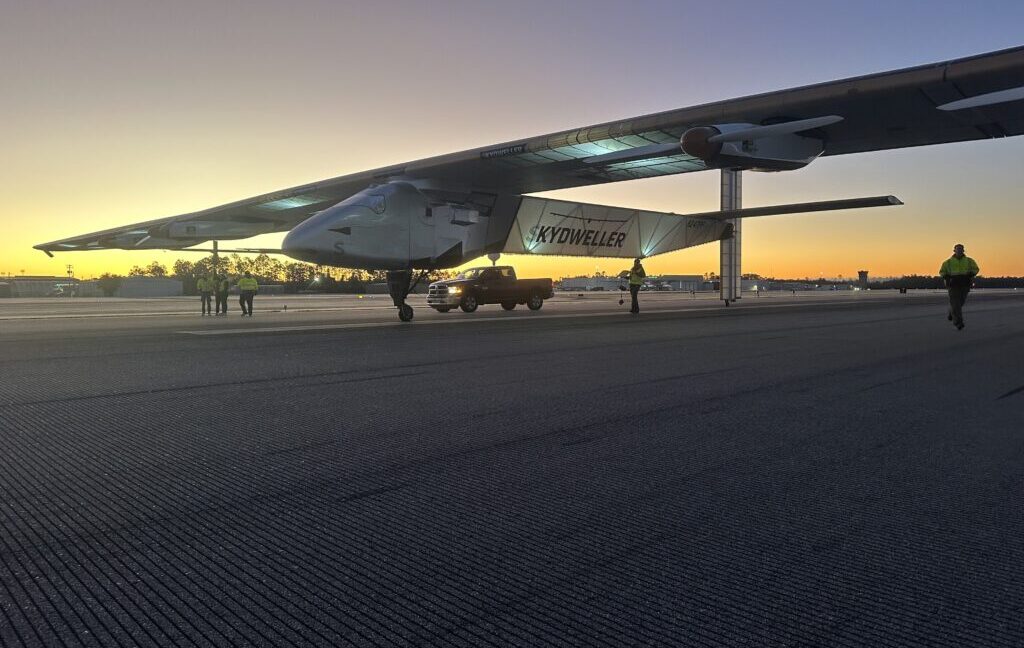
In the high-stakes world of aerospace innovation, few projects have captured the imagination quite like the Skydweller. With a wingspan rivaling that of a Boeing 747—stretching an incredible 236 feet (72 meters)—and a frame draped in 17,000 solar cells, the aircraft represented the pinnacle of perpetual, uncrewed flight. However, the dream of an eternal solar sentinel recently met a watery end in the Gulf of Mexico, marking both a record-breaking triumph and an untimely conclusion for one of the most storied airframes in aviation history.
The aircraft in question was not merely a new invention; it was a reincarnation of the legendary Solar Impulse 2, the Swiss-engineered vessel that famously completed the first solar-powered circumnavigation of the globe between 2015 and 2016. After its historic voyage, the plane was acquired and extensively modified by Skydweller Aero to serve as a high-altitude, long-endurance (HALE) platform for military and commercial surveillance. Its final mission, which spanned over eight days of continuous flight, ended in a controlled ditching after encountering severe weather, leaving the aviation community to mourn the loss of a pioneering piece of technology.
A Chronology of the Final Mission
The final journey of the Skydweller began in the early morning hours of April 26. Taking off from Stennis International Airport in Mississippi, the drone was tasked with integrating into the U.S. Navy’s annual Fleet Experimentation (FLEX) exercises near Key West, Florida.
For the first four days, the mission was a resounding success. The drone operated in concert with the U.S. Navy, utilizing advanced onboard radar and thermal imaging to monitor maritime activity. According to company reports, the aircraft functioned as a sophisticated communication relay, linking warships and aircraft while tracking maritime traffic via AIS transponders.
Following the formal conclusion of the FLEX exercises on April 30, the Skydweller continued to push its operational envelope. The company directed the aircraft to perform extended demonstrations of its endurance, navigating the airspace between Cuba and the Yucatan Peninsula. This phase was intended to showcase the platform’s "airspace flexibility" within the U.S. Southern Command (SOUTHCOM) area of responsibility.
The situation deteriorated on the night of May 3. As the drone hovered between Cuba and the Cayman Islands, it encountered unexpected, extreme weather conditions. Meteorologists and the company noted "extreme vertical air mass variability," with turbulence exceeding typical climb and descent rates by a factor of ten. While the aircraft’s internal systems remained nominal, the drone exhausted its energy reserves in a desperate bid to maintain stability against the volatile atmospheric conditions. On the morning of May 4, at approximately 6:30 a.m. ET, the team initiated a controlled water ditching. Due to the aircraft’s lightweight, non-buoyant composite construction, it sank shortly after contact, ending the flight at eight days and 14 minutes—a world record for a solar-powered aircraft of its class.
The Technical Legacy of the Solar Impulse 2
To understand the loss of the Skydweller, one must appreciate the engineering marvel that preceded it. The Solar Impulse 2 was designed to challenge the limits of what was possible with renewable energy. Its 17,000 solar cells fed energy into high-density lithium-ion batteries, allowing it to remain aloft through the night.
When Skydweller Aero acquired the platform, they stripped away the cockpit and the human-centric life support systems, replacing them with heavy-duty sensors and payload bays capable of carrying up to 800 pounds (363 kilograms). This transformation turned a record-breaking hobbyist project into a viable military asset. The "perpetual flight" capability was the company’s "holy grail," aiming to provide a persistent "eye in the sky" that could stay airborne for months at a time, providing surveillance, communications, and data relay services that are typically only possible with expensive, low-orbit satellites.
Military Integration and the "Kill Chain"
The involvement of the Skydweller in U.S. Navy exercises highlights the Pentagon’s growing reliance on unmanned systems. During the FLEX 2026 exercises, the Navy successfully demonstrated a "sophisticated kill chain." This operation involved a synergy between commercial drone technology, crewed military helicopters, and the Freedom-variant littoral combat ship, the USS Wichita.
While the exact role of the Skydweller in the targeting of drug boats remains a subject of investigation, the integration of such platforms into the SOUTHCOM strategy is clear. The U.S. military has been aggressively expanding its use of drones in the Caribbean and Pacific to counter transnational organized crime. The inclusion of the Skydweller in these exercises signals a strategic shift toward using long-endurance, solar-powered platforms as the backbone of maritime domain awareness.
However, this integration is not without controversy. Recent reports from organizations like InSight Crime have highlighted that SOUTHCOM has engaged in dozens of "lethal kinetic strikes" against suspected drug vessels, resulting in nearly 200 deaths since September 2025. Legal scholars and human rights advocates have raised serious concerns regarding the legality of these actions, suggesting that the use of such autonomous or semi-autonomous surveillance platforms to facilitate lethal force may skirt both international and domestic legal boundaries.
The Implications of the Loss
The loss of the Skydweller drone is a significant setback for the company, particularly as it had planned to donate the airframe to the Swiss Museum of Transport in Lucerne upon the conclusion of its testing cycle. That agreement is now effectively void, representing a loss not just for the company, but for aviation history enthusiasts who hoped to see the aircraft preserved in its final form.

From a business perspective, the loss creates an immediate vacuum. Skydweller Aero confirmed they have no other prototypes currently ready to immediately replace the lost unit. However, the company remains defiant, framing the incident as a "validation of practical military utility." They argue that the data gathered during the eight-day flight, despite the final crash, provided invaluable insights into energy management and structural integrity under stress.
The company is now pivoting toward "planned upgrades" using existing technologies to fortify future iterations against extreme weather. This is crucial if solar-powered drones are to become a permanent fixture of military and civilian operations. The current atmosphere—characterized by the Pentagon’s proposal to invest over $54 billion into drone warfare systems—provides a fertile environment for such development.
The Future of Solar Aviation
The incident serves as a stark reminder of the vulnerability of ultra-lightweight, solar-powered aircraft. While these planes are marvels of efficiency, their reliance on large, thin wings makes them susceptible to the violent shifts in weather that traditional, heavier aircraft might navigate with relative ease.
As the industry moves forward, the "Skydweller" will be remembered as a transitional bridge—the project that took a symbolic achievement (the first solar flight around the world) and attempted to forge it into a utilitarian tool for the 21st-century battlefield.
Whether the loss of this specific aircraft will delay the adoption of solar-powered surveillance remains to be seen. However, the demand for persistent, carbon-neutral, and cost-effective monitoring platforms is higher than ever. As the Pentagon and other global powers continue to pour capital into the "drone revolution," the lessons learned from the Skydweller’s final eight-day flight will undoubtedly influence the design of the next generation of solar-powered giants.
For now, the Skydweller rests at the bottom of the Gulf of Mexico, a testament to the risks inherent in pushing the boundaries of flight. It stands as a beacon of both the incredible potential of renewable energy in aviation and the unforgiving nature of the skies. The quest for "perpetual flight" continues, but the dreamers and engineers behind it are now tasked with ensuring that the next iteration of the solar titan is not only capable of breaking records but of surviving the inevitable storms that define the limits of human ingenuity.


 Azzam Bilal Chamdy