Lina Irawan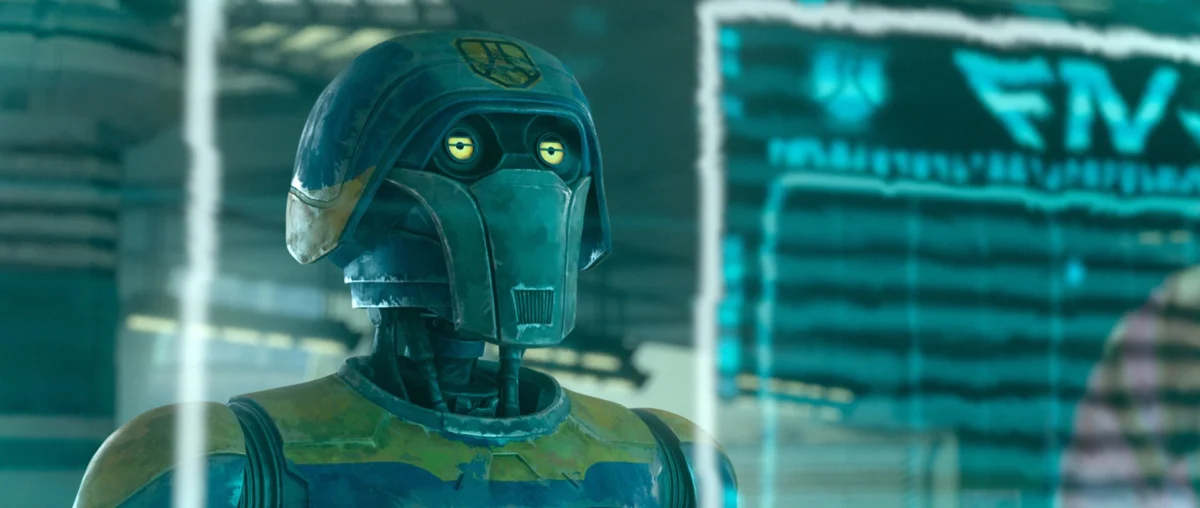
Maintaining peace in the lawless reaches of the Outer Rim is a Herculean task, but on the planet Janix, two figures stand as the final bulwark against the encroaching chaos of the underworld. Captain Brander Lawson and his droid partner, Two-Boots, have become the unexpected breakout stars of the new Disney+ original series, Star Wars: Maul — Shadow Lord. As the first six episodes of the series captivate audiences, the narrative has shifted from a standard procedural into a complex study of morality, fatherhood, and the grey areas of justice in a galaxy under the thumb of the Galactic Empire.
The Core Duo: A Study in Contrasts
At the heart of the series lies the partnership between Captain Brander Lawson, a rugged, street-wise detective, and Two-Boots, a highly specialized, pedantic police droid. While they operate within the traditional framework of law enforcement on Janix, their methodologies could not be more divergent.
Lawson, portrayed with gritty authenticity by Academy Award nominee and Golden Globe winner Wagner Moura, is a man defined by his contradictions. He is a protector, a father, and a skeptic of authority. Unlike the polished, dogmatic officers often depicted in the Imperial era, Lawson is a "boots on the ground" investigator who relies on intuition, a heavy intake of caf, and a willingness to operate in the shadows.
Conversely, Two-Boots represents the rigid, rule-bound nature of droid programming, yet he possesses a distinct "fashionable flair"—notably evidenced by the iconic boots that earned him his moniker. Voiced with razor-sharp wit by Richard Ayoade, the droid serves as the series’ moral compass, constantly urging caution and adherence to protocol, even as he finds himself dragged into the dangerous escapades necessitated by Lawson’s unorthodox approach to justice.
Chronology of the Conflict
The narrative trajectory of Maul — Shadow Lord is set against the backdrop of an unpredictable era in the Star Wars timeline. The conflict begins as Lawson and Two-Boots investigate a series of disturbances in the Janix underworld, a sector notorious for its criminal element and proximity to the machinations of Maul.
- Act I: The Quiet Before the Storm: The series introduces the audience to the routine of Janix law enforcement. We see the domestic life of Captain Lawson as he balances the dangers of the street with the responsibilities of raising his son, Rylee. The establishment of this "family unit"—which includes the droid Two-Boots acting as a surrogate "fun uncle"—anchors the series in a personal, high-stakes reality.
- Act II: The Shadow of the Underworld: As the investigation deepens, the duo crosses paths with key informants like Rheena Sul. This phase of the story highlights the friction between Lawson’s "bend-the-rules" philosophy and Two-Boots’ inherent need for protocol. It is here that the threat of the Galactic Empire begins to loom larger, forcing Lawson to make increasingly difficult choices to keep his operations off the Imperial radar.
- Act III: The Escalation: The current episodes on Disney+ see the duo moving from local law enforcement into a wider galactic conspiracy. As Maul’s influence spreads through the underworld, the stakes move from simple criminal containment to a desperate struggle for survival.
Supporting Data: The Human Element of Galactic Law
The brilliance of Maul — Shadow Lord lies in its subversion of the typical "buddy cop" trope. The series does not simply focus on the action; it examines the psychological toll of being a guardian in a corrupt system.
Wagner Moura’s performance provides the series with its emotional gravity. Discussing his approach to the character, Moura noted that while Lawson is a "good guy," he is fundamentally a human being struggling with the impossible pressures of his profession. "There’s a persona of a cop and how tough they have to be, but there’s also always the human being behind that," Moura explained. "That was what I wanted to bring to Lawson."
The data surrounding the partnership is equally compelling. Two-Boots is more than a tool; he is an entity capable of profound affection. As Charlie Bushnell (who plays Rylee Lawson) notes, the droid’s commitment to the Lawson family goes beyond his programming. Whether it is tracking the stats of Rylee’s botekin matches or shielding his partner from blaster fire, Two-Boots is a constant, albeit pedantic, presence. This relationship provides the series with its warmth, contrasting sharply with the cold, sterile nature of the Empire’s influence in the region.
Official Responses and Creative Vision
The creators of Maul — Shadow Lord have been vocal about their desire to explore the "humanity" of the Star Wars galaxy. By centering the story on a father-son dynamic and a unique detective partnership, the production team has succeeded in grounding a high-fantasy setting in relatable human drama.
Wagner Moura’s insights on fatherhood are particularly poignant, as he draws from his own life to inform Lawson’s motivations. "There’s something about fatherhood in this series. With Rylee, I think that’s the heart of Lawson’s drama," Moura shared. "It’s the most important relationship in his life, and it’s very hard not to fulfill what he’s supposed to do—being a father—but that’s something that we all go through."
This sentiment is echoed by the production’s commitment to character depth. The series avoids the trap of making the droid a mere comedic relief; instead, it elevates Two-Boots to a character who possesses a genuine, if programmed, moral code. The dynamic between Ayoade’s vocal performance and Moura’s live-action intensity creates a synergy that feels both fresh and classic.
Implications for the Star Wars Universe
The success of Maul — Shadow Lord carries significant implications for the future of Star Wars television. By shifting the focus away from the Jedi and the Sith, the series demonstrates that the galaxy is a vast, interconnected web of stories that can thrive on smaller, more intimate scales.
1. The Expansion of the Underworld
The portrayal of Janix and the criminal informants operating within its borders provides a clearer picture of how the Empire’s rise affected local economies and law enforcement. The "red tape" Lawson constantly fights against serves as a metaphor for the stifling bureaucracy of the Imperial era.
2. The Evolution of Droid Characters
Two-Boots challenges the traditional perception of droids in Star Wars. While characters like R2-D2 and C-3PO have long defined the archetype, Two-Boots represents a more nuanced iteration—a machine with "lots of love and affection," as Moura puts it. This suggests a shift toward more complex, multi-dimensional droid characters in upcoming projects.
3. A New Tone for Procedurals
The show’s gritty, noir-inspired aesthetic suggests a willingness within the Star Wars franchise to embrace darker, more grounded genres. By blending elements of a classic detective story with the high-stakes action of a galactic conflict, the series appeals to both long-time fans and newcomers who appreciate character-driven storytelling.
Conclusion: The Path Ahead
As we look toward the remainder of the series, the fate of Captain Lawson and Two-Boots remains uncertain. With the looming threat of the Empire and the unpredictable nature of the underworld, the duo’s commitment to "maintaining order" will undoubtedly face its greatest challenge yet.
However, one thing remains clear: in a galaxy far, far away, the bond between a father, his son, and a very fashion-forward droid is the most powerful force of all. Whether or not they can continue to balance the scales of justice remains to be seen, but their journey is one that demands the attention of every fan of the Star Wars saga.
For those who have yet to dive into the mystery, the first six episodes are currently available on Disney+. The story of Janix is only just beginning, and if the early reception is any indication, Captain Lawson and Two-Boots have established themselves as an indelible part of the Star Wars mythos.


 Evan Lee Salim
 Nana Wu