Ali Ikhwan
In a demonstration that has sent shockwaves through the robotics industry and social media alike, Figure AI has pushed the boundaries of what is possible for general-purpose humanoid robots. In a recent livestreamed event, a team of F.03 humanoid robots successfully navigated an eight-hour, fully autonomous production-line shift, performing complex logistics tasks without human intervention. This milestone represents a significant leap from laboratory experiments to practical, real-world application, fueling the growing debate over the future of labor, automation, and the speed at which artificial intelligence is evolving.
The Challenge: A Shift in Productivity
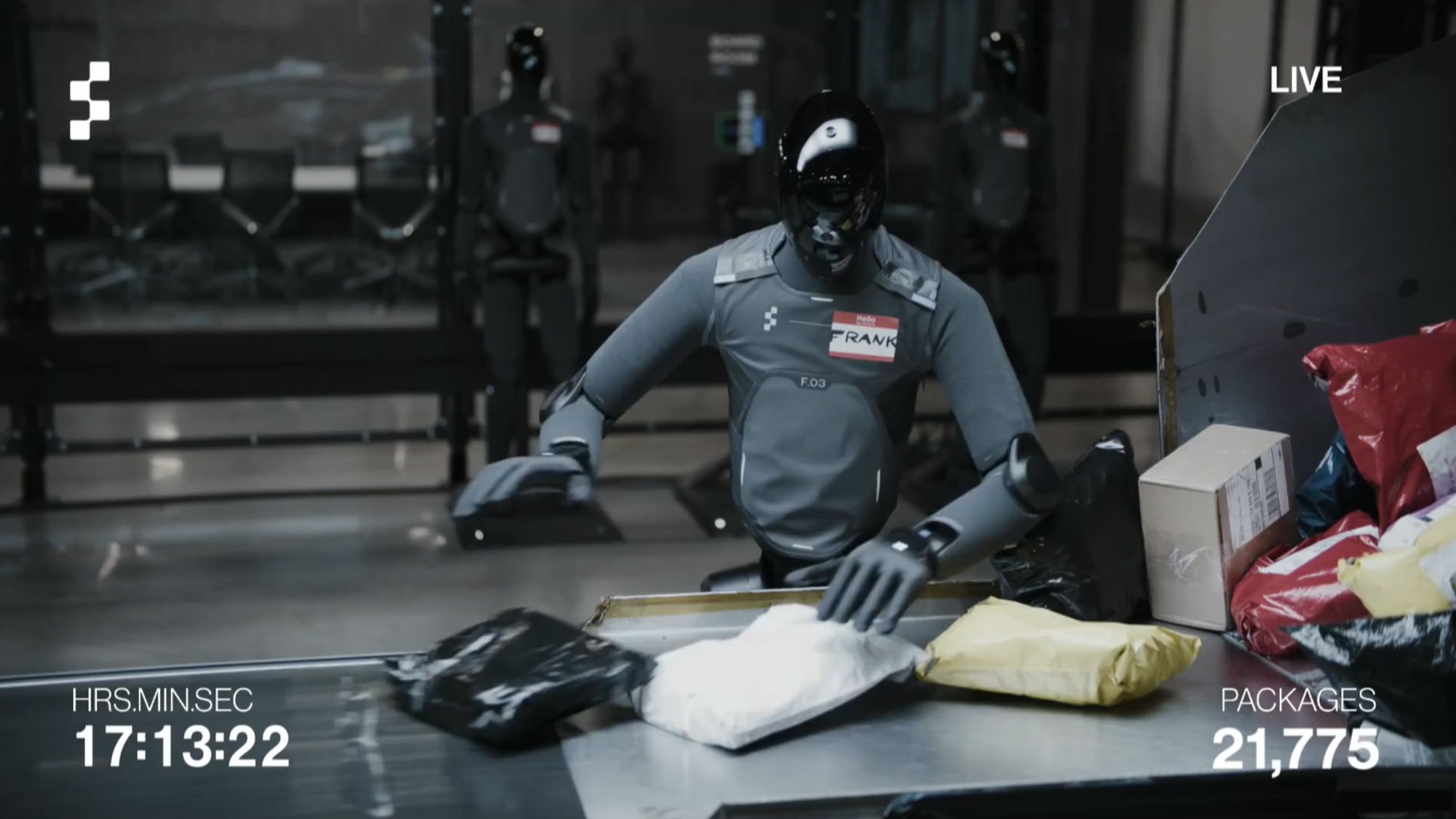
The test, documented by Figure AI CEO Brett Adcock via the social platform X, saw three F.03 units operating in a synchronized, high-intensity environment. The objective was clear: the robots were tasked with detecting unique barcodes on packages, picking them up with precision, and placing them onto a conveyor belt in a specific orientation—barcode face down.
This was not a curated, short-burst demonstration typical of early-stage robotics prototypes. By running for a continuous eight-hour cycle, Figure AI aimed to prove the operational endurance and reliability of its hardware. According to technical specifications provided by the company, the robots achieved a processing speed of approximately three seconds per package. This performance metric—parity with human workers—is a critical threshold. In the logistics and manufacturing sectors, reaching "human speed" is often the make-or-break factor for the commercial viability of automation technology.
The robots are powered by the new Helix-02 software stack, an integrated AI architecture that combines computer vision, object manipulation algorithms, and real-time path planning. This software allows the F.03 units to interpret their surroundings dynamically, adjusting their movements based on the flow of goods rather than relying on pre-programmed, static coordinates.
A Chronology of Progress
Figure AI has maintained an aggressive development cadence that has surprised even industry veterans. To understand the gravity of this eight-hour shift, one must look at the recent history of the company:
- Initial Concept Phase: Figure AI began by focusing on the fundamental physics of bipedal locomotion and dexterous manipulation, aiming to build a machine that could navigate human-centric spaces.
- The Early Demos: Initial public reveals showed the robots performing simple, controlled tasks. These were characterized by slow, deliberate movements and constant human supervision to ensure safety and accuracy.
- The Integration of LLMs: By incorporating large language models and advanced vision-language models, Figure AI transitioned from "robotic movement" to "robotic reasoning," allowing the machines to understand verbal instructions and visual cues.
- The Current Milestone: The recent 8-hour production shift serves as the culmination of these efforts, proving that the robots can handle the mundane, repetitive, and fatiguing tasks that currently define the backbone of global warehouse operations.
Supporting Data and Technical Capability
The performance of the F.03 in this trial is supported by several technological advancements:
- Vision Systems: The onboard cameras utilize high-frame-rate sensors to capture barcode data instantaneously. The Helix-02 software processes this visual stream to identify the package type, orientation, and optimal grip points in milliseconds.
- Kinematic Dexterity: Unlike specialized industrial arms that are bolted to the floor and designed for a single motion, the F.03 uses a humanoid chassis. This allows it to move around a warehouse, adjust its posture to reach different heights, and navigate human-traversed aisles.
- Reliability Metrics: While the livestream showed near-perfect execution, Figure AI noted that there were minor exceptions. However, in an industrial context, an error rate that mimics or improves upon human fatigue-induced errors is considered a massive success.
The company has already signaled that this is merely a precursor to more ambitious trials, with plans to extend these shifts to a 24-hour cycle. Such a feat would demonstrate the ability of the hardware to handle "three-shift" operations, effectively tripling the productivity of a human-equivalent workstation without the need for breaks, shift changes, or ergonomic considerations.
Public Skepticism and the "Scam" Narrative
Despite the impressive nature of the livestream, the video generated intense scrutiny. With over 10 million views, the comment sections on X and Reddit became a battleground of opinion.
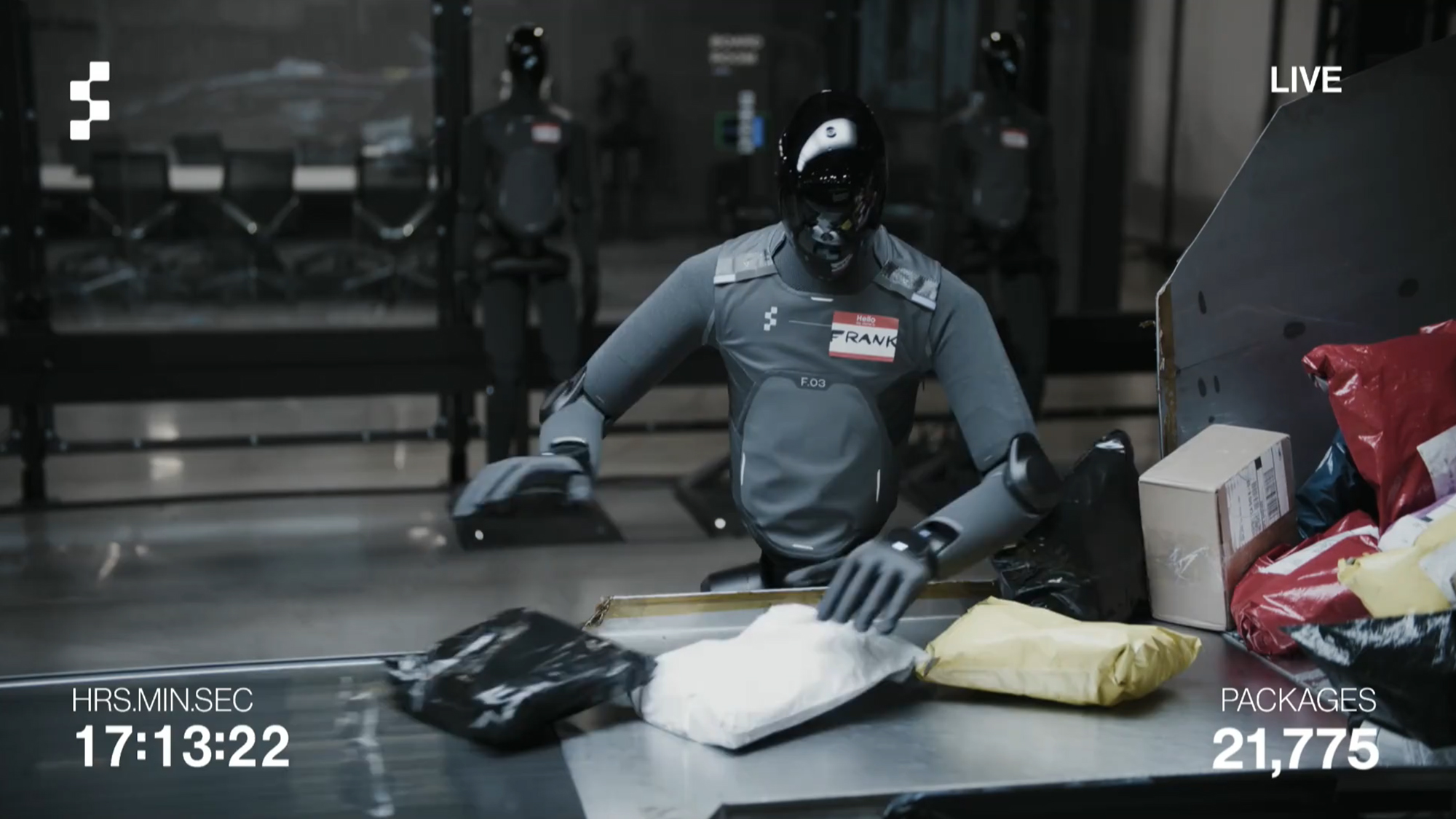
A prevalent theory among skeptics is the "remote operation" claim. Some observers pointed to specific moments—such as a robot touching its own head—as potential evidence that a human was operating the machine via a VR headset and motion-capture rig. Critics argued that the fluidity of the movement was "too human," suggesting a level of teleoperation rather than fully autonomous AI decision-making.
Figure AI has consistently denied these claims, maintaining that the robots are fully autonomous. Industry analysts largely back the company, noting that teleoperation is physically and logistically difficult to maintain for an eight-hour shift across multiple units simultaneously. The "head-touching" gesture, rather than a sign of a VR headset, is more likely an artifact of the robot’s self-calibration protocols or a programmed safety check. The intensity of this skepticism, however, reflects the "uncanny valley" effect—as robots become more human-like, the public’s psychological resistance to them increases.
The Implications: A New Era of Labor
The deployment of humanoid robots into the warehouse environment has profound economic and social implications. If Figure AI’s technology proves scalable, we are looking at a fundamental shift in the labor market.
Economic Impact
The primary selling point for companies like Figure AI is the "labor shortage" narrative. With aging populations in the West and a shrinking workforce in manufacturing, robots offer a way to keep production lines running at capacity. If a robot can perform the same task as a human for a fraction of the long-term cost—without the need for healthcare, retirement benefits, or breaks—the economic incentive for adoption is insurmountable.

The Human Element
Conversely, the "stealing jobs" argument—a sentiment echoed by the viral Reddit comment—remains the most significant social hurdle. As the technology moves from "assistive" to "replacing," the conversation shifts from productivity to policy. Will the rise of the humanoid robot necessitate a universal basic income? How will the logistics industry support the transition of human workers into roles that require higher-level oversight rather than manual labor?
Technical Maturity
From an engineering perspective, the F.03 represents the "iPhone moment" for robotics. By proving that a humanoid can operate autonomously for a full shift, Figure AI has moved the goalposts for its competitors, including Tesla’s Optimus and Sanctuary AI. The focus is no longer on whether a robot can stand up or walk; it is now on how many hours of uptime it can maintain in a real-world, high-traffic environment.
Conclusion: The Road Ahead
The eight-hour shift of the F.03 robots is a testament to the accelerated pace of AI-driven hardware development. While debates regarding the authenticity of the demo will continue, the trajectory is clear: the hardware is becoming more capable, the software is becoming more reliable, and the cost of entry is falling.
As we move toward 24-hour autonomous trials, the question is no longer about whether these machines can do the job, but how quickly society will adapt to their presence. Whether they are viewed as a necessary solution to global productivity challenges or a disruptive force that threatens the stability of the traditional workforce, Figure AI has successfully moved the humanoid robot out of the research lab and onto the factory floor. The future of the production line is not just automated; it is humanoid, and it is here to stay.


 Muslim