Asep Darmawan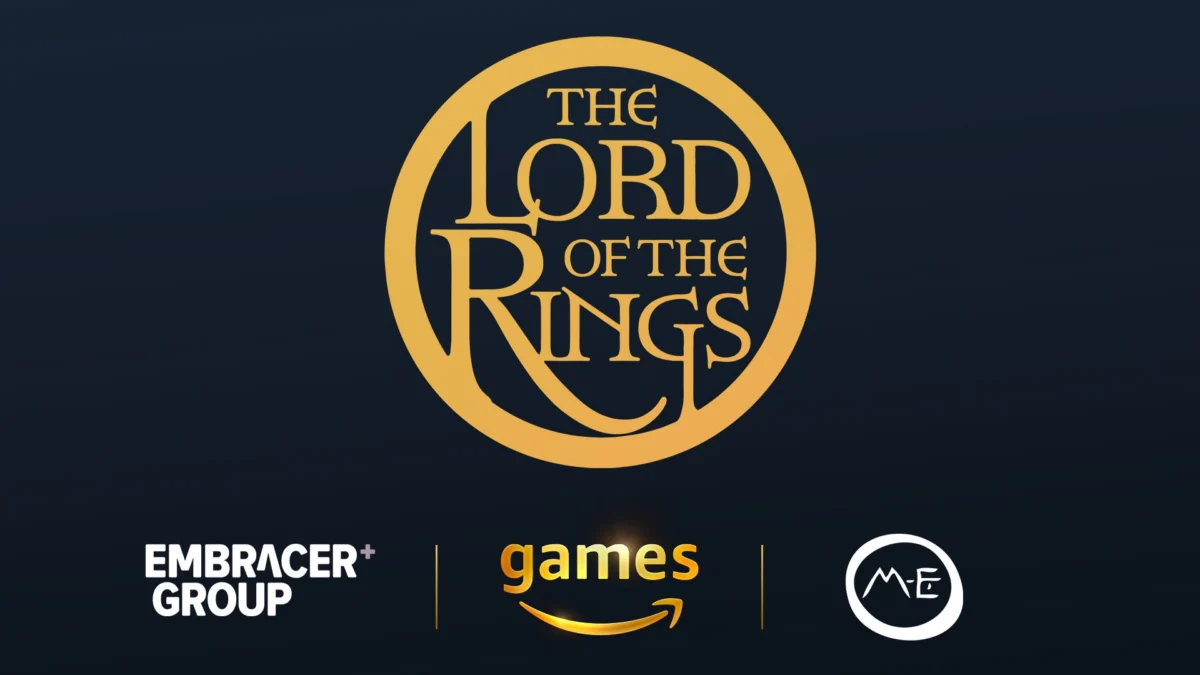
SEATTLE, WA – The grand ambition of bringing J.R.R. Tolkien’s Middle-earth to life as a sprawling massively multiplayer online (MMO) game by Amazon appears to have once again crumbled, as sources familiar with the project indicate the long-gestating Lord of the Rings MMO has been cancelled. This latest setback for Amazon Games, a division grappling with a turbulent history and recent significant layoffs, casts a long shadow over the future of large-scale first-party game development within the tech giant.
While Amazon’s head of games, Jeff Gattis, has refrained from directly confirming the cancellation, he acknowledged a strategic pivot, stating that the company is now exploring a "new game experience" within the beloved Lord of the Rings franchise. This carefully worded response leaves many questions unanswered, particularly regarding the substantial investment and years of development poured into what was intended to be a flagship title for Amazon Games.
The news, initially reported by Eurogamer, highlights that the project’s demise closely follows a wave of layoffs in October that significantly impacted Amazon’s Games division, among other sectors of the company. These cuts, which affected thousands of employees across Amazon, are now understood to have directly curtailed the Lord of the Rings MMO’s progress, despite developers having transitioned from other projects to bolster its ranks.
A Troubled Odyssey: The Chronology of Amazon’s Middle-earth Ambitions
The journey of Amazon’s Lord of the Rings MMO has been fraught with challenges, marked by shifting partnerships, corporate acquisitions, and now, apparent internal restructuring. The vision for a new online adaptation of Tolkien’s epic world was first unveiled with considerable fanfare, promising an immersive experience for fans eager to explore Middle-earth anew.
Early Aspirations: The Leyou Partnership (2019-2021)
Amazon Game Studios initially announced its partnership for the Lord of the Rings MMO in 2019, collaborating with Leyou Technologies, a Chinese game developer and publisher. The project was conceived as a free-to-play title for PC and consoles, set thousands of years before the events of The Hobbit and The Lord of the Rings, offering players a chance to delve into unexplored corners of Tolkien’s expansive lore. The announcement generated significant excitement, positioning the game as a potential competitor in the highly lucrative, albeit challenging, MMO market.
However, this initial collaboration proved short-lived. In December 2020, Chinese tech giant Tencent acquired Leyou Technologies for an estimated $1.5 billion. This acquisition introduced a complex web of intellectual property rights and contractual obligations. By April 2021, Amazon confirmed that its partnership with Leyou had been dissolved, leading to the first cancellation of the Lord of the Rings MMO project. At the time, Amazon stated that it had "been unable to secure terms to proceed with this title at this time," implying that the change in ownership of Leyou had rendered the original agreement unviable. The dream of a new Middle-earth MMO seemed to vanish as quickly as it had appeared, leaving fans and developers disappointed.
A Second Dawn: The Embracer Partnership (2023)
Despite the initial setback, Amazon’s interest in the Lord of the Rings universe remained undimmed, fueled perhaps by the multi-million-dollar investment in its Lord of the Rings: The Rings of Power television series. In May 2023, just two years after the first cancellation, Amazon announced a renewed effort to develop the Lord of the Rings MMO. This time, the company partnered directly with Embracer Group, the Swedish gaming conglomerate that had acquired Middle-earth Enterprises in 2022, thereby becoming the sole rights holder for most of Tolkien’s literary works outside of publishing.
This new partnership was hailed as a significant development, promising a fresh start for the ambitious project. Amazon Games Orange County, the studio responsible for the company’s existing MMO, New World, was tasked with leading the development. The move seemed logical: leveraging an internal studio with proven MMO experience, even if New World‘s journey had been turbulent. The project was reportedly entering its pre-production phase, a critical stage where foundational elements are solidified before full-scale development. Sources indicated that a significant number of developers, estimated to be around 1,000, had begun transitioning from New World to the Lord of the Rings project months before the fateful October layoffs, signaling a concerted effort to accelerate its development.
The October Cull and the Project’s Demise (2023-2024)
The renewed optimism was abruptly shattered by the widespread layoffs that swept through Amazon in October 2023. While the exact number of employees affected within Amazon Games was not disclosed, it was part of a larger corporate restructuring impacting over 14,000 jobs across various divisions. These cuts appear to have delivered a fatal blow to the resurrected Lord of the Rings MMO, effectively leading to its reported cancellation. The timing, just as the project was gearing up for intensive pre-production, underscores the sudden and impactful nature of Amazon’s strategic adjustments.
Supporting Data: Amazon Games’ Tumultuous History and Industry Context
The reported cancellation of the Lord of the Rings MMO is not an isolated incident but rather fits into a broader pattern of struggles within Amazon Games. Despite the vast resources of its parent company, Amazon’s foray into the gaming industry has been marked by high-profile failures and lukewarm successes.
A History of High Hopes and Hard Landings
Amazon’s ambition in gaming began over a decade ago, with significant investments in game development studios and the Lumberyard game engine. However, this ambition has often outstripped execution. Early projects like Breakaway and Crucible were cancelled either before or shortly after release, failing to find an audience or meet internal expectations. New World, the studio’s only major release to date, launched to significant player numbers but struggled with retention due to technical issues, bugs, and content droughts. While it has maintained a dedicated player base and seen improvements, its journey has been a testament to the immense challenges of sustaining an MMO. The fact that New World: Aeternum, a console version and major update, is scheduled to go offline in January 2027, suggests a planned sunsetting even for its more stable titles, further highlighting a shift in long-term strategy.
The decision to transition a substantial portion of the New World team to the Lord of the Rings MMO prior to the layoffs indicates a commitment that was ultimately undermined by corporate restructuring. This points to a fundamental disconnect between project-level development plans and higher-level strategic directives within Amazon.
The Perilous MMO Market
Developing a successful MMO is one of the most resource-intensive and risky undertakings in the gaming industry. These games demand enormous budgets, years of development, continuous post-launch support, and a dedicated community to thrive. The market is dominated by established giants like World of Warcraft, Final Fantasy XIV, and Elder Scrolls Online, making it incredibly difficult for new entrants to carve out a significant share. The Lord of the Rings IP offers immense potential, but even that might not be enough to overcome the inherent difficulties of the genre, especially for a company still finding its footing in game development. The cost of failure in the MMO space is exceptionally high, both in financial terms and in reputational damage.
The Broader Wave of Tech and Gaming Layoffs
Amazon’s October layoffs were part of a wider trend that impacted the technology and gaming sectors throughout 2023 and continuing into 2024. Thousands of jobs were cut across major companies like Microsoft, Sony, Unity, Epic Games, and others, citing various reasons including post-pandemic market corrections, over-hiring, economic uncertainties, and strategic realignments. For Amazon, CEO Andy Jassy had previously stated the company was streamlining operations to be "organized more leanly," even acknowledging that many divisions were "performing well." This context suggests that the layoffs were not necessarily a reflection of poor performance in specific teams but rather a top-down corporate directive to reduce overhead and focus investments. The gaming division, with its high-risk, high-reward profile and mixed track record, likely became a target for such cuts.
Official Responses and the AI Mandate Controversy
In the wake of the reported cancellation, official statements from Amazon have been carefully phrased, attempting to manage expectations while hinting at a future for Lord of the Rings gaming under the Amazon banner. However, conflicting narratives have emerged regarding the true motivations behind the layoffs and the project’s demise.
Jeff Gattis’s Strategic Shift
Jeff Gattis, Amazon’s head of games, has not explicitly confirmed the cancellation of the Lord of the Rings MMO. Instead, his statement focuses on a forward-looking approach: "Our creative team continues to explore a compelling new game experience that does justice to Tolkien’s world; we are working closely with Middle-earth Enterprises and remain excited about the IP." This suggests a pivot rather than an outright abandonment of the Lord of the Rings gaming ambition. "New game experience" could imply anything from a significantly scaled-down project, a different genre entirely, or even a third-party publishing deal rather than internal development. The emphasis on "doing justice to Tolkien’s world" highlights the immense cultural weight of the IP and the pressure to deliver a quality product.
Steve Boom’s Memo: A Clearer Indication
A more direct insight into Amazon’s internal reasoning came from an internal memo penned by Steve Boom, Amazon’s Vice President of Audio, Twitch, and Games. Boom’s memo explicitly stated that the layoffs resulted from "halting a significant amount of first-party game development, especially related to MMOs." This internal communication provides a clearer, albeit grim, picture: Amazon is reducing its direct investment in large-scale, internally developed games, with a particular emphasis on moving away from the high-risk MMO genre. This aligns with the broader corporate strategy of "leaner operations" and suggests a reassessment of where Amazon can best compete in the gaming landscape.
The Shadow of AI: Conflicting Accounts
Adding another layer of complexity to the situation are claims from anonymous sources, reported by Eurogamer, suggesting that the layoffs and strategic shifts were partly driven by an "AI mandate" introduced prior to the cuts. These sources pointed to an internal project named "Project Trident," which reportedly relies heavily on generative AI, as an example of this new directive. The implication is that Amazon might be shifting resources towards AI-driven game development, potentially seeing it as a more cost-effective or innovative path forward.
However, Jeff Gattis vehemently denied that AI was the primary reason for the role reductions in the Games division. He attributed the changes to a "strategic shift in [Amazon’s] business," reiterating the company’s commitment to talented human developers. Gattis clarified Amazon’s stance on AI: "Great games are made by talented people and we think AI should expand what’s possible. We remain focused on using these technologies thoughtfully and responsibly, always guided by the creativity and judgment of our teams. We’re proud of what our teams are creating, and we look forward to sharing more of what they’ve been building soon."
This creates a dichotomy: while Gattis acknowledges AI’s role in "expanding what’s possible," he denies it as the reason for the layoffs, framing it instead as a "strategic shift." Industry observers speculate that even if AI wasn’t the direct cause of all layoffs, a strategic shift towards leveraging AI could inherently reduce the need for certain traditional development roles, or influence the types of projects Amazon chooses to pursue internally. The debate around generative AI in creative industries is ongoing, with concerns about job displacement and artistic integrity clashing with promises of increased efficiency and innovation.
Implications: A Shifting Landscape for Amazon Games and Middle-earth
The reported cancellation of the Lord of the Rings MMO carries significant implications for Amazon Games, the future of the beloved Middle-earth IP in interactive entertainment, and the developers caught in the crossfire.
For Amazon Games: A Strategic Reorientation
This latest development strongly suggests a significant reorientation for Amazon Games. The internal memo from Steve Boom indicates a move away from large-scale, first-party MMO development. This could mean several things:
- Focus on Smaller Projects: Amazon might pivot towards smaller, less resource-intensive games, potentially in different genres, or even mobile titles.
- Increased Third-Party Publishing: The company could double down on its strategy of publishing games from external studios, a model that has seen some success with titles like Lost Ark and Throne and Liberty. This reduces internal development risk and overhead.
- AI-Driven Development: While Gattis denied AI was the reason for layoffs, the "strategic shift" could still involve a greater integration of AI tools and methodologies into development pipelines, potentially impacting the scale and team sizes of future internal projects. The company may be exploring how AI can streamline development, reduce costs, or even create unique gameplay experiences.
- Prioritizing Existing Successes: A renewed focus on stabilizing and growing New World‘s remaining player base or other existing projects might be prioritized over launching new, risky ventures.
The repeated struggles with internal game development, especially with high-profile IPs like Lord of the Rings, pose a challenge to Amazon’s long-term credibility as a major player in the gaming industry. It forces a fundamental question: what is Amazon Games’ core identity and strategy moving forward?
For the Lord of the Rings IP in Gaming: An Uncertain Future
For fans of Middle-earth, this news is undoubtedly a disappointment. The Lord of the Rings universe is ripe for gaming adaptations, and a large-scale MMO held the promise of an unparalleled immersive experience. With Amazon’s project seemingly shelved, the future of a major Lord of the Rings MMO is once again uncertain.
Embracer Group, as the IP owner through Middle-earth Enterprises, now faces the challenge of finding a new partner or reassessing its strategy for large-scale gaming adaptations. While there are other Lord of the Rings games in various stages of development (such as Private Division’s upcoming Tales of the Shire and Free Range Games’ Lord of the Rings: Return to Moria), none possess the scale and ambition of a full-fledged MMO. Embracer will likely be evaluating potential collaborators who can demonstrate a clearer path to success in this demanding genre. The IP remains incredibly valuable, but finding the right developer and publisher to "do justice to Tolkien’s world" in an MMO format has proven exceptionally difficult.
For the Developers: The Human Cost
Behind every cancelled project and every strategic shift are the talented individuals who pour their passion and effort into creation. The developers at Amazon Games Orange County, many of whom had transitioned from New World with renewed hope for the Lord of the Rings MMO, now face an uncertain future. Layoffs are not just numbers; they represent disrupted careers, financial strain, and the emotional toll of seeing years of work disappear. The gaming industry, while exciting, remains volatile, and this incident serves as another stark reminder of the precarious nature of employment in large corporate gaming divisions.
The Broader MMO Landscape and AI’s Influence
The cancellation might also be seen as a microcosm of the challenges facing the MMO genre as a whole. While still popular, the sheer investment required and the fierce competition make new entries incredibly difficult. Publishers might increasingly favor smaller, more focused online experiences or turn to AI to potentially streamline content creation and reduce development costs. The debate around AI’s role in game development will only intensify, with this incident adding another data point to the complex discussion of technology, creativity, and job security in the industry.
As Amazon Games explores its "new game experience" within the Lord of the Rings universe, the industry will be watching closely. The path forward for the tech giant in gaming appears to be one of careful recalibration, moving away from past ambitions towards a strategy that better aligns with its corporate objectives and the evolving dynamics of the gaming market. For Middle-earth fans, the hope for a truly epic online adventure remains, but the journey to get there has once again proven to be a long and arduous one, much like a quest through the perilous lands of Tolkien’s own creation.


 Lina Irawan
 Sagoh
Sagoh