Ammar Sabilarrohman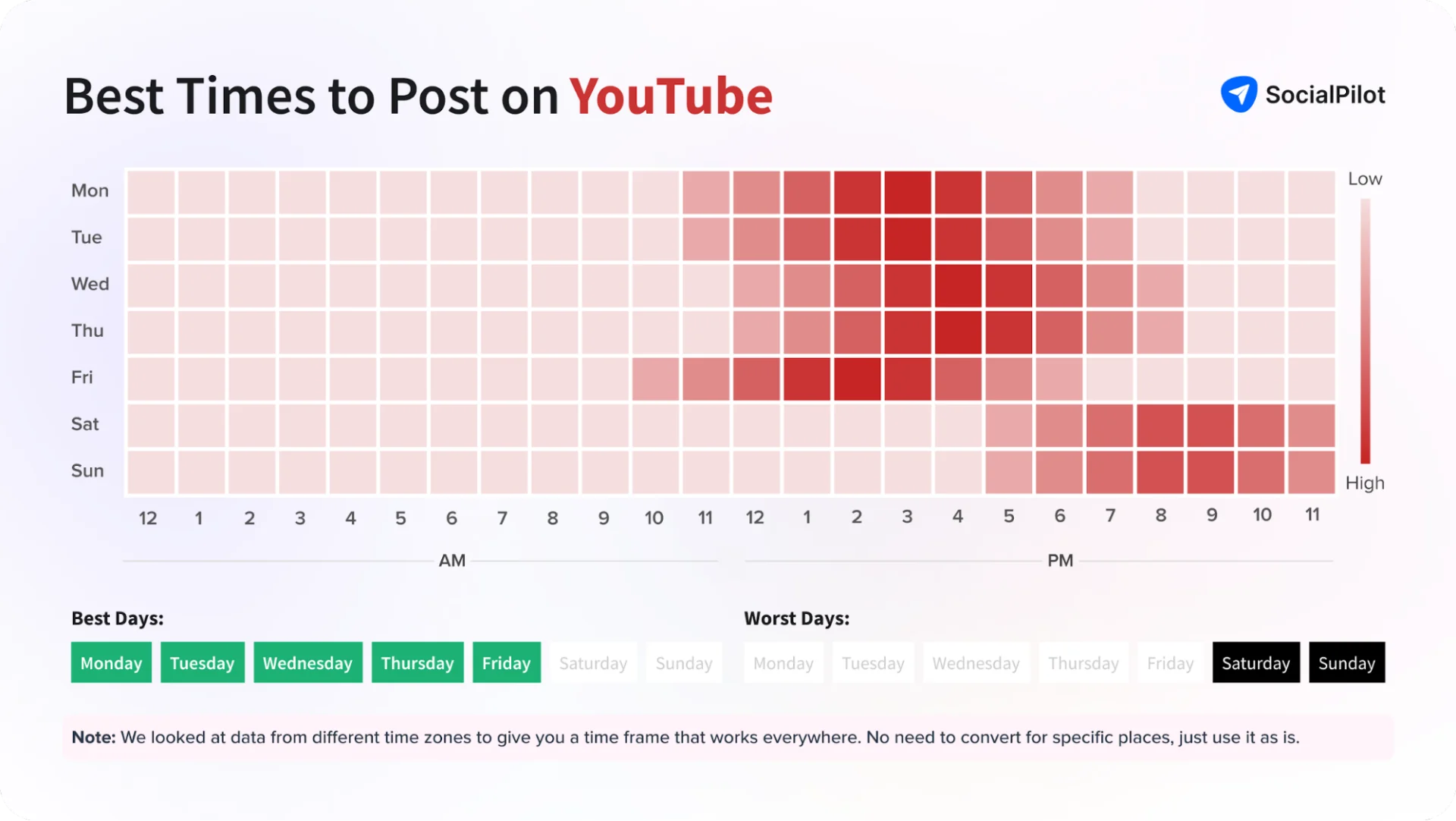
You have spent days conceptualizing a video, filming it with precision, and editing it to perfection. You have designed a high-CTR thumbnail and written a compelling, SEO-friendly title. You hit "Publish," and then… silence. Two days later, a smaller channel in your same niche posts a similar video and watches it soar, leaving your content gathering digital dust.
In the fast-paced ecosystem of YouTube, success is rarely just about quality; it is about rhythm. Posting time is not a minor optimization—it is a critical algorithmic lever. For established channels, shifting an upload window by as little as two to three hours can increase first-24-hour views by 20% to 40%. That initial velocity is the "signal" that tells the YouTube recommendation engine to push your content to a wider audience.
To decode the current landscape, we analyzed 301,000 YouTube videos published by over 27,000 channels. The data suggests that in 2026, the old rules of thumb are obsolete.
The Core Data: When to Hit Publish
Our study confirms a definitive shift: long-form content and YouTube Shorts now operate on near-opposite peak schedules. If you are recycling the same posting strategy for both, you are likely cannibalizing your own performance.
Long-Form vs. Shorts: The 2026 Divide
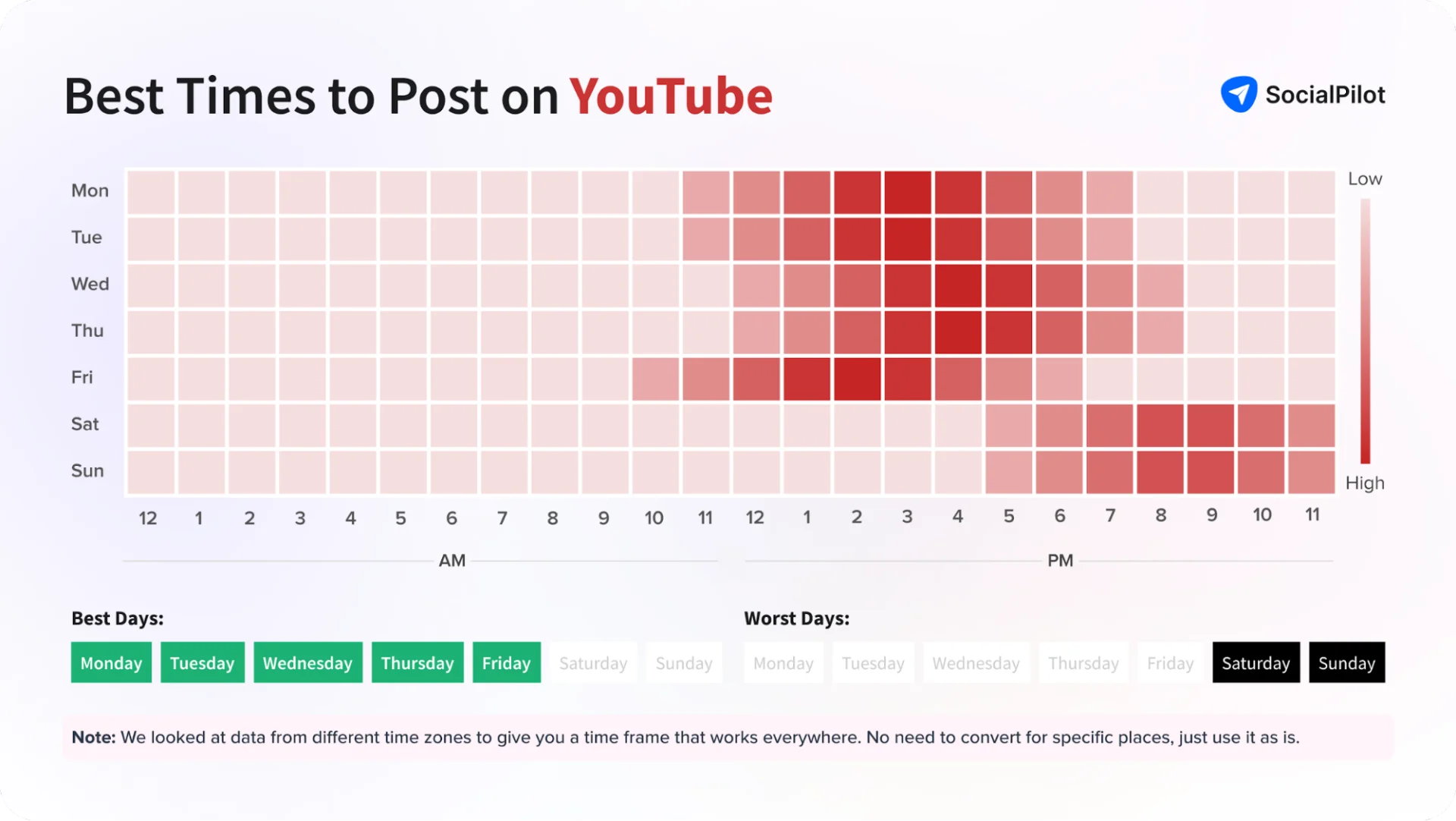
- Long-form Videos (8+ minutes): These require "intentional viewing." They perform best when published 2–4 hours before the evening peak (typically 2 PM – 4 PM local time). This allows the algorithm time to index the video and notify subscribers before the prime-time viewing window of 6 PM – 9 PM.
- YouTube Shorts: These are designed for "passive, micro-session" consumption. They thrive in two distinct windows: midday (12 PM – 2 PM) and early evening (6 PM – 7 PM). Unlike long-form content, Shorts can resurface in the feed days or weeks later, making consistency more important than precise timing.
Why Timing Matters: The Mechanics of the Algorithm
Creators often mistake YouTube for a social media feed. It is not. It is a sophisticated recommendation engine. Understanding how it evaluates your video in the first 48 hours is the key to growth.
The Three Stages of Recommendation
- The Test Pool: When you publish, YouTube shows your video to a small, loyal segment of your audience. Their behavior is the first "vote" on your content.
- Signal Collection: The algorithm measures three primary metrics: Click-Through Rate (CTR), Average View Duration (AVD), and Viewer Satisfaction (likes/comments). These metrics calculate your "engagement velocity."
- Distribution Decision: If your engagement velocity is high, the algorithm enters "Amplification Mode," pushing the video to Browse and Suggested features. If the signals are weak, the video is relegated to Search traffic only.
The 48-hour window is your make-or-break period. Uploading when your audience is active ensures that your "test pool" is ready to engage immediately, providing the algorithm with the data it needs to promote your video.
The "Pre-Peak" Strategy: A Critical Shift
A common mistake among creators is attempting to post at the exact peak of viewer activity. Doing this is akin to showing up to a party after it has already peaked. When you upload at peak time, your video arrives in the feed without the initial momentum of early engagement.
The Solution: Aim to publish 1–2 hours before your audience’s peak. This buffer allows YouTube to:
- Fully process the video quality.
- Complete thumbnail testing.
- Deliver push notifications to your subscribers.
- Accumulate initial watch time.
By the time the general audience reaches their peak, your video already has the "social proof" (views, likes, and comments) that encourages new viewers to click.
Chronology: A Week in the Life of a YouTube Channel
Viewer behavior shifts dramatically between the high-intent weekdays and the relaxed weekends.
Weekday Strategy (Monday–Thursday)
- Long-form: Aim for 2 PM – 5 PM. These are the "prep" hours for the evening binge-watching session.
- Shorts: Focus on the "commute and lunch" windows—12 PM for the lunch crowd, and 6 PM for the post-work transition.
Weekend Strategy (Friday–Sunday)
- Friday: An outlier. Viewing habits start earlier. Midday uploads (1 PM – 3 PM) are highly effective as people finish their work week.
- Saturday/Sunday: The "Morning Peak." Our data shows a massive spike in long-form viewing between 8 AM and 10 AM on weekends, as viewers catch up on their subscription feed while enjoying a slow morning.
Supporting Data: Industry-Specific Benchmarks
Not all niches are created equal. The behavior of a gaming viewer is fundamentally different from that of a B2B professional.
| Industry | Best Upload Time | Peak Engagement |
|---|---|---|
| Gaming | 3 PM – 4 PM (Weekdays) | 7 PM – 10 PM |
| Education | 8 AM – 10 AM (Weekdays) | 9 AM – 12 PM |
| B2B / Finance | 9 AM – 11 AM (Tues/Wed) | 11 AM – 2 PM |
| Fitness | 5 AM – 7 AM or 5 PM – 7 PM | 6 AM, 10 AM, 7 PM |
Note: B2B/Finance content succeeds during office hours, while entertainment and gaming are exclusively evening-dominant.
Official Perspective and Community Insights
While data-driven models provide a blueprint, the creator community remains divided on the "weight" of timing. Discussions on platforms like r/NewTubers suggest that for channels under 1,000 subscribers, timing is secondary to content quality.
"Timing cannot rescue weak content," notes a frequent contributor to YouTube creator forums. "It is the last thing you should optimize if your click-through rate is near zero."
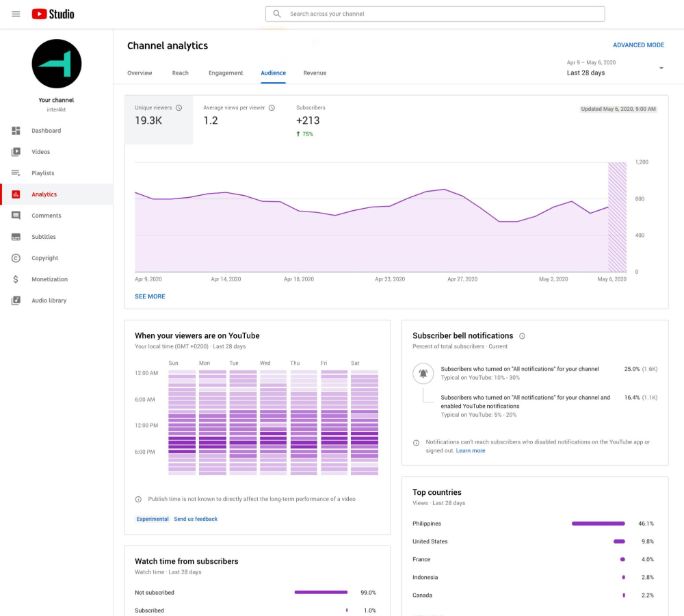
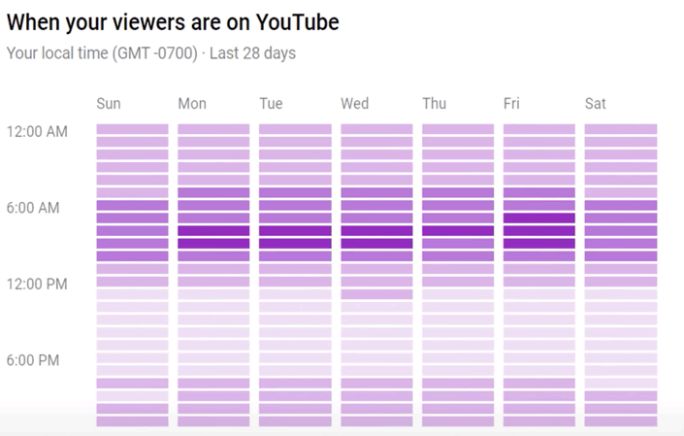
However, the consensus among established creators is clear: Use the data, don’t be enslaved by it. The most important tool you have is the "When your viewers are on YouTube" report found in your YouTube Studio Analytics.
Implications for Your Workflow
To maximize your 2026 growth, we recommend a three-step implementation:
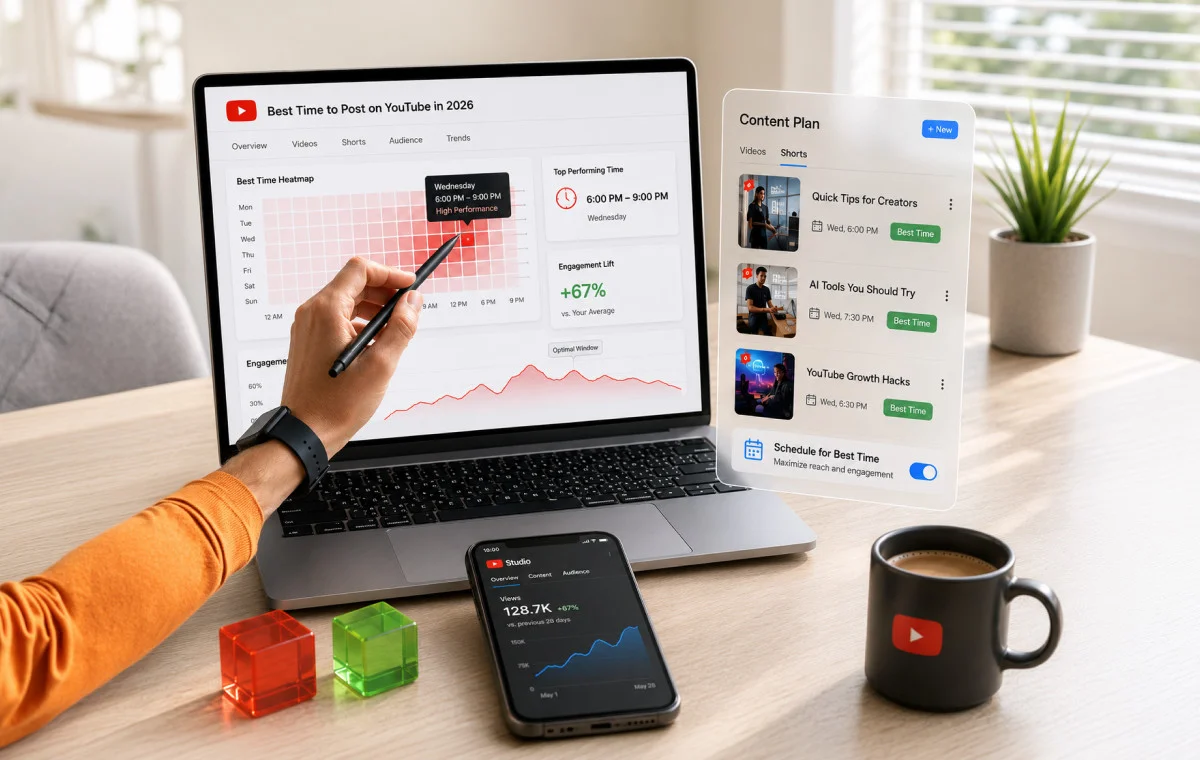
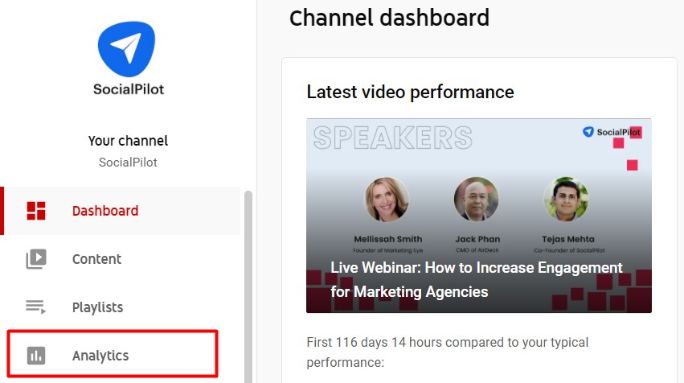
- Audit Your Heatmap: Log into YouTube Studio, navigate to the Audience tab, and identify your specific peak hours. Do not rely on industry averages if your data says otherwise.
- Separate Your Streams: Never post a Short and a long-form video at the same time. You will split your own audience’s attention and force them to choose between your videos.
- Automate for Consistency: Consistency is the single biggest factor in long-term growth. Tools like SocialPilot allow you to schedule content in advance, ensuring that even if you are asleep or busy, your video hits the feed at the precise moment your audience is ready to consume it.
Final Takeaway: The "Consistency Multiplier"
If you can maintain a schedule of 1–2 long-form videos and 3–5 Shorts per week, you are effectively training the algorithm. By the end of a 12-month period, the platform will have learned your patterns, and your audience will have learned to expect your content.
In 2026, the goal is not to "beat" the algorithm, but to sync with it. By leveraging the data of your specific audience and employing a pre-peak upload strategy, you can turn your channel into a well-oiled machine that doesn’t just hope for views—it earns them.

 Asro
Asro
 Nila Kartika Wati