The world of entertainment lost one of its most versatile and beloved icons on August 25th, when Tim Curry passed away at the age of 80. A performer who defied easy categorization, Curry occupied a unique space in the cultural consciousness. Whether he was draped in the fetishistic couture of a trans-dimensional alien or voicing a malevolent, planet-consuming cloud of pollution, his presence was always marked by a singular, infectious exuberance.
For five decades, Curry served as a North Star for theater kids, animation aficionados, and the queer community. He provided more than just entertainment; he provided a sense of belonging for those who identified with his brand of "outsider" chic. His career, spanning from the grime of London’s underground stages to the glitz of Hollywood blockbusters and the immersive worlds of video game voice acting, stands as a testament to an actor who never treated a role as "too small" or "too silly."

A Chronology of a Chameleonic Career
To summarize Tim Curry’s career is to attempt to capture lightning in a bottle. His journey began in the vibrant, experimental theater scenes of the early 1970s.
- 1973-1975: The birth of an icon. Curry’s portrayal of Dr. Frank-N-Furter in the original stage production of The Rocky Horror Show and the subsequent 1975 film catapulted him to international fame. It was a performance that challenged the rigidity of gender norms and remains a cornerstone of queer cinema.
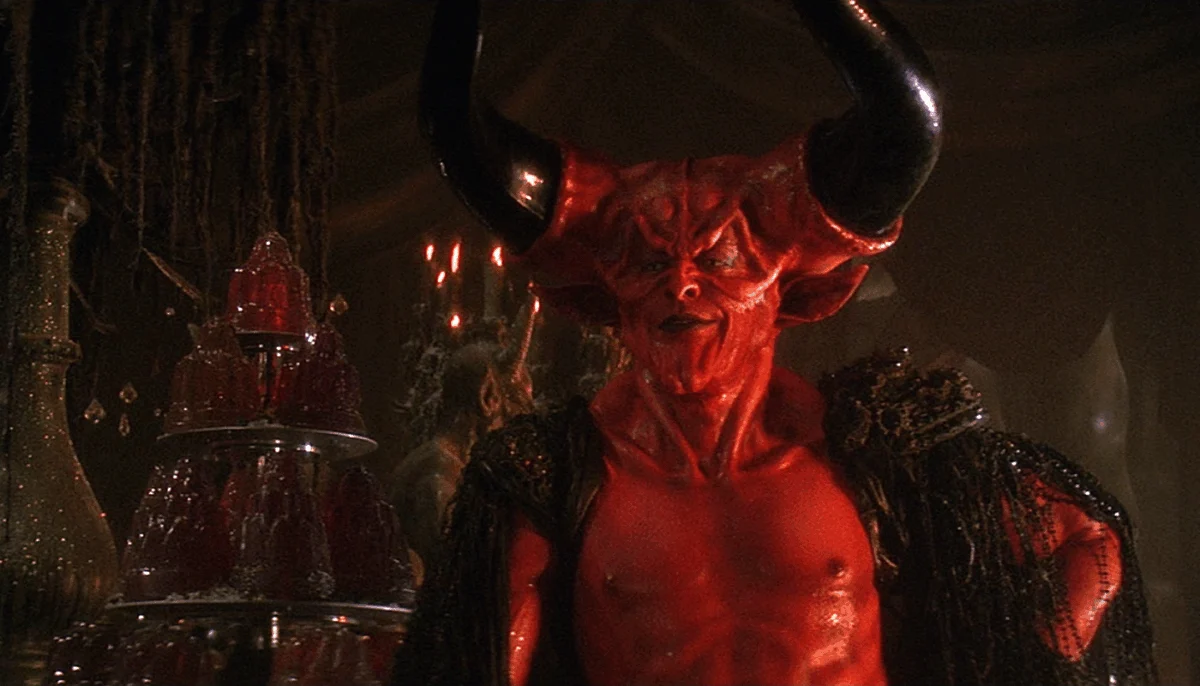
- 1980s: Curry pivoted toward both high-camp villainy and grounded character work. His turn as Rooster Hannigan in Annie (1982) showcased his musical prowess, while his role as the butler Wadsworth in Clue (1985) solidified his status as a master of physical comedy. During this period, he also embodied the terrifying personification of evil in Ridley Scott’s Legend (1985).
- 1990s: The "Curry-naissance" in children’s media. He became the voice of a generation, providing chilling gravitas to Pennywise in the 1990 It miniseries and the eco-horror villain Hexxus in FernGully: The Last Rainforest (1992). He rounded out the decade with the swashbuckling delight of Muppet Treasure Island (1996).
- 2000s and Beyond: Curry transitioned into the digital age, proving his comedic timing was just as sharp in the realm of interactive media. His role as Premier Anatoly Cherdenko in Command & Conquer: Red Alert 3 (2008) became an internet phenomenon, proving that even in his later years, his ability to command an audience was undiminished.
The Anatomy of an Icon: Performance Analysis
What set Curry apart was his refusal to play the "straight man," even when the script demanded it. His performance as Wadsworth in Clue is perhaps the best evidence of this. While the character is ostensibly the dry, composed butler, Curry’s portrayal is a slow-burn descent into manic, high-energy hysteria. He doesn’t just walk through the mansion; he ricochets through it, turning the film’s final act into a one-man show of endurance and wit.

Equally compelling was his work in animation. Curry understood that voice acting required a different kind of physical commitment. As Hexxus in FernGully, he used his voice to create a character that was both repulsive and strangely alluring. He made the concept of environmental decay feel like a cabaret performance, proving that he could infuse even the most heavy-handed message with genuine personality.
Perhaps his most significant contribution remains Dr. Frank-N-Furter. As the decades have passed, the discourse surrounding The Rocky Horror Picture Show has evolved, with many modern viewers questioning the film’s representation of queer identities. Curry himself addressed this with characteristic nuance, noting in a 2024 reflection that while the film contains problematic elements by modern standards, it was an act of profound bravery in 1975, a time when homosexuality was still criminalized in the United Kingdom. He asked his fans to look at the work within its historical context, a request that highlights the intelligence behind his flamboyance.

Official Tributes and Industry Impact
Following the news of his passing, the entertainment industry has been quick to acknowledge the void he leaves behind. Peers, collaborators, and the countless artists who cited him as an influence took to social media and press outlets to pay their respects.
"Tim didn’t just play a role; he haunted it, he loved it, and he invited us all to join the party," said a representative for the Jim Henson Company, recalling his time on Muppet Treasure Island. "He treated the Muppets with the same professional respect as any A-list actor, which is why he remains one of the best human partners the Muppets ever had."

Video game journalists and industry historians have also highlighted his late-career contributions. Justin McElroy, whose work has often focused on the unsung brilliance of video game performances, noted that Curry’s ability to "break" during a line delivery—and for that take to be the one kept in the final game—showcased a level of charisma that few actors possess. "He knew exactly how dumb the line was," McElroy stated, "and he leaned into that stupidity with the confidence of a Shakespearean actor."
The Implications: Why Curry Matters
The death of Tim Curry marks the end of an era defined by a specific type of theatrical performance—one that prioritizes camp, artifice, and high-voltage charisma. In an age where acting is often praised for being "naturalistic" or "subtle," Curry was a reminder of the power of the performance. He understood that an audience doesn’t always want a mirror held up to their own reality; sometimes, they want to be invited into a distorted, glitter-covered, and slightly dangerous version of it.

His legacy is also deeply tied to the concept of the "safe space." For the LGBTQ+ community, Rocky Horror was more than a movie; it was a gathering place. Curry’s Frank-N-Furter was a beacon of unapologetic self-expression at a time when that expression was frequently suppressed. He proved that to be "different" was not to be broken, but to be the center of one’s own universe.
Furthermore, his impact on the "theater kid" archetype cannot be overstated. He validated the idea that being dramatic, loud, and slightly unhinged could be a career path. He taught generations of performers that it is better to be memorable than to be conventional.

Final Reflections
As we look back on his catalog—from the gothic dread of Legend to the hilarious desperation of Red Alert 3—we are left with a body of work that is as sprawling as it is consistent in its quality. Curry was a master of the "overblown flourish," a performer who could take a single word and turn it into a multi-syllabic event.
His final elegiac number in The Rocky Horror Picture Show, "I’m Going Home," now serves as a poignant, accidental epitaph for his career. As he sat, blue-shadowed and tear-stained, singing of a place where he truly belonged, he captured a universal human longing. Tim Curry lived a life of fearless, boundary-pushing art, and he left the world much more interesting than he found it.

Whether he was scaring us as a clown in a sewer or making us laugh as a butler in a mansion, he was, in every sense of the word, a star. He rests now, but the characters he breathed life into—the ones that danced, crooned, and threatened their way into our hearts—will continue to live on, eternally, in the dark embrace of the screen.
What will you miss most?
As we process the loss of such a monumental talent, the question remains: what does Tim Curry mean to you? Was it the first time you saw Rocky Horror at a midnight screening? Was it the way his voice turned a cartoon villain into a complex, tragic figure? The invitation is open to share your memories, your favorite quips, and the ways in which his work touched your life. In celebrating him, we keep the fire of his performance alive.