Lina Hope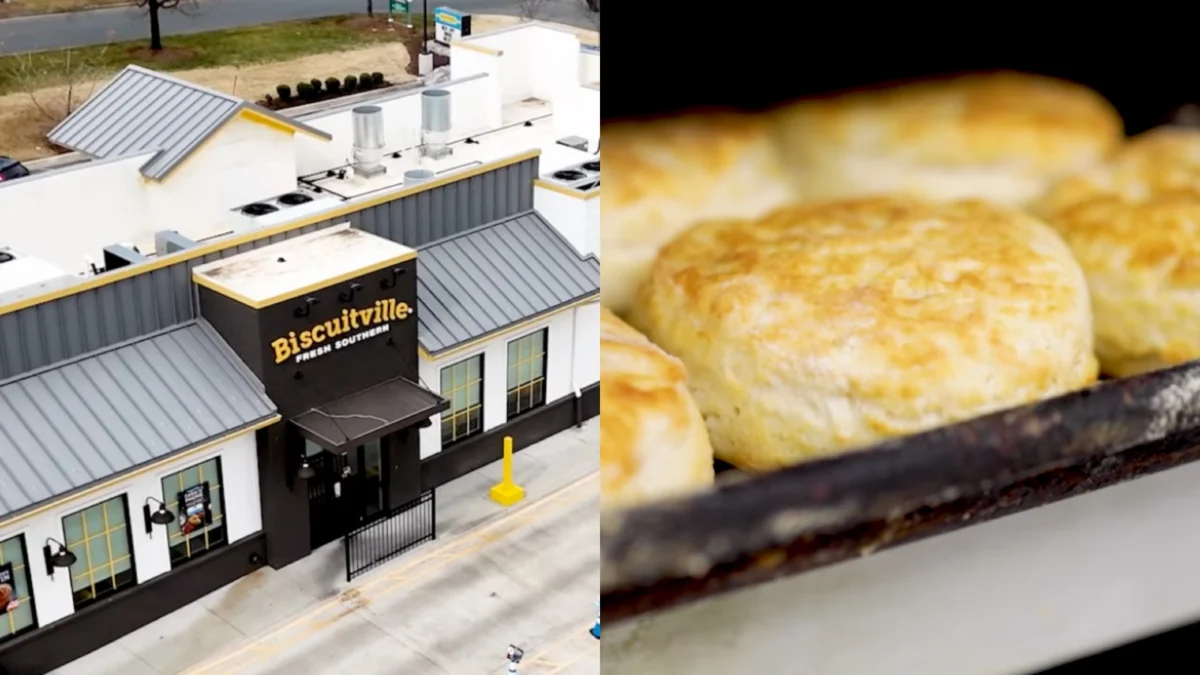
In the high-stakes, multi-billion-dollar arena of American fast food, the playbook usually favors scale. For decades, the breakfast throne has been a battleground for global titans—McDonald’s, Chick-fil-A, and Burger King—companies with thousands of locations, massive advertising budgets, and ubiquitous supply chains. Yet, for the fourth consecutive year, the industry’s most coveted title, "America’s Best Fast-Food Breakfast," has been snatched by a regional contender that operates a mere 90 locations across only three states.
Biscuitville, the North Carolina-based breakfast powerhouse, has once again topped the USA Today 10Best readers’ choice awards. By prioritizing artisanal quality over rapid-fire expansion, this Southern chain has proven that in the world of breakfast, the secret to success isn’t global dominance—it’s the humble, scratch-made biscuit.
The Main Facts: A David vs. Goliath Victory
The USA Today 10Best rankings are a barometer for consumer sentiment, relying on a month-long voting period where food enthusiasts across the country weigh in on their favorite morning haunts. While larger chains rely on brand recognition to secure votes, Biscuitville relies on an almost cult-like devotion from its customer base in North Carolina, South Carolina, and Virginia.
The results of the latest poll underscore a fascinating shift in consumer preferences. Biscuitville took the gold medal, followed by Farmer Boys in second place and Del Taco in third. Perhaps most startling to industry analysts is the positioning of the industry’s heavyweights: McDonald’s fell to fourth place, Chick-fil-A to fifth, Burger King to sixth, and Wendy’s to seventh.
The victory is not merely a statistical anomaly; it is the fourth year in a row that Biscuitville has fended off international giants. This sustained dominance suggests that Biscuitville has achieved something rare in the fast-food industry: a consistent product that transcends regional boundaries to capture a national imagination.
Chronology of a Regional Phenomenon
Biscuitville’s journey to the top was not an overnight success story, but rather a slow, deliberate climb rooted in Southern tradition. Founded in 1966 by Maurice Jennings, the chain began as a humble pizza venture that pivoted to breakfast after realizing the high demand for high-quality, authentic Southern morning meals.
- 1966: The first "Pizza & Biscuitville" opens in Danville, Virginia.
- 1970s–1990s: The brand pivots away from pizza to focus exclusively on the "Biscuitville" concept, refining their scratch-biscuit recipe and expanding steadily across North Carolina and Virginia.
- 2010s: The company undergoes a brand refresh, leaning heavily into its "Southern" identity, highlighting local ingredients and the "baked every 15 minutes" promise.
- 2021: Biscuitville wins its first USA Today 10Best "Best Fast-Food Breakfast" title, marking its arrival on the national stage.
- 2022–2024: The chain solidifies its status, winning the award for three subsequent years, effectively creating a dynasty.
This chronology reflects a company that resisted the temptation to sacrifice quality for the sake of aggressive franchising, choosing instead to double down on the specific culinary traditions that gave the brand its identity.
Supporting Data: Why the Biscuits Matter
At the core of the Biscuitville operation is a logistical commitment that most large-scale chains would find impossible to maintain. Every Biscuitville location features a "Biscuit Window," where a dedicated baker prepares fresh biscuits from scratch every 15 minutes.
The ingredients are simple, but the process is rigorous. The recipe, a closely guarded family secret, relies on a specific flour blend and a technique that ensures the biscuits remain light, buttery, and flaky. Kristie Mitchell, the Chief Marketing Officer for Biscuitville, explains the consumer resonance: "We get comments all the time from our feedback line that say, ‘Your biscuit tastes just like my grandmother’s biscuit.’"
This emotional connection to food is the "X-factor" that prevents larger, more automated chains from replicating Biscuitville’s success. While competitors utilize mass-produced, frozen, or par-baked biscuits that can sit in warming cabinets for hours, Biscuitville’s 15-minute rule ensures that the product the customer receives is as close to a home-cooked meal as possible in a drive-thru setting.
Beyond the biscuits themselves, the menu serves as a homage to Southern staples:
- The Classics: Bacon, egg, and cheese on a buttermilk biscuit.
- The Comfort: Fried chicken biscuits, which have seen a surge in popularity as the "chicken sandwich wars" continue to influence breakfast trends.
- The Sides: Southern-style country gravy and stone-ground grits, which provide the essential "comfort food" profile that attracts commuters and families alike.
Official Responses and Corporate Philosophy
The leadership at Biscuitville is keenly aware that their success makes them a target for larger chains looking to reclaim the top spot. However, the corporate culture at Biscuitville appears to be one of humility and "anti-complacency."
In a recent statement following the win, Kristie Mitchell addressed the challenge of maintaining excellence while holding the top spot. "We have earned it, but we don’t want to live in a space where we come to expect it," she noted. This mindset is vital for the company’s survival. When a small chain beats a global corporation, the temptation is often to rush expansion. Biscuitville, however, has maintained a disciplined growth strategy.
The company is currently exploring expansion into states like Tennessee and Georgia. This is a calculated risk: moving into new markets requires maintaining the integrity of their scratch-made supply chain and finding local staff who can master the art of the biscuit. For Biscuitville, the expansion is not about hitting a specific number of locations, but about finding markets that value the same culinary traditions they serve.
The Implications: What This Means for Fast Food
The success of Biscuitville signals a broader "craft revolution" in the fast-food industry. For decades, the industry was defined by "standardization"—ensuring a burger in Tokyo tastes exactly like a burger in New York. However, the rise of regional chains like Biscuitville, Whataburger, and others suggests that consumers are beginning to reject the sterile, mass-produced nature of traditional fast food.
1. The Death of One-Size-Fits-All
The fact that McDonald’s and Burger King are being outperformed by a regional player suggests that "efficiency" is no longer the primary driver of customer satisfaction. Consumers are increasingly willing to wait an extra few minutes for a meal that feels "made for them" rather than "assembled for them."
2. The Power of "Authenticity" Marketing
Biscuitville’s marketing doesn’t rely on flashy celebrity endorsements or complex digital apps; it relies on the narrative of the "grandmother’s recipe" and the "15-minute bake cycle." This narrative resonates in an age where consumers are increasingly wary of highly processed foods.
3. The Future of Breakfast
Breakfast is the most profitable daypart for many quick-service restaurants. As more chains look to capture the "breakfast commuter," the pressure to innovate will grow. We are likely to see more chains attempting to mimic the "fresh-baked" model, though many will struggle to replicate the infrastructure that Biscuitville has spent decades perfecting.
Conclusion: Can the Dynasty Hold?
As Biscuitville looks toward the future, the road ahead is filled with both opportunity and peril. Entering the Georgia and Tennessee markets will test the scalability of their model. They will be competing not just against the national giants they have already beaten, but against local legends in those regions that have their own, equally fierce, breakfast traditions.
However, if their performance over the last four years is any indicator, Biscuitville is not easily rattled by competition. They have built a brand on the foundation of quality, tradition, and a refusal to compromise on their core product. While McDonald’s and the other giants will undoubtedly continue to innovate and try to reclaim their lost crown, they are fighting an uphill battle against a company that has successfully turned a simple biscuit into a symbol of Southern pride.
For now, the crown remains in the Carolinas. For anyone looking for the "best" breakfast in America, the data is clear: ignore the golden arches and look for the place where the flour is flying and the biscuits are coming out of the oven every 15 minutes. Biscuitville hasn’t just won a poll; they have won the hearts of the American breakfast-going public, and they show no signs of letting go.

 Nana Muazin
 Muslim