Pevita Pearce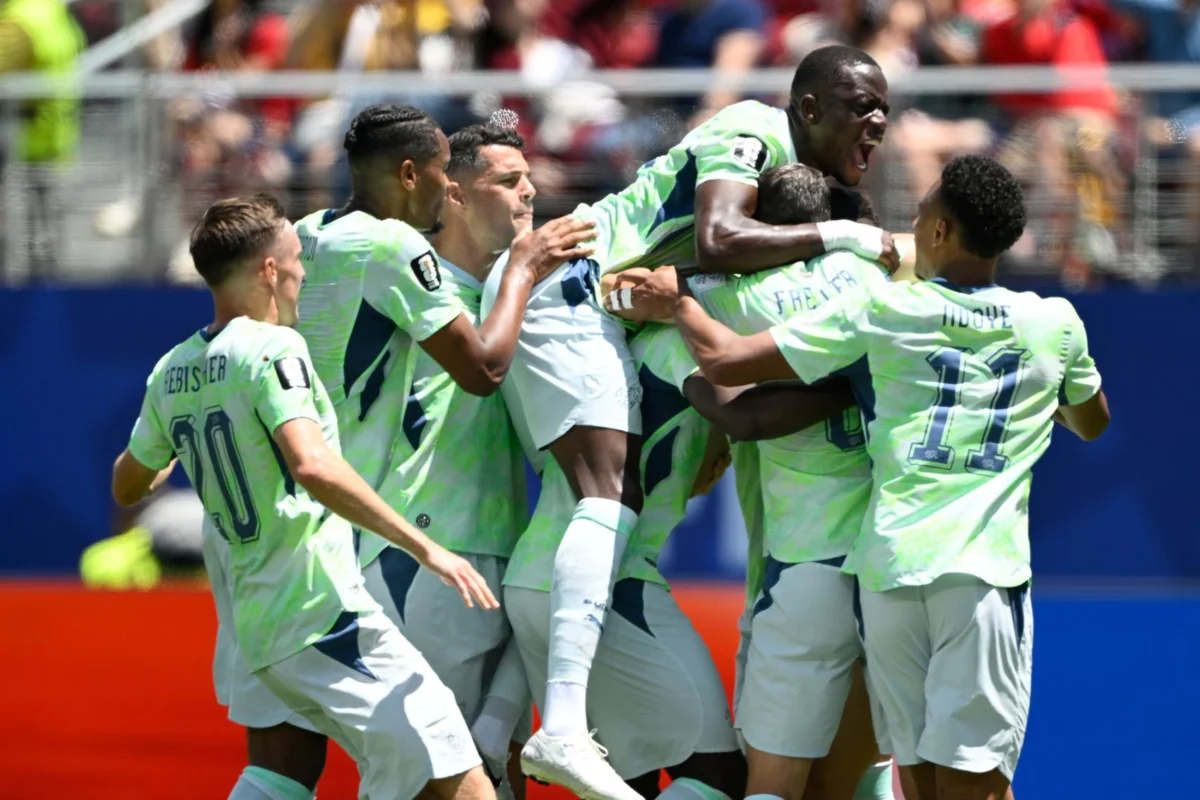
The Miracle in Santa Clara: An Overview
In a result that has sent shockwaves through the 2026 World Cup, Qatar—a team still haunted by the ghosts of a winless home campaign four years ago—secured a historic 1-1 draw against Group B favorites Switzerland on Saturday. The match, hosted at the cavernous Levi’s Stadium in Santa Clara, California, saw the underdog Qataris snatch a point in the dying embers of the contest, effectively rewriting the narrative of their international standing.
For the Swiss, the afternoon was nothing short of a "QATARSTROPHE," as dubbed by the French-language public broadcaster RTS. Despite controlling long stretches of possession and creating a surplus of scoring opportunities, Switzerland’s inability to finish off the match proved their undoing. The result leaves Group B wide open and forces the Swiss into a precarious position heading into their next fixtures.
Chronology of a Dramatic Encounter
The intensity of the match was palpable from the opening whistle. Under a scorching June sun, the tempo was set early by both sides.
The First Half: Tension and Technicality
The game began with a flurry of activity. Just two minutes in, Qatar signaled their intent when Edmilson Junior breached the Swiss defensive line, finding himself one-on-one with goalkeeper Gregor Kobel. The Swiss shot-stopper, however, was equal to the task, pulling off a vital save that kept the match level.
The drama escalated in the 13th minute when Qatari goalkeeper Mahmoud Abunada collided with Breel Embolo during a scramble in the penalty area. The impact left Abunada motionless on the turf, triggering a brief moment of panic among the medical staff and spectators alike. After several tense minutes, the goalkeeper regained consciousness and managed to continue, though the referee had already whistled for a foul.
In the 17th minute, Embolo stepped up to the spot. With the composure of a veteran, he slotted the ball into the upper left corner, igniting the red-clad Swiss supporters in the stands. The remainder of the first half was defined by Switzerland’s dominance, though they struggled to convert their possession into a cushion, a failure that would define the afternoon.
The Second Half: The Wait for Redemption
As the temperature on the field climbed, the pace of play slowed, hampered by the occasional distraction of stadium sprinklers during a mid-half break. Switzerland continued to probe, searching for a second goal that would put the match beyond reach. Qatar, meanwhile, remained disciplined, operating under a rigid tactical plan implemented by manager Julen Lopetegui.
As the match entered the 90th minute, it appeared the Swiss had done just enough. A close-range attempt by Ahmed Alaaeldin was expertly gathered by Kobel, leading many to believe the three points were secured. However, football is a game of fine margins.
The Final Act: The Header That Changed History
In the fourth minute of stoppage time, with the crowd of 67,966 holding its collective breath, Qatar forced a final set-piece opportunity. A well-delivered ball found Boualem Khoukhi, who rose above the Swiss defense to power a header into the back of the net. The stadium erupted. As the final whistle blew moments later, scenes of unbridled emotion followed: Qatari players collapsed onto the pitch in disbelief and joy, while the Swiss squad stood in stunned silence.
Statistical Context and Performance Analysis
The match statistics highlight a game of contrasting fortunes. While Switzerland dominated the ball, their "Expected Goals" (xG) metrics will likely reveal a frustrating lack of clinical execution.
- Attendance: 67,966 at Levi’s Stadium.
- Key Moments: Embolo’s penalty (17’), Khoukhi’s equalizer (90+4’).
- Discipline: A yellow card for Qatar’s Abunada in the 13th minute.
- The Embolo Narrative: The Swiss forward’s participation was in doubt until days before the tournament due to visa complications arising from a 2018 criminal conviction. His performance on the pitch—scoring the lone Swiss goal—only highlighted the team’s missed opportunities elsewhere.
The disparity in experience between the two nations is stark. Switzerland, making its sixth consecutive World Cup appearance, has built its reputation on consistency and tactical rigor. Qatar, conversely, arrived in the U.S. having qualified through a challenging playoff route after a disappointing 2022 campaign where they became the first host nation in history to lose all three group-stage matches.
Official Responses and Tactical Reflection
In the aftermath of the draw, the mood in the respective dressing rooms could not have been more polarized.
Qatar: The Power of Belief
Qatar manager Julen Lopetegui was visibly moved during his post-match press conference. "I was very proud about today—our mentality, the discipline they showed," Lopetegui remarked. "We needed to have a plan, and we needed to fulfill it. We were a little bit lucky sometimes, but you need to believe and to want to have this belief and a bit of luck in life and in football."
Lopetegui’s ability to instill resilience in a team that suffered such a public collapse four years ago is a testament to his tactical evolution. By keeping the match tight and capitalizing on the final play, Qatar effectively nullified the technical superiority of their European opponents.
Switzerland: The Agony of Missed Chances
For the Swiss, the frustration was raw. Midfielder Denis Zakaria, when asked by RTS if the result constituted a catastrophe, did not mince words. "Clearly," he admitted. "We didn’t play the kind of match we needed to. We had so many chances and we missed so many in front of goal. Today we paid dearly."
The pressure on the Swiss side is significant. Having lost 6-1 to Portugal in the Round of 16 four years ago, the team arrived in North America with a mandate to reach the quarterfinals or beyond—a stage they have never breached in their modern history.
Broader Implications for Group B
The result at Levi’s Stadium serves as a reminder of the "anything can happen" nature of the World Cup. For Qatar, this is their first-ever point in the tournament, a milestone that provides a much-needed psychological boost for a program looking to move beyond the ignominy of 2022.
For Switzerland, the "QATARSTROPHE" creates an immediate crisis of confidence. The Swiss defense, usually a bedrock of consistency, will need to address the lapses that allowed a late-game equalizer. Furthermore, the reliance on players like Embolo to carry the attacking load, while productive, has left the team vulnerable when those individuals are not supported by a more cohesive secondary attack.
Looking Ahead
The empty seats scattered throughout Levi’s Stadium—a venue that hosted the Super Bowl only months ago—stood in stark contrast to the fervor of the match itself. As the tournament progresses, the pressure on the favorites will only intensify. Switzerland must now regroup for their next match, knowing that their path to the knockout stages is no longer guaranteed.
For Qatar, the draw is a validation of their journey. They were expected to be the whipping boys of Group B; instead, they have become the spoilers. Whether they can build on this momentum remains to be seen, but for one afternoon in Santa Clara, they proved that even the mightiest teams can be brought to their knees by a side with nothing to lose and everything to prove.
The 2026 World Cup has officially announced its capacity for drama, and if Saturday’s result is any indication, the road to the final will be paved with more than just statistics—it will be defined by the relentless pursuit of the impossible.


 Neng Nana
 Asro
Asro