Nana
NanaBy [Your Name/Journalist Name] | June 5, 2026
In the current cinematic landscape, the line between high-fantasy epic and science-fiction spectacle has become increasingly porous. When audiences witness a blond hero with Herculean strength traversing rainbow-hued interdimensional bridges to battle cosmic threats, the instinctual response is to look toward the Marvel Cinematic Universe (MCU). However, this weekend, that specific aesthetic—a blend of sword-and-sorcery grit and high-concept sci-fi—is being championed not by the God of Thunder, but by the latest iteration of Masters of the Universe.
As the Thor franchise navigates a period of uncertainty following the conclusion of Taika Waititi’s tenure with Love and Thunder, industry observers are looking to Eternia for inspiration. The shared DNA between these two properties is no accident; it is the result of a creative lineage that traces back to the legendary Jack “The King” Kirby. By analyzing the successes and, crucially, the failures of the new Masters of the Universe film, Marvel Studios may find the necessary course correction for Thor’s future on the big screen.
A Shared Ancestry: The Kirby Connection
To understand why Masters of the Universe feels so fundamentally "Thor-adjacent," one must examine the 1982 origins of the Mattel toy line. Initially conceived as a tactical maneuver to capitalize on the surging popularity of Conan the Barbarian and the space-faring wonder of Star Wars, the property was designed to be a hybrid of disparate genres.
When Mattel partnered with DC Comics to flesh out the lore provided in the mini-comics packaged with action figures, they did not reach for generic fantasy tropes. Instead, they tapped directly into the wellspring of Jack Kirby’s creative output. Kirby, the undisputed architect of the modern Marvel Universe, utilized his time at both Marvel and DC to refine the concept of "Techno-Mythology."
His original Thor runs were never just about Norse gods; they were about the intersection of ancient divinity and advanced, incomprehensible science. When Kirby moved to DC, he brought his rejected Thor concepts—specifically his meditations on Ragnarok and the cyclical nature of destruction—to create the Fourth World Saga. The introduction of the war-torn worlds of New Genesis and Apokolips, and the conflict between Orion and Darkseid, serves as a clear historical antecedent to the power dynamics between He-Man and Skeletor. Consequently, when the 1987 Masters of the Universe film—and its 2026 successor—hit the screen, they were utilizing the same narrative architecture that defined Thor’s most iconic comic book arcs.
Chronology: From Panels to the Silver Screen
The relationship between these franchises has evolved significantly over the last four decades:
- 1962: Jack Kirby and Stan Lee introduce Thor to Marvel Comics, blending Shakespearean drama with scientific marvels.
- 1970: Kirby launches the Fourth World at DC, introducing the "New Gods" and the aesthetic of cosmic, high-stakes conflict.
- 1982: Mattel launches Masters of the Universe, drawing heavy visual and narrative inspiration from Kirby’s work.
- 1987: The first live-action Masters of the Universe film is released, with director Gary Goddard explicitly citing the Fourth World as his primary influence.
- 2011–2022: The MCU releases four Thor films, shifting from Kenneth Branagh’s grounded, operatic style to Taika Waititi’s irreverent, meta-humorous approach.
- 2026: The modern Masters of the Universe reboot premieres, highlighting both the potential for a "pure" fantasy-sci-fi blockbuster and the pitfalls of self-conscious cynicism.
Supporting Data: The Tone Problem in Modern Franchises
The primary friction point in recent superhero cinema has been tone. For years, the Thor franchise oscillated between two extremes. The earlier films, Thor and Thor: The Dark World, attempted a "grounded" approach, treating the God of Thunder as a Shakespearean figure. While this maintained a level of seriousness, it often felt at odds with the inherent absurdity of the character’s source material.
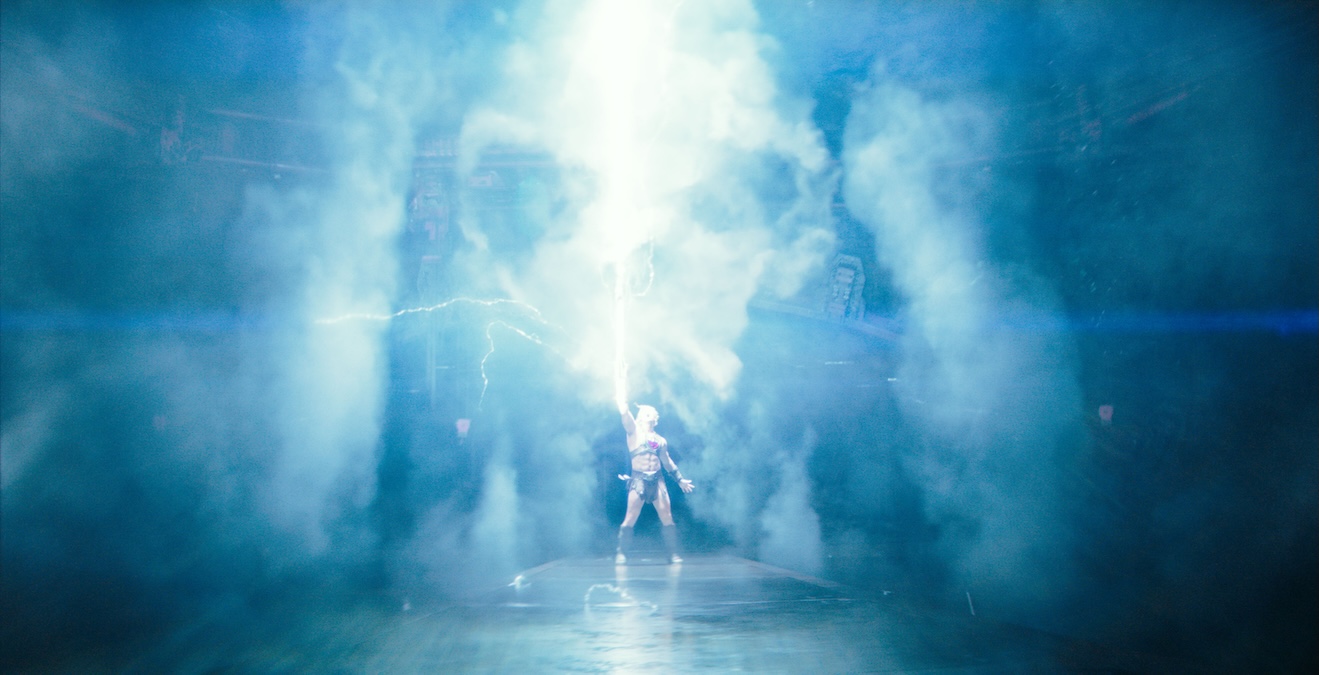
Conversely, Thor: Ragnarok and Love and Thunder swung the pendulum to the opposite extreme, utilizing constant humor to undercut the gravity of the stakes. While successful at the box office, these films often felt as though they were apologizing for the premise, signaling to the audience that the concept of a magical hammer-wielding god was "silly."
Data from recent audience sentiment analyses suggests a growing fatigue toward this "winking at the camera" style of storytelling. Masters of the Universe (2026) arrives at a critical juncture. It successfully recreates the visual language of Eternia—the colorful skies, the monstrous henchmen, the sheer physicality of the lead—but it occasionally falls into the trap of meta-humor. Moments where the protagonist, Nicholas Galitzine’s Adam, struggles with the reality of his own iconography, or where Jared Leto’s Skeletor engages in banter that mocks his own villainy, mirror the exact insecurities found in recent Marvel outings.
Official Responses and Creative Implications
Industry insiders have noted that the "unapologetic" nature of high-fantasy action is a goldmine that studios have yet to fully exploit. By constantly trying to "elevate" these characters, studios often strip them of the very mythic weight that made them popular in the first place.
"The key," says film historian Dr. Elena Vance, "is not to treat these stories as jokes, but as sincere, high-stakes adventures. When you look at the best Thor comic runs—such as those by Walt Simonson—they aren’t afraid of the absurd. They lean into the giant serpents, the frost giants, and the cosmic grandeur. They don’t need a punchline to justify their existence."
For the next Thor installment, the implications are clear:
- Embrace the Aesthetic: Abandon the attempts to make Asgardian technology feel "grounded." Let it be the weird, Kirby-esque, neon-drenched space opera it was always meant to be.
- Sincerity over Cynicism: If the next antagonist is a classic comic villain like the Absorbing Man, present them with the gravitas of a formidable foe rather than a character to be poked fun at for wearing striped pants.
- The Hero’s Journey: Return to the core of the character. Thor is a god of war, a protector, and a figure of immense power. The film should celebrate this power, not minimize it through self-deprecating humor.
Conclusion: The Path Forward
Masters of the Universe may not be a perfect film, but it acts as a mirror, reflecting the missed opportunities of the MCU’s recent trajectory. It serves as a proof-of-concept that audiences are hungry for the "dumb, awesome adventure" that defines the best of Kirby-inspired storytelling.
Marvel Studios now stands at a crossroads. They can continue to dilute the mythic stature of their heroes in an attempt to remain "relatable" through humor, or they can look back to the source—the same source that fueled the toys of the 80s—and reclaim the epic, unashamed fantasy that Thor deserves. If the God of Thunder is to regain his footing, he must stop apologizing for who he is and start wielding his power with the confidence that the King intended.
As the credits roll on the current iteration of Eternia, the lesson is clear: the power has always been there. It is simply a matter of who is bold enough to seize it.

 Jia Lissa
 Iffa Jayyana