The air surrounding the 2026 Hugo Awards is thick with the familiar, electric charge of anticipation. At this moment, for those awaiting the results, the winners exist in a state of quantum superposition—a collection of potential outcomes held in the collective imagination of the science fiction community. Whether these states are destined to collapse into a singular, celebrated reality or spark further debate, the tension remains a hallmark of the genre’s most prestigious night. Yet, for the seasoned observer of speculative fiction, this cyclical anxiety serves as a poignant reminder of the ways in which we measure merit and nurture talent within the field.
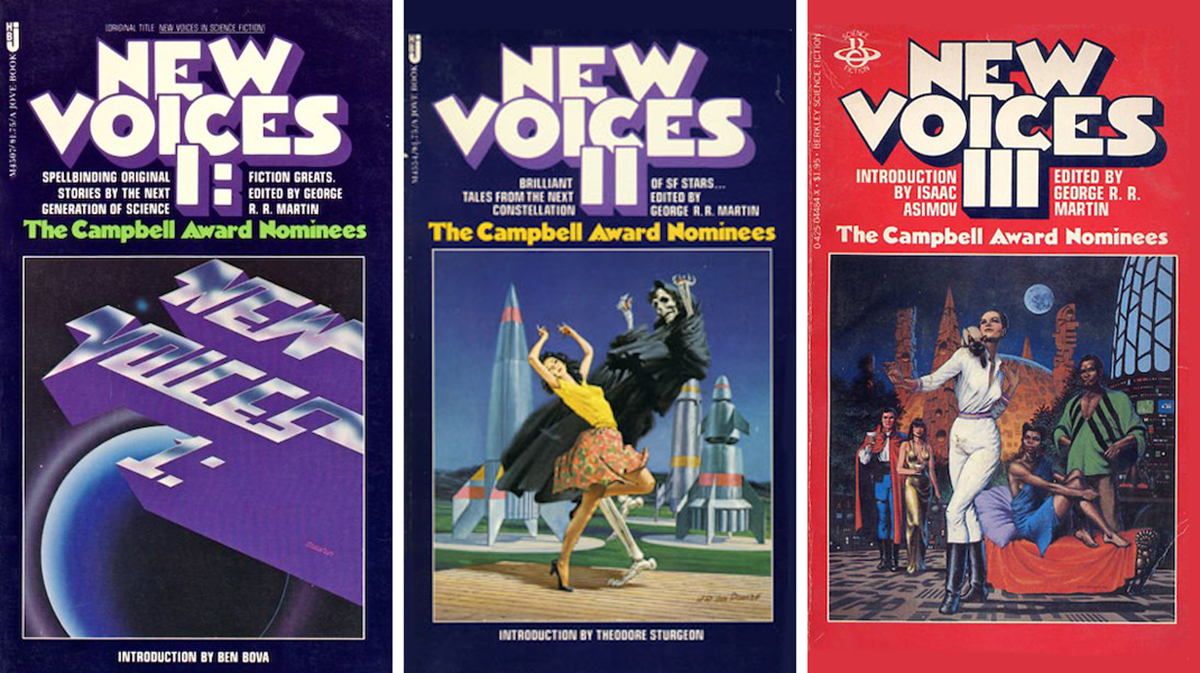
It is in this climate of evaluation that one’s thoughts inevitably drift toward a project that, while technically distinct from the Hugo Awards, remains inextricably "Hugo-adjacent": George R.R. Martin’s seminal New Voices anthology series. Spanning five volumes (with a sixth lost to the ether of publishing history), this series attempted to bridge the gap between burgeoning talent and established recognition, offering a masterclass in how to effectively showcase the "next big thing" in science fiction.
The Campbell Legacy: A Catalyst for Change
To understand the impetus behind New Voices, one must first examine the influence of John W. Campbell, Jr. (1910–1971). A titan of the Golden Age of science fiction, Campbell’s tenure as the editor of Astounding Science Fiction defined the trajectory of the genre for decades. His editorial practices—most notably his willingness to pay authors competitive rates promptly—earned him a level of institutional influence that few have since replicated.
Campbell’s impact was not merely financial; it was foundational. He cultivated the voices that would eventually form the canon of mid-century speculative fiction. Such was his stature that the industry saw fit to name two awards in his honor: the John W. Campbell Award for Best New Writer (now the Astounding Award) and the John W. Campbell Memorial Award for Best Science Fiction Novel. As the genre continues to grapple with its history, these awards remain subjects of intense scrutiny, yet they underscore the enduring, if complex, shadow Campbell casts over the field.
The "New Voices" Philosophy: A Chronology of Innovation
Martin’s New Voices series was specifically designed to orbit the John W. Campbell Award for Best New Writer. While the award is not a Hugo, its integration into the Worldcon apparatus—with nominations and selection managed by the same processes that govern the Hugos—renders it a vital satellite of the main event.
The Problem of the "Short Fiction" Bias
Historically, anthologies of award-nominated fiction have functioned as vital archives, preserving the best of the best for posterity. Works like Isaac Asimov’s The Hugo Winners volumes serve as touchstones for scholars and fans alike. However, Martin identified a critical flaw in the traditional model of the "award anthology."
Standard anthologies of that era relied on existing short stories. This created an inherent bias: authors who made their name primarily through novels or those who had not yet published a flurry of short fiction were often excluded, even if they were considered the most promising new voices in the industry. Martin’s solution was elegant in its simplicity: he commissioned original fiction from the Campbell Award finalists.
The Series Timeline
The production of these volumes was an ambitious, albeit arduous, endeavor. The logistical hurdles were significant:
- Volume 1 (1977): Focused on 1973 finalists.
- Volumes 2, 3, & 4: Released in the years following, each suffering from a five-year lag.
- Volume V: Released seven years after the nominated authors’ debut on the award circuit.
This delay—the result of the lengthy process of commissioning, writing, editing, and publishing—ultimately proved to be the series’ Achilles’ heel. While the quality remained high, the "newness" of the voices was often tempered by the passage of time.
Supporting Data: Literary Merit and Lasting Impact
The New Voices series was not merely a commercial project; it was a curator’s triumph. By commissioning original work, Martin provided a platform for authors to showcase their range outside the constraints of their existing bibliographies.
The literary output of these anthologies was significant. Several stories featured in the series went on to receive critical acclaim in their own right, garnering nominations from the Nebula and Locus committees. Notable inclusions include:
- Lisa Tuttle’s "The Family Monkey": A haunting exploration of domesticity and the uncanny.
- George R.R. Martin’s "The Stone City": A testament to the editor’s own burgeoning prowess in the field.
- John Varley’s "Beatnik Bayou" and "Blue Champagne": Demonstrating the versatility of one of the genre’s most imaginative minds.
- Suzy McKee Charnas’s "Scorched Supper on New Niger": A sharp, biting piece that highlighted the evolving socio-political consciousness of late-70s sci-fi.
Perhaps the most tragic footnote in this chronology is Volume 6. Elizabeth A. Lynn’s The Red Hawk was slated for inclusion in a sixth volume that reached the assembly stage but never saw print due to the sudden collapse of Bluejay Books. It stands as a "lost" artifact, a reminder of the fragility of the publishing ecosystem that supports the literary arts.
Official Responses and Editorial Challenges
The editorial burden Martin shouldered was immense. Beyond the standard duties of selecting stories and editing manuscripts, he functioned as a talent scout, a diplomat (managing author deadlines), and a biographer (writing the extensive profiles that accompanied each story).
In retrospect, the delay in publication was a structural necessity rather than a failure of management. To curate a "New Voices" anthology required that the "New Voices" be identified first. The subsequent commissioning and drafting process meant that by the time the books hit the shelves, the authors were often no longer "new" in the strict sense of the word. While this allowed for a higher caliber of writing, it meant the series struggled to maintain the immediacy required by the fast-moving publishing industry of the 1980s.
Implications for the Future of Speculative Fiction
The New Voices series offers several profound lessons for the current generation of editors and publishers.
1. The Value of Originality
By moving away from the "best of the year" reprint model, Martin prioritized original content. This provided a deeper look into the creative process of developing writers. For modern anthologies, this suggests that the value of a collection lies not in aggregation, but in curation—in giving authors a prompt or a space to create something they wouldn’t have written otherwise.
2. The Persistence of "Hugo-Adjacent" Spaces
The success (and eventual decline) of New Voices proves that there is a hunger for spaces that bridge the gap between award ceremonies and the broader reading public. Fans want to understand the trajectory of a career, not just the quality of a single story.
3. The Fragility of Niche Publishing
The collapse of Bluejay Books and the subsequent loss of the sixth volume serve as a cautionary tale. Independent and experimental publishing projects are susceptible to the volatility of the market. The preservation of literary history is often left to chance, or in this case, to the dusty shelves of used bookstores where the New Voices series now resides.
Conclusion
As we look toward the 2026 Hugo Awards and beyond, we should view the history of projects like New Voices with appreciation. They represent an era when the industry was willing to take risks on new formats to elevate the voices of tomorrow. While the New Voices series has long been out of print, its legacy endures in the careers of the writers it championed. It remains a testament to the fact that while awards may confer status, it is the thoughtful, intentional curation of a writer’s voice that truly cements their place in the annals of science fiction history.
For those who wish to revisit these volumes, the hunt through used bookstores is more than a shopping trip—it is an act of literary archeology, uncovering the early sparks of authors who would go on to shape the genre as we know it today.