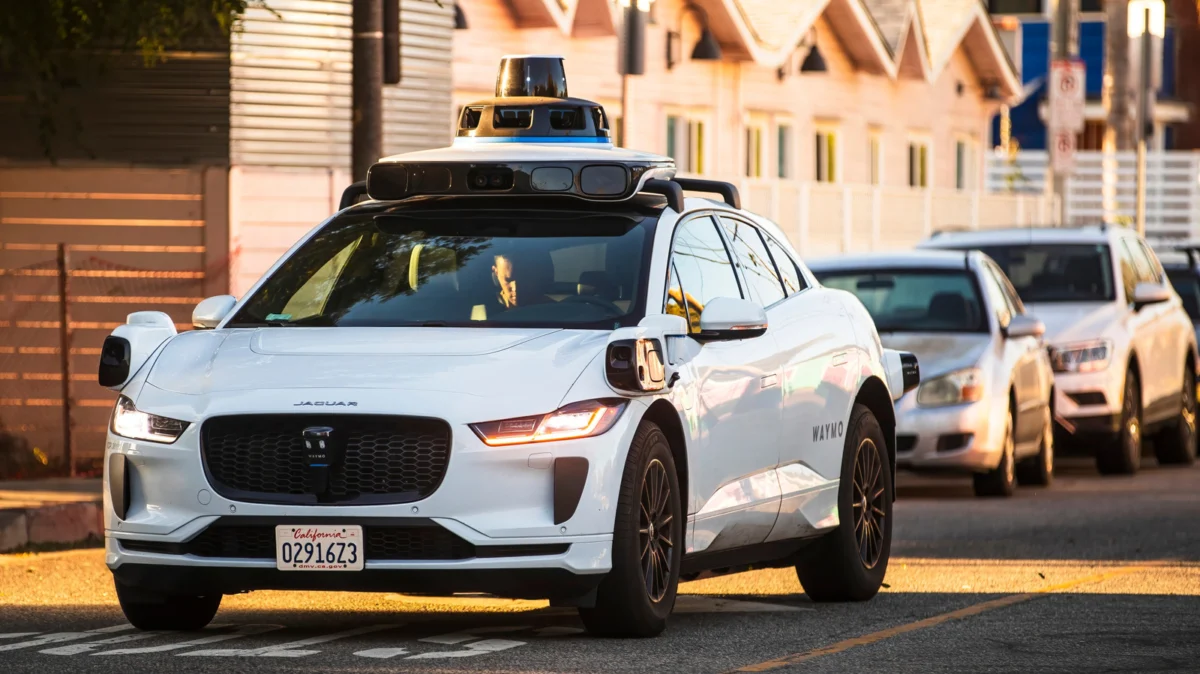
To the average commuter watching a driverless Jaguar navigate a busy metropolitan intersection, the distinction between "high automation" and "full automation" feels like a technicality. When a vehicle executes turns, yields to pedestrians, and navigates complex traffic flows without human intervention, it is easy to assume that the industry has reached the finish line of autonomous vehicle (AV) development. However, industry insiders and engineers know that we are not yet at the end of the road.
While companies like Waymo have successfully normalized the presence of "robotaxis" on public streets, these vehicles operate strictly under the classification of SAE Level 4. The journey to Level 5—a vehicle capable of driving anywhere, in any condition, at any time—remains one of the most formidable engineering challenges of the 21st century.
Main Facts: The Architecture of Automation
The Society of Automotive Engineers (SAE) provides the industry-standard framework for categorizing vehicle automation, consisting of six levels, ranging from 0 to 5. Understanding where Waymo and its contemporaries sit requires a clear grasp of these definitions.
- Levels 0–2: These represent various forms of driver assistance. At Level 0, the human is fully responsible. Levels 1 and 2 involve features like adaptive cruise control or lane-centering, but the driver must remain engaged and attentive at all times.
- Level 3: Often called "conditional automation," this is the gray area where the vehicle can handle the driving task under specific conditions, but a human driver must be ready to take control when the system requests it.
- Level 4: Known as "high automation," this is where Waymo currently operates. The system manages all aspects of driving, including steering, braking, and navigation, but only within a pre-defined "Operational Design Domain" (ODD).
- Level 5: "Full automation." This is the theoretical apex where the vehicle can operate under any conditions a human driver could, without any geographic or environmental restrictions.
The fundamental differentiator is not the sophistication of the artificial intelligence, but the presence of the ODD. A Level 4 system is a master of its specific environment; a Level 5 system is a master of the road, period.
A Chronology of the Autonomous Shift
The path to current-day autonomy has been a decade-long exercise in incrementalism.
2009–2015: The Research Phase
The modern era of self-driving began with the Google Self-Driving Car Project. During this period, the focus was on proving that LIDAR, radar, and cameras could perceive the world more accurately than the human eye.
2016–2019: The Pivot to Commercialization
Google spun off its self-driving unit into Waymo. The company began shifting from test tracks to public road trials, specifically in Phoenix, Arizona. This period saw the realization that "driving everywhere" was impossible, leading to the adoption of the ODD model.
2020–2023: The Rise of the Robotaxi
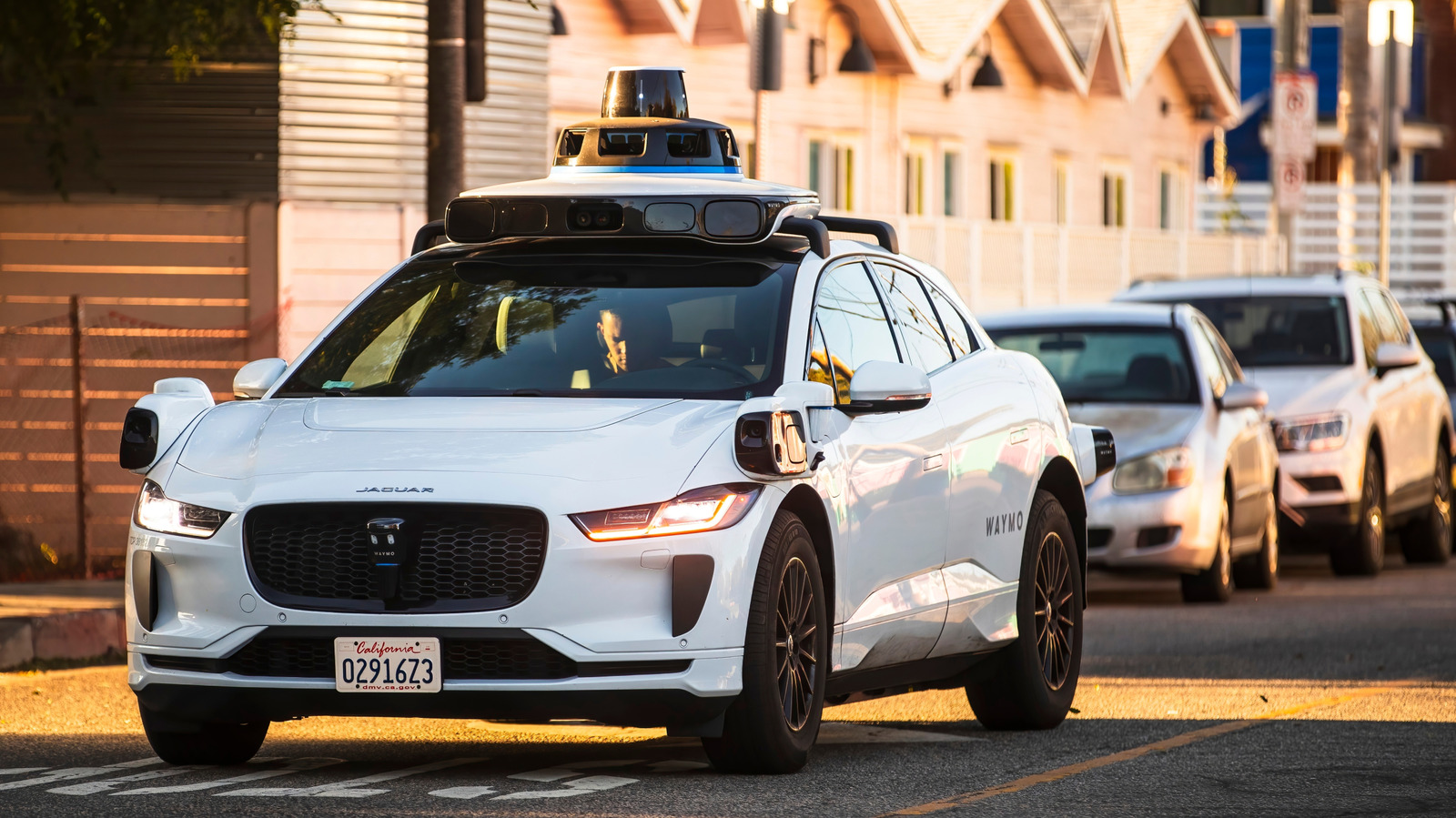
Waymo launched its fully driverless commercial service in Phoenix, followed by expansions into San Francisco, Los Angeles, and beyond. This marked the era of the "Level 4 proof-of-concept," proving that a vehicle could safely navigate urban density without a human behind the wheel.
2024–Present: The "Generalization" Struggle
The industry is currently in the phase of testing the limits of Level 4. Companies are attempting to expand their ODDs to include extreme weather, rural roads, and complex construction zones, while simultaneously grappling with the massive computational hurdles required to move toward a truly universal system.
Supporting Data: Why "Defined Boundaries" Matter
The transition from Level 4 to Level 5 is not simply a matter of adding more software code; it is a transition from "known environments" to "unknown variables."
According to SAE and the National Highway Traffic Safety Administration (NHTSA), the ODD is the bedrock of safety. For a Level 4 system, engineers can map a city down to the centimeter. They can analyze historical weather patterns, identify high-frequency accident zones, and pre-program the vehicle to handle those specific challenges.
However, the sheer volume of "edge cases"—rare, unpredictable events—scales exponentially. In a report published in 2026, researchers noted that even with billions of miles of simulation, the "long tail" of driving scenarios remains vast. For example, while a Waymo vehicle can navigate a predictable sun-drenched street in Phoenix with near-perfect reliability, a sudden, localized flash flood or an unmapped, multi-day road construction detour requires a level of human-like contextual reasoning that current machine learning models are still struggling to replicate.
Official Responses and Industry Stance
The major players, including Waymo, have been notably cautious about claiming "Level 5" status. In their public research disclosures, Waymo emphasizes that their mission is to provide the "World’s Most Experienced Driver." Their focus is on rigorous validation within their service areas rather than promising a "go-anywhere" vehicle.
The NHTSA has maintained a neutral but observant stance. Their official guidance reinforces that there is no regulatory shortcut to Level 5. They highlight that the safety of autonomous vehicles must be proven through standardized testing protocols, which are notoriously difficult to design for Level 5 because the environment is, by definition, undefined.
"We are building systems that prioritize safety above all else," a Waymo representative stated in a recent forum on autonomous systems. "Our growth strategy is focused on expanding our ODD, not skipping the foundational work required to ensure our systems are safer than human drivers in every environment they operate in."
The Implications of the Final Leap
The implications of remaining at Level 4 versus reaching Level 5 are profound for the future of transportation and urban planning.
Economic and Infrastructure Implications
If we remain in a Level 4 world, our cities will likely be partitioned into "AV-friendly zones." This means infrastructure investment—such as high-definition mapping and V2I (Vehicle-to-Infrastructure) communication—will be concentrated in dense, high-revenue urban areas. This creates a "digital divide" in transportation access.
Safety and Ethics
The "trolley problem" and other ethical dilemmas become far more complex at Level 5. A Level 4 system is trained for a specific area, allowing for a concentrated set of ethical guidelines. A Level 5 system, which must navigate every country, culture, and driving style, faces a much broader set of moral ambiguities. How does a car react to a hand signal from a traffic officer in rural India versus a stop sign in suburban America?
The Future of Ownership
The goal of Level 5 is the "mobility as a service" utopia: the end of private car ownership. If a vehicle can drive anywhere, you never need to own one; you simply summon a pod, and it arrives. While this is the long-term vision, the reality of Level 4 means that for the foreseeable future, personal car ownership will remain necessary for those living outside of the "robotaxi" service zones.
Conclusion: The Horizon of Automation
Is Level 5 a pipe dream? Not necessarily. But it is a destination that requires a fundamental breakthrough in AI reasoning. We are currently in the age of "specialized intelligence," where machines are incredibly adept at solving defined problems. Level 5 requires "general intelligence," the ability to adapt to the unexpected without prior data.
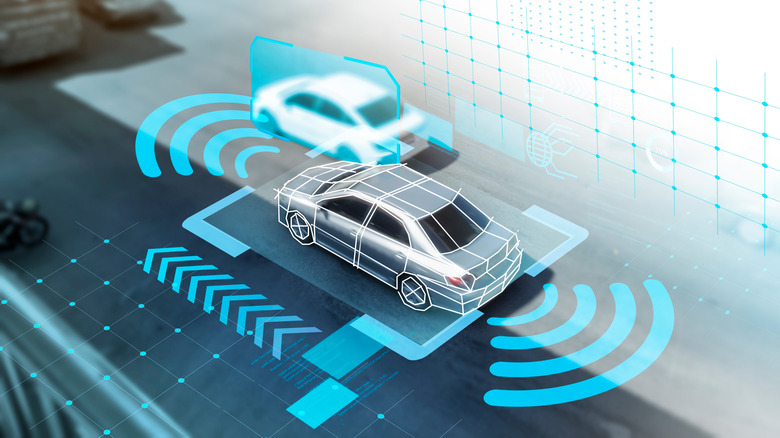
For now, the distinction between Level 4 and Level 5 is the most important boundary in the tech world. As Waymo and its peers continue to push the edges of their ODDs, they are not just improving a product; they are mapping the limits of what machines can do. Whether we reach Level 5 in five years or fifty, the shift from human-piloted vehicles to autonomous transport remains the most significant change in human mobility since the invention of the internal combustion engine. The journey is far from over, but the road ahead is being paved one "defined condition" at a time.