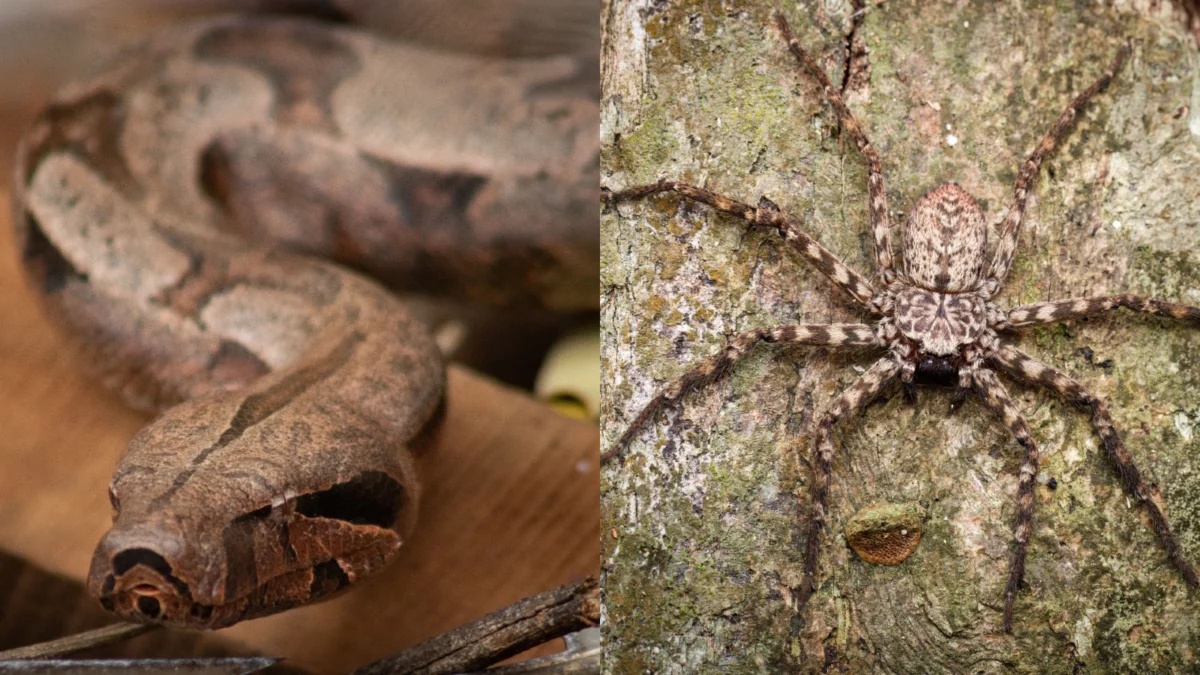
For most residents of Queensland, Australia, the sight of a seven-foot snake inside a private bedroom would be the pinnacle of a harrowing afternoon. However, for Stuart McKenzie, a veteran professional with the renowned Sunshine Coast Snake Catchers, a routine call to remove a carpet python recently transformed into a double-header of wildlife relocation that tested his composure and expertise.
The incident, which has since gone viral due to the sheer size of the creatures involved, serves as a vivid reminder of the unique challenges faced by those living in the “Sunshine State,” where the boundary between human civilization and the rugged Australian bush remains perpetually blurred.
Main Facts: A Room Divided by Predators
The call originated from a residential home in Queensland, where a startled occupant discovered an uninvited guest coiled within their sleeping quarters. Upon identifying the intruder as a substantial carpet python, the resident took the prudent step of closing the bedroom door and retreating to a safe distance before contacting local experts.
When McKenzie arrived, he anticipated a standard extraction. His mission was simple: locate the serpent, safely secure it, and return it to the wild. What he did not expect, however, was to be greeted by a second, equally formidable inhabitant upon stepping into the room. Before the seven-foot python could even be addressed, McKenzie found himself staring down a Giant Huntsman spider—a specimen so large that even a professional accustomed to the dangers of the Australian wilderness described it as one of the most impressive he had encountered in his career.
The incident highlights the commonality of such encounters in Queensland, yet the presence of two high-profile, non-venomous (though intimidating) predators in one confined space underscores the sheer biodiversity that can infiltrate suburban homes.
Chronology of the Extraction
The events unfolded with the efficiency one would expect from a seasoned professional, documented in full via a video that has since captured the attention of the global public.
The Entry and the Unexpected Discovery
Upon arriving at the property, McKenzie was guided to the bedroom door. The strategy was deliberate: seal off the area to prevent the animal from retreating into wall cavities or furniture gaps. Upon entering, the team—cameras rolling—immediately scanned the perimeter. Before the python was spotted, the beam of their equipment landed on the wall, revealing a massive Giant Huntsman spider.
These arachnids are legendary in Australia, not necessarily for their lethality, but for their speed, size, and propensity for startling unsuspecting humans. This specific individual was, by any metric, a behemoth.
Managing the Arachnid
Recognizing the resident’s distress, McKenzie opted for a hands-on approach. Lacking a traditional spider-catching kit in that exact moment, he improvised. Using his own hat as a containment vessel, he carefully ushered the spider off the wall. The maneuver required steady hands and a calm demeanor, as the spider—disturbed from its resting spot—was highly active. Once the spider was securely within the brim of his hat, he carried it outside, allowing it to crawl onto a nearby leaf, thereby ensuring it could return to its natural environment without further bothering the occupants.
The Snake Extraction
With the spider safely removed, the focus shifted to the primary objective: the seven-foot carpet python. The snake had positioned itself atop a piece of bedroom furniture, appearing remarkably undisturbed by the commotion.
McKenzie utilized a specialized snake hook to gauge the animal’s temperament. Once he determined the snake was not in a defensive strike posture, he transitioned to using his bare hands to safely secure the reptile. The process involved a delicate balance of speed and gentleness to ensure neither the animal nor the human was injured. The python was then placed into a transport bag and moved to a vehicle for relocation.
Supporting Data: The Creatures in Question
To understand why this video garnered such widespread attention, one must look at the biological data regarding the two species involved.
The Carpet Python (Morelia spilota)
Carpet pythons are common throughout Australia and are generally considered beneficial to have in the vicinity of human habitation due to their role as natural pest controllers. They feed primarily on rodents, possums, and birds. While they are non-venomous, they are constrictors. A seven-foot specimen is well into adulthood and possesses significant muscular power. Their presence in a home usually indicates that a rodent population nearby has drawn them in, or that the home provides a warm, sheltered environment during a change in weather.
The Giant Huntsman (Heteropoda maxima)
The Giant Huntsman is often the subject of urban legends in Australia. While they are not medically significant to healthy adults—their bite is painful but not typically lethal—their leg span can reach up to 12 inches. They are hunting spiders, meaning they do not build webs to catch prey; instead, they stalk and ambush insects, cockroaches, and occasionally smaller reptiles. Their intimidating appearance, combined with their ability to move with incredible speed, makes them one of the most feared household visitors in the region.
Official Responses and Expert Perspective
Following the viral success of the video, Stuart McKenzie provided additional commentary on his experience. He emphasized that while the situation looked dramatic, both the snake and the spider were simply acting according to their instincts.
"It’s not every day you find a seven-foot snake and a massive spider in the same room," McKenzie noted in his follow-up. He stressed the importance of not panicking. "When people find these animals, the worst thing to do is try to handle them or kill them. Panic leads to accidents. By closing the door and calling a professional, the resident did exactly the right thing."
Local authorities in Queensland have echoed these sentiments, reminding the public that during warmer months, snakes are more active. Wildlife relocation services are essential infrastructure in these areas, acting as a buffer between the natural expansion of urban sprawl and the wildlife that has called the region home for millennia.
Implications: Coexistence in the Modern Australian Landscape
The viral nature of this incident raises broader questions about how humans and wildlife coexist in an era of rapid urban development.
Urban Expansion and Wildlife Conflict
As residential areas expand into previously undeveloped bushland, encounters with wildlife are statistically bound to increase. The "Sunshine Coast" region is particularly susceptible to this, given its lush environment and high levels of biodiversity. The incident serves as a case study in effective coexistence: the resident’s adherence to safety protocols prevented a dangerous physical confrontation, and the professional intervention ensured the animals were not harmed.
The Role of Education
Educating the public remains the most effective tool in mitigating fear. By documenting these events, professionals like McKenzie are helping to demystify creatures that are often unfairly maligned. The narrative shift—from "pest removal" to "wildlife relocation"—is critical. It acknowledges that these animals are not invaders, but rather native inhabitants of the ecosystem that humans have moved into.
Future Considerations
Moving forward, local councils and wildlife organizations are encouraging homeowners to take preventative measures. Simple actions—such as clearing woodpiles, ensuring that screen doors are properly fitted, and keeping potential rodent food sources (like pet food) secured—can significantly reduce the likelihood of attracting both spiders and snakes into the home.
In conclusion, while the sight of a massive spider and a seven-foot python in one bedroom is undoubtedly the stuff of nightmares for some, it remains a testament to the resilience of Australia’s wildlife. The calm, professional handling of the situation serves as a blueprint for how residents can handle these inevitable, albeit startling, brushes with nature. Through patience, respect for the animals, and the intervention of skilled professionals, the inhabitants of Queensland continue to navigate the unique challenges of living alongside some of the world’s most impressive, and misunderstood, creatures.