
 Asep Darmawan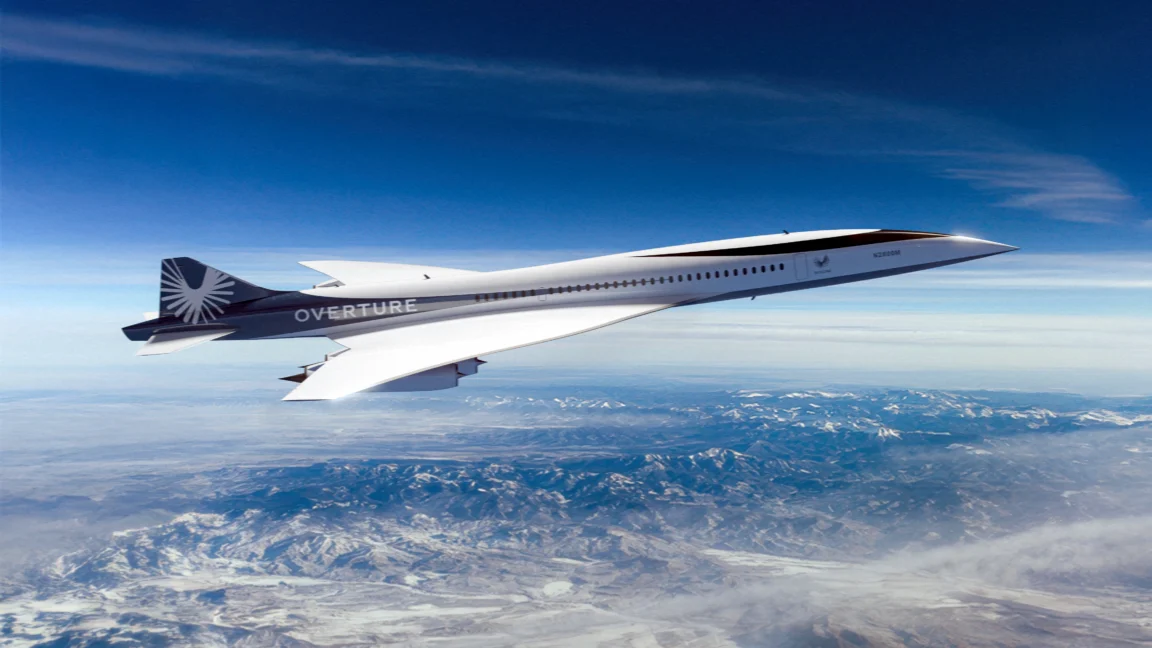
The dream of commercial supersonic flight—once the crown jewel of aviation—has remained largely grounded since the retirement of the Concorde in 2003. However, a convergence of legislative action, experimental engineering, and private-sector ambition is pushing the industry toward a long-awaited renaissance. As the Federal Aviation Administration (FAA) navigates the complex task of drafting noise regulations, the future of supersonic travel hinges on a delicate balance: satisfying regulatory safety standards while proving that the technology is economically viable.
Main Facts: The Regulatory and Technological Landscape
At the heart of the current discourse is the FAA’s proposed regulatory framework for overland supersonic flight. Critics, including industry observers and some lawmakers, argue that the current proposals lack the necessary rigor to balance innovation with public impact.
"I’m honestly surprised that the FAA would propose a rule this weak," remarked Rutherford, a vocal critic of the current draft. This skepticism underscores a broader tension between the desire to revitalize high-speed travel and the agency’s mandate to protect communities from noise pollution.
Parallel to the FAA’s rulemaking, Congress is driving the Supersonic Aviation Modernization Act. Having passed the House of Representatives on March 24, 2026, the bill is currently awaiting a Senate vote. Its core directive is to authorize overland supersonic flight—but with a crucial caveat: supersonic operations may only occur if the aircraft is configured or operated such that no sonic boom reaches the ground. This "no-boom" mandate is the legislative cornerstone of the industry’s future, as it aims to lift the long-standing ban on supersonic flight over the continental United States.
Chronology: The Road to Modern Supersonic Flight
The history of supersonic flight is defined by technological leaps and subsequent economic failures. To understand the current climate, one must view the timeline of progress:
- 1976–2003: The Concorde era defined high-speed transatlantic travel, slashing flight times between New York and London to under three hours. Despite its speed, it was plagued by high fuel consumption and exorbitant development costs—estimated at over $2.8 billion—that were heavily subsidized by the UK and French governments.
- 2020s (Early): Boom Supersonic emerges as a major player, securing interest from major carriers including American Airlines, Japan Airlines, and United Airlines.
- March 2026: The House of Representatives passes the Supersonic Aviation Modernization Act, moving the needle on domestic overland flight permissions.
- June 2026: NASA’s X-59 "Quesst" program gains momentum, with high-profile tests demonstrating the feasibility of reducing the sonic boom to a "sonic thump."
- Late 2026: Boom Supersonic pivots its operational strategy, announcing a venture into natural gas turbines for AI data centers to secure capital for its aviation ambitions.
- Mid-2027 (Target): The FAA plans to finalize its noise regulations for overland supersonic flight, with additional standards for takeoff and landing expected to follow.
- 2029 (Target): Boom Supersonic aims to deliver its first Overture airliner to commercial customers.
Supporting Data: The Science of the "Sonic Thump"
While legislation dictates the when, engineering dictates the how. NASA’s Lockheed Martin X-59 Quesst mission is the industry’s most critical testing ground. The aircraft, designed with an elongated, needle-like nose, is specifically engineered to manipulate shockwaves to prevent them from coalescing into a traditional sonic boom.
NASA researchers utilize "Perceived Levels of Decibels" (PLdB) to measure sound. Their target is 75 PLdB—a sound equivalent to a car door slamming from 20 feet away. This is a revolutionary departure from the jarring, window-rattling booms of the Concorde era. NASA’s flight tests over various U.S. cities are intended to provide the FAA with the empirical data needed to quantify "community acceptance." This data will be instrumental in finalizing regulations that differentiate between a "nuisance" and an "acceptable technological byproduct."
Official Responses and Industry Skepticism
The path to commercial viability is not without its detractors. While Boom Supersonic remains the face of the movement, the company has faced intense scrutiny regarding its financial stability.
In a surprising strategic pivot, Boom has recently focused on developing natural gas turbines to power the massive energy requirements of AI data centers. CEO Blake Scholl has argued that this diversification is a necessity, with revenue from the power sector intended to subsidize the immense R&D costs of the Overture airliner.
However, the industry remains divided. United Airlines CEO Scott Kirby has publicly characterized the odds of the Overture project’s success as a "50/50" proposition, reflecting the deep uncertainty among major stakeholders. The skepticism is rooted in the hard lessons of the Concorde: speed is not enough if the operating costs, fuel consumption, and environmental footprint remain prohibitive.
Implications: The Future of Global Connectivity
The successful legalization of quieter overland supersonic flight would represent a paradigm shift in global commerce and travel. If the FAA and international civil aviation authorities reach a consensus, the travel time between major global hubs could be halved. However, the implications are as much about economics as they are about engineering.
1. Environmental and Economic Hurdles
The "Concorde lesson" remains the industry’s ghost. Supersonic flight is inherently fuel-intensive. For the Overture or any successor to succeed, it must demonstrate that it can operate with a carbon footprint and fuel efficiency that aligns with modern ESG (Environmental, Social, and Governance) mandates.
2. The AI-Aviation Nexus
Boom’s decision to build turbines for AI data centers is a unique development in aviation history. By becoming a multi-industry player, Boom is essentially attempting to "cross-subsidize" its way into the aviation market. If successful, this model could become a blueprint for high-tech aerospace firms struggling to raise the billions required for clean-sheet aircraft development.
3. The Regulatory "Final Mile"
The FAA’s work in the next 12 to 18 months will be the most significant regulatory hurdle the industry has faced in decades. By mid-2027, the agency must deliver a framework that addresses:
- Overland Noise Standards: Codifying what constitutes an "acceptable" sound profile.
- Takeoff and Landing Regulations: Addressing the unique noise profiles created by high-thrust supersonic engines during the most critical phases of flight.
Conclusion
The resurgence of supersonic flight is no longer a matter of mere engineering possibility; it is a complex negotiation between federal oversight, private equity, and public tolerance for noise. While NASA’s X-59 provides a promising technological path forward, the commercial viability of planes like the Overture remains an open question.
As Congress debates the Supersonic Aviation Modernization Act and the FAA finalizes its noise standards, the industry stands at a crossroads. The dream of a three-hour flight across the Atlantic is within reach, but for that dream to become a daily reality, the industry must prove that it has learned from the failures of the past. The next few years will determine whether we are truly entering a new golden age of flight, or if the "sonic thump" will remain a scientific curiosity rather than a commercial standard.


 Raul Delapena Setiawan
 Neng Nana




