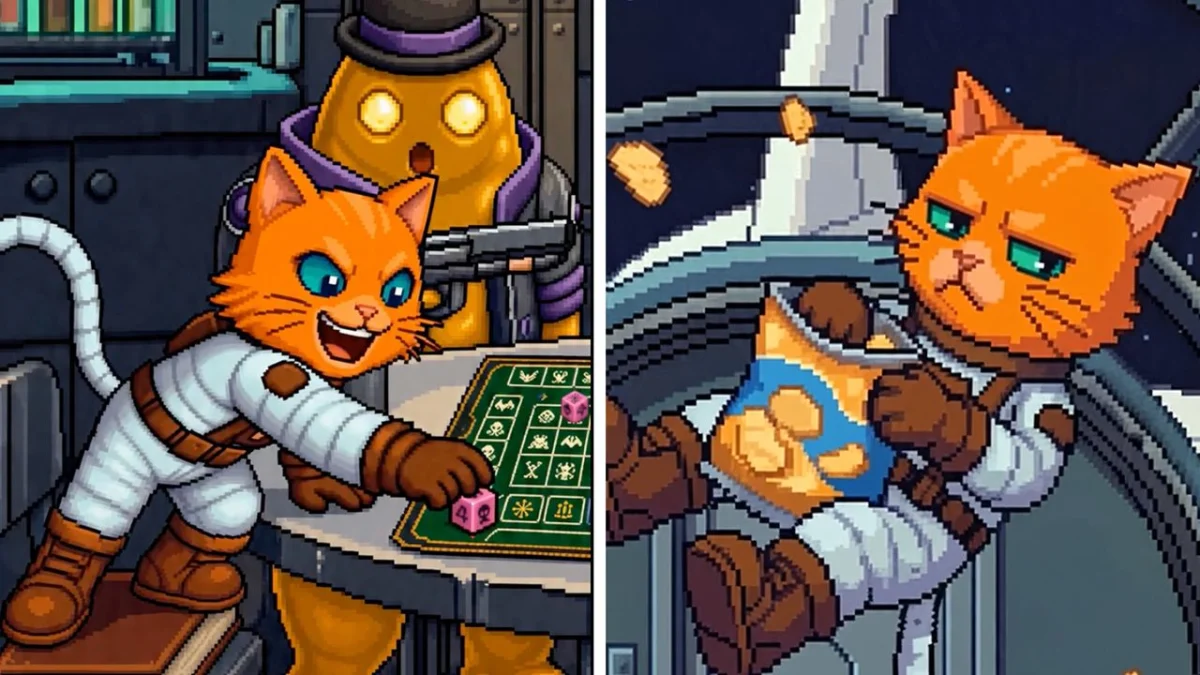
In the rapidly evolving landscape of independent game development, the challenge of expanding an Intellectual Property (IP) beyond its original medium has historically been a hurdle reserved for well-funded studios. For the solo developer, the transition from a 2D pixel-art game to a serialized animated production typically requires a team of dozens and a budget to match. However, London-based developer HaZ Dulull, a vocal skeptic-turned-adopter of artificial intelligence, has charted a new course. By utilizing Nura Studios’ "Showcraft" platform, Dulull has successfully transformed his indie title Astro Burn into a vertical-format animated mini-series, proving that AI, when used as a surgical tool rather than a replacement for creativity, can bridge the gap between niche gaming and broader multimedia storytelling.
The Evolution of an Indie Visionary
HaZ Dulull is no stranger to pushing the boundaries of independent production. A seasoned creator, he previously made headlines by leveraging Unreal Engine to produce Max Beyond, a CG-animated film that demonstrated how real-time rendering could empower smaller creators to achieve cinematic quality on a fraction of the traditional budget.
Despite his track record with high-end technology, Dulull approached the current wave of generative AI with a healthy dose of professional skepticism. His concerns were rooted in the common industry anxieties: the dilution of artistic identity and the potential for "soulless" automation to overwrite the meticulous, hand-crafted aesthetic of his work. His pivot came not from a desire to automate the creative process, but from a pragmatic need to scale his IP, Astro Burn, for social media platforms like TikTok, YouTube Shorts, and Instagram.
A Chronology of the Astro Burn Adaptation
The development of the Astro Burn mini-series was a rapid, iterative sprint. Working alongside Nura Studios writer-director Abe Scheuermann, the duo managed to conceptualize, produce, and finalize 10 episodes of vertical animation in roughly five weeks—a pace that would have been physically impossible under conventional animation pipelines.
The Production Timeline:
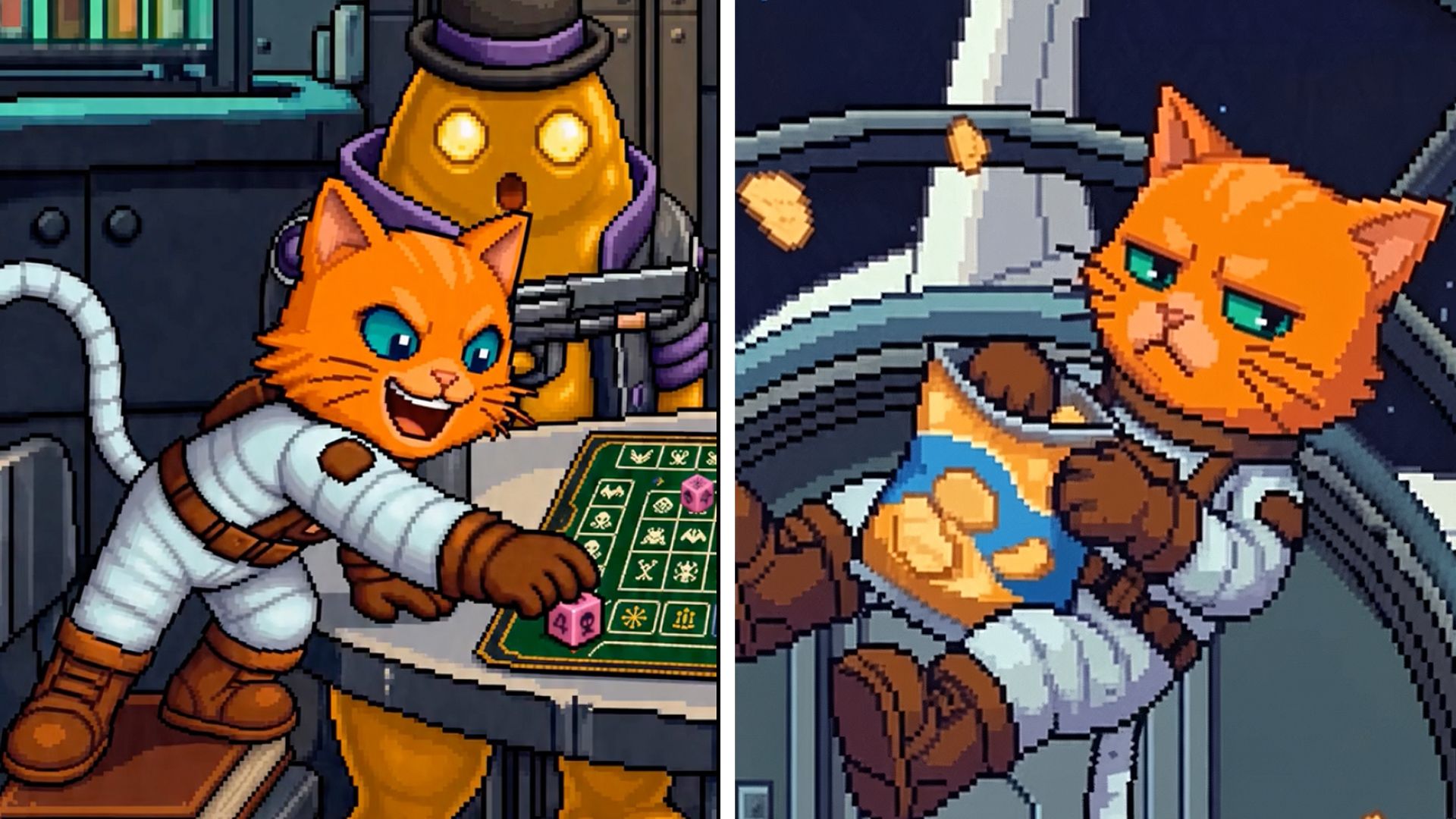
- Week 1: Model Calibration and Training. Dulull prioritized the protection of the game’s unique visual identity. Rather than relying on public or broad-base AI models, he insisted on a "locked-down" approach. The AI was trained exclusively on the original character sprites, environment assets, and artwork from the Astro Burn game.
- Week 2-3: Scripting and Storyboarding. With the model calibrated, Scheuermann focused on translating the game’s mechanics into narrative beats suitable for vertical video.
- Week 4: Execution and Refinement. The team utilized the Showcraft platform to generate animation frames, which were then subjected to rigorous human oversight. Dulull provided annotated notes on lighting, pacing, and character consistency, receiving updates within hours.
- Week 5: Post-Production and Delivery. The final stage involved integrating human voice performances, licensing music through Epidemic Sound, and performing manual cleanup to ensure the final output maintained a cohesive "pixel-art-come-to-life" aesthetic.
The Human Core: Why the AI Didn’t Do Everything
A critical component of this project was the intentional decision to exclude AI from elements that require emotional resonance. The production was human-led in every area that mattered for narrative depth.
The character "Astro" is voiced by Graziela Larroca, while the character "AL" is voiced by Elvis Deane. Supporting roles were filled by Brian Ulrich. For Dulull and Scheuermann, the choice of human voice talent was non-negotiable.
"I strongly prefer human voice artists because they bring nuances to a performance that are almost entirely absent from AI-generated voices," Scheuermann explains. "The same philosophy applies to music." By isolating the AI’s utility to the visual generation of assets—and keeping the "soul" of the performance in the hands of human actors—the team avoided the "uncanny valley" effect that plagues many AI-only projects.
Supporting Data and Technical Efficacy
The efficiency of this project highlights a significant shift in production economics. Traditionally, an animated series of this length would require a team of animators, storyboard artists, and compositors working over several months. By using Showcraft to handle the heavy lifting of frame generation and consistency, the team of five (the creator, the director, and three actors) achieved a level of polish that would typically require a significantly larger budget and a dedicated production house.
The responsiveness of the system was perhaps its most compelling feature. Dulull noted that the ability to send feedback on specific frames and receive iterations within hours allowed for a "director-led" experience that is rare in animation. Instead of waiting weeks for a revision from a remote studio, he could steer the creative direction in real-time, effectively functioning as both the producer and the primary visual editor.
Official Perspectives: The Philosophy of "Tool, Not Master"
The central argument emerging from this case study is that AI is a medium-agnostic tool that succeeds only when a strong creative vision is already in place.
"AI can’t and won’t tell your story. That’s your job," Dulull states firmly. He emphasizes that the project worked precisely because he was not asking the AI to "prompt random ideas." Instead, he treated the technology as a sophisticated brush—one that required a master painter to wield it correctly.
For Nura Studios, this project serves as a showcase for their Showcraft platform, positioning it not as an "idea generator," but as a professional-grade pipeline tool. By allowing creators to train models on their own IP, the platform addresses the most significant legal and creative concern for independent artists: the risk of IP contamination or copyright infringement.
Implications for the Future of IP Expansion
The success of the Astro Burn experiment has profound implications for the gaming and entertainment industries:
1. The Democratization of Transmedia
Indie developers have long struggled to move their games into television or short-form content due to the prohibitive cost of traditional animation. This model lowers the barrier to entry, allowing solo creators to build "multiverses" around their games without needing external funding or publishing deals.
2. A New Definition of "Indie"
The definition of an "indie" production is expanding. We are entering an era where a single person can oversee the production of a multi-platform media franchise. As long as the creator maintains ownership of their assets and uses them to "train" their own tools, the risk of losing the artistic "voice" is mitigated.
3. The Shift in Skill Sets
The role of the director is shifting. Future creators will need to be part-animator, part-data curator, and part-creative director. The ability to "curate" AI output—to select the best frames, provide the right annotations, and guide the model—will become as essential as the ability to draw or write.
4. Legal and Ethical Consolidation
Dulull’s insistence on "locked-down" models serves as a blueprint for the industry. As copyright laws around AI-generated content continue to be litigated, the practice of training models exclusively on one’s own, original, and licensed assets will likely become the gold standard for professional creators looking to avoid legal headaches.
Conclusion
HaZ Dulull’s experiment with Astro Burn is a testament to the idea that technology, no matter how advanced, remains a servant to the creator. By resisting the urge to let the AI "take the wheel" and instead treating it as a highly responsive, specialized assistant, he has created a roadmap for how indie developers can expand their reach in a crowded digital marketplace.
As the Astro Burn series rolls out across social platforms, it stands as more than just a promotional tool for the game currently available on Steam. It is a proof-of-concept for a new era of storytelling—one where the vision of a single artist can be scaled to reach millions, provided they have the discipline to lead the machine rather than follow it.