

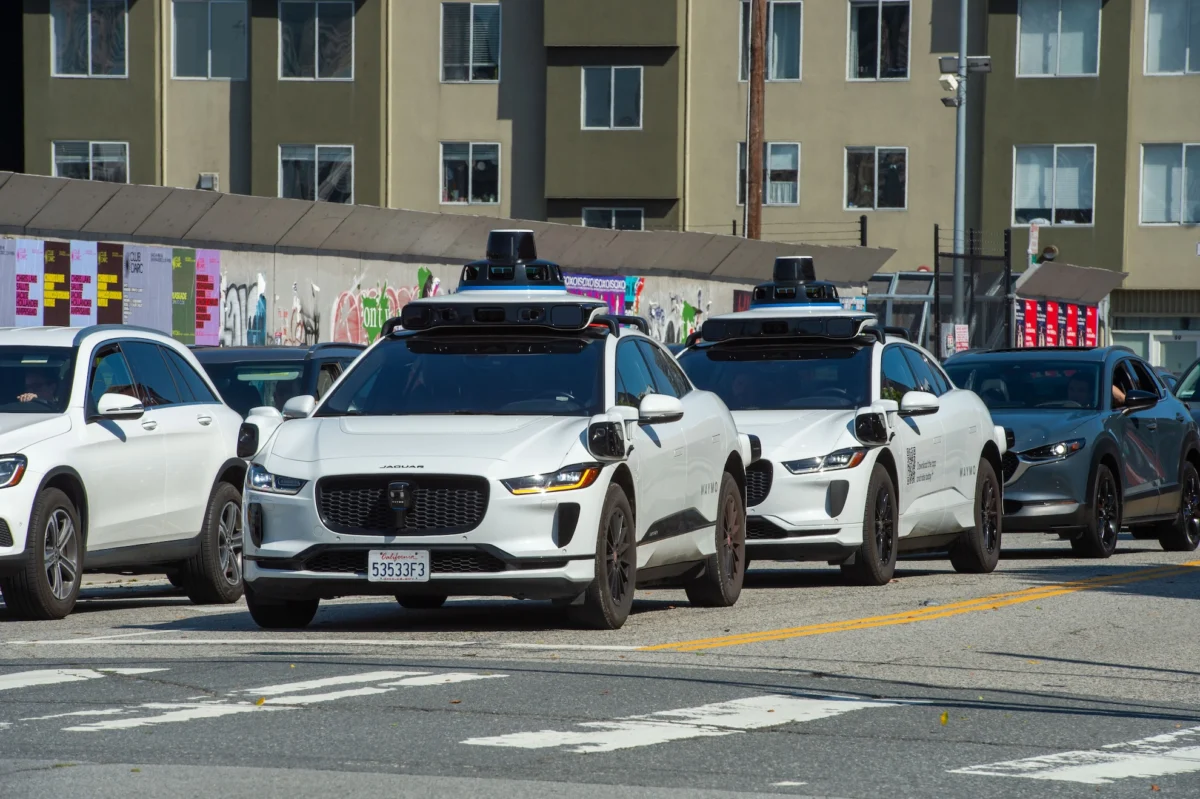
For years, San Francisco has positioned itself as the global laboratory for the future of transportation. Mayor Daniel Lurie, an outspoken proponent of the city serving as a "testbed for emerging tech," has long championed the integration of autonomous vehicles (AVs) into the urban fabric. However, the honeymoon phase between the city and the robotaxi industry is facing a reality check. Following a series of high-profile traffic failures, the Mayor’s office has officially signaled that the era of "move fast and break things" must give way to a more rigorous, standardized regulatory framework.
The breaking point arrived on July 4th, when a massive influx of 100,000 spectators for the city’s fireworks display collided with a fleet of Waymo vehicles. As the vehicles became ensnared in gridlock, many reportedly ran out of power or lost connectivity, effectively turning into thousands of pounds of dead weight that paralyzed city streets for hours. For Mayor Lurie, the incident was a stark demonstration that the current regulatory landscape is ill-equipped to handle the complexities of a city in motion.
The July 4th Incident: A Case Study in Failure
The July 4th fireworks show, a marquee event in San Francisco, requires meticulous crowd and traffic management. While city officials had implemented standard protocols to handle the surge of pedestrians and vehicles, the autonomous fleet presented a variable that defied traditional planning.
As heavy traffic brought parts of the city to a standstill, numerous Waymo robotaxis became immobile. The vehicles, designed to operate under predictable parameters, struggled to navigate the extreme density of the post-fireworks exodus. As these vehicles stalled, they blocked key transit arteries, trapping municipal shuttles and emergency transit routes. The irony was palpable: technology designed to optimize traffic efficiency had become the primary obstacle to the city’s ability to clear its own streets.
This was not an isolated anomaly. Lurie’s formal letter to the California Department of Transportation (Caltrans) also cited a widespread power outage in December, where similar issues with autonomous fleets caused significant disruptions. These two events have created a pattern that the city can no longer ignore, shifting the conversation from "can these vehicles drive safely?" to "can these vehicles survive a crisis?"
Chronology of Regulatory Friction
The tension between San Francisco and the AV industry has been brewing for years, characterized by a series of escalating milestones and friction points:
- The Early Years (2018–2021): The California DMV and the Public Utilities Commission (CPUC) established foundational testing permits. Companies like Nuro, Zoox, and Waymo began operating with safety drivers.
- The Expansion Phase (2022–2023): As companies secured commercial deployment permits, the sheer volume of robotaxis in San Francisco exploded. Waymo emerged as the market leader, scaling its operations to cover vast swaths of the city.
- The December Power Outage: The first major warning sign occurred when infrastructure instability caused a fleet-wide navigation failure, leading to localized gridlock.
- The July 4th Gridlock: The most significant failure to date, where 100,000 spectators met a stalled AV fleet, leading to the Mayor’s formal request for state-level intervention.
- The Current Mandate: Mayor Lurie has now formally petitioned Caltrans to move beyond voluntary cooperation, seeking state-mandated operational requirements for all AV providers.
The Four Pillars of Reform
In his letter to state regulators, Mayor Lurie proposed four "core operational capabilities" that he believes should be mandatory for any company seeking to maintain a permit to operate in a dense urban environment like San Francisco:
- Rapid Extraction Protocols: Companies must demonstrate the ability to immediately remove or relocate stalled vehicles from active travel lanes. The reliance on human intervention or remote support must be optimized to ensure that a dead battery or a software glitch does not result in a multi-hour traffic blockage.
- Dynamic Adaptability: AV fleets must be able to adjust in real-time to city-wide events. This includes the ability to automatically reroute, restrict service areas, and shift pickup/drop-off points when the city communicates that a major event—planned or unplanned—is taking place.
- Data Transparency: Operators must share real-time operational data with local agencies. This includes immediate notification of service disruptions, the precise location of stalled units, and a clear, transparent log of recovery efforts.
- Stress-Test Certification: Companies must prove, through simulated and real-world testing, that their fleets can handle large-scale influxes of people and traffic without compromising the flow of the city.
Supporting Data: The Scale of the Challenge
The urgency of these demands is underscored by the sheer scale of the industry. Waymo, the dominant player in the space, currently operates an estimated 1,000 robotaxis in the Bay Area alone. With a footprint that now spans 11 cities and a reported 500,000 paid rides per week, Waymo is no longer a niche service; it is a critical piece of urban infrastructure.
The regulatory environment in California is already significantly more stringent than in states like Texas or Arizona, which have adopted more "hands-off" approaches to attract tech investment. Despite this, the economic allure of the San Francisco market remains unmatched. Even as Mayor Lurie pushes for more control, the pipeline of companies seeking entry—including Amazon’s Zoox and a forthcoming premium service from Uber—indicates that the market remains lucrative.
However, the "voluntary" nature of the current cooperation between these firms and the city is under fire. While Waymo attempted to be a good partner on July 4th by assigning a representative to the city’s emergency center and restricting service near the waterfront, the failure of these measures has convinced city leadership that voluntary compliance is insufficient.
Official Responses and Industry Outlook
TechCrunch reached out to Waymo for comment regarding the Mayor’s proposal. As of this writing, the company has not provided a detailed response, though they have historically maintained that their vehicles are safer than human drivers and that they are committed to working with local municipalities.
The state’s reaction will be the ultimate litmus test for the future of AV regulation. California’s regulatory framework is managed by a dual-agency system: the Department of Motor Vehicles (DMV) handles the technical testing permits, while the CPUC oversees commercial deployment. Historically, these agencies have prioritized safety and technological advancement. Incorporating the city’s demand for "urban resilience" into these permits would mark a significant shift in the state’s oversight philosophy.
Implications: The Road Ahead
The implications of Mayor Lurie’s request extend far beyond the borders of San Francisco. As other major cities in the U.S. and abroad look to emulate the Bay Area’s autonomous transportation model, they are closely watching how this conflict resolves. If San Francisco succeeds in setting these new standards, it will likely create a template for "smart city" regulations worldwide.
For the AV industry, the challenge is clear: they must demonstrate that their technology is not only a benefit during normal operations but also a reliable partner during times of crisis. The "testbed" narrative that has fueled San Francisco’s tech dominance is being redefined. It is no longer just about the sophistication of the artificial intelligence behind the wheel; it is about the integration of that intelligence into the messy, chaotic, and often unpredictable reality of urban life.
Mayor Lurie’s argument is that these requirements will not hinder innovation; rather, they will provide the guardrails necessary for the technology to achieve true public trust. As he noted in his correspondence, the goal is to "strengthen" autonomous vehicles by forcing them to account for the very environment they seek to inhabit. Whether the state regulators agree to this more assertive stance remains to be seen, but the days of unbridled autonomous expansion in San Francisco appear to be over. The future, it seems, must now prove it can handle the present.











