Evan Lee Salim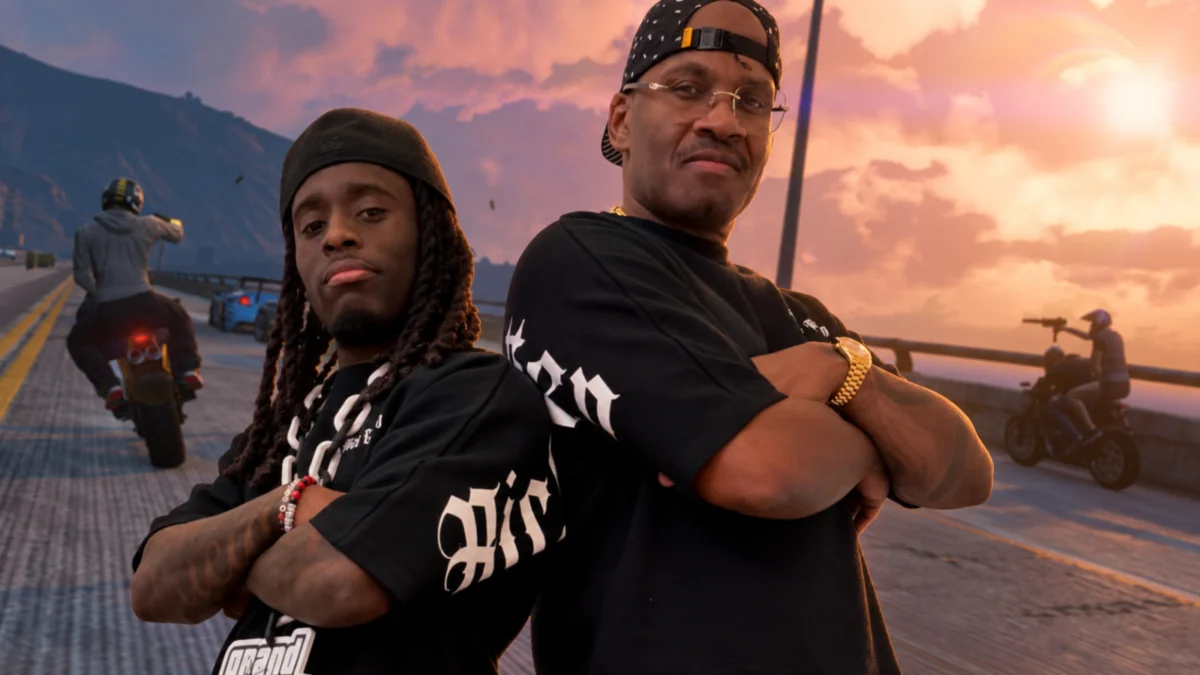
The intersection of digital fame and real-world philanthropy has long been a complex landscape, but a recent, highly publicized falling out between Grand Theft Auto V icon Shawn Fonteno and streaming superstar Kai Cenat has brought the ethical responsibilities of influencers under intense scrutiny. Fonteno, best known for his iconic portrayal of Franklin Clinton in Rockstar Games’ blockbuster title, has officially announced that he will no longer collaborate with the Twitch titan, citing a broken promise to a child living in impoverished conditions.
The controversy stems from an interaction during an excursion in Los Angeles, where the two media figures visited a family living in dire circumstances. According to Fonteno, the failure of the streaming star to honor a commitment made to a young fan has left a lasting rift that the actor deems irreparable.
The Chronology of the Conflict: From Mafiathon to Fallout
The professional relationship between Fonteno and Cenat initially appeared to be a meeting of minds between a seasoned veteran of the entertainment industry and the current face of streaming culture. In November 2024, Fonteno appeared on Cenat’s massive "Mafiathon 2" broadcast. During that session, the actor provided candid insights into his life before GTA 5, explaining how his own upbringing informed the authenticity of his performance as Franklin.
The chemistry between the two seemed palpable. Shortly after the Mafiathon appearance, the duo reconvened for a localized broadcast, with Fonteno acting as a guide, taking Cenat through the real-world neighborhoods in Los Angeles that served as the inspiration for the virtual streets of Los Santos. It was during this excursion that the events leading to the current fallout took place.
According to Fonteno’s account, shared during an episode of the Dope As Usual podcast, the duo visited a home housing approximately 15 people in a single-bedroom unit. During the visit, a young boy, clearly starstruck and familiar with the streamers’ influence, expressed his admiration and requested a motorcycle. Fonteno claims that Cenat, caught up in the energy of the broadcast, looked at the child and explicitly stated, "We’re going to make it happen."
For the family, this was not merely a casual comment; it was a beacon of hope. For Fonteno, who spent weeks attempting to facilitate the promise, it became a source of mounting frustration and eventual moral outrage.
The Breakdown of Communication
Following the stream, Fonteno assumed the matter would be handled with the efficiency one expects from a team of Cenat’s caliber. Estimating the cost of the motorcycle to be between $1,000 and $1,200—a negligible amount relative to the millions generated by top-tier streamers—the actor began checking in on the status of the gift as the holiday season approached.
"He just ignored me," Fonteno stated during the podcast, noting that he reached out to both Cenat and his production team repeatedly. The situation became increasingly agonizing as the young fan began reaching out to Fonteno, asking if his motorcycle was still on its way. The disparity between the child’s hopeful anticipation and the silence from the streamer’s camp proved to be the breaking point for the actor.
Unable to stomach the optics of the broken promise, Fonteno took it upon himself to resolve the issue. He eventually provided the child’s father with the funds necessary to purchase the bike personally. To date, Fonteno reports that he has received no communication from Cenat regarding the situation, nor has he been reimbursed for the funds he fronted to cover the streamer’s original pledge.
The Ethical Implications of Influencer Philanthropy
The incident has sparked a broader conversation regarding the "contentization" of charity. When streamers visit struggling families as part of a broadcast, the line between genuine altruism and "performative content" can become blurred. For many in the audience, the act of giving is a primary appeal of the creator’s personality. When that promise is made on camera and then abandoned, it carries consequences that extend beyond the individual child.

Fonteno’s critique was pointed and deeply personal: "It just hurt my heart, but it also made me more upset with him to the point he couldn’t call me no more. And then it made me upset with other streamers; like this is how y’all are, soaking all these millions and millions and millions and you have millions of fans, but you can’t cater to one kid."
This sentiment highlights a growing disillusionment within the entertainment industry regarding the accountability of digital creators. While traditional celebrities often operate under strict PR guidelines and contractual obligations, the "creator economy" is largely self-regulated. When a promise is made during an unscripted, long-form broadcast, the lack of institutional oversight means that accountability falls entirely on the creator’s own moral compass.
Personal Accountability and Public Reputation
Despite the gravity of his accusations, Fonteno was careful to frame his frustration within the context of a "teachable moment" rather than a malicious character assassination. He explicitly referred to Cenat as a "good kid," expressing a desire to avoid the inevitable internet dogpiling that follows such public disclosures.
"I don’t want y’all to harass him," Fonteno noted, emphasizing that his goal is for the streamer to reflect on the weight of his words. The actor’s hope is that the public airing of this grievance will serve as a catalyst for growth, urging Cenat to understand that in his position of influence, words carry real-world consequences that cannot be simply edited out or ignored.
For now, the bridge is burned. Fonteno has unequivocally stated, "I’ll never do another stream with him again." The betrayal of trust—both toward the family and toward Fonteno, who had vouched for the streamer’s character—has fundamentally changed their professional relationship.
Official Responses and Current Status
As of the time of writing, Kai Cenat has not issued a public statement regarding the incident. His social media channels and streams have continued to focus on his regular content schedule, leaving the allegations largely unaddressed in the public sphere.
This silence, however, is being interpreted by many as a tactical error. In the modern era of social media, silence often acts as an accelerant to controversy. With the clip of the Dope As Usual podcast circulating widely, the lack of an official response has left a vacuum filled by fan speculation and criticism.
Looking Forward: The Cost of a Promise
The fallout between Shawn Fonteno and Kai Cenat serves as a cautionary tale for the burgeoning creator economy. As streamers transition from playing video games to becoming global cultural icons, their actions carry the weight of traditional celebrities. The power dynamic inherent in a meeting between an influencer and a fan in need is extreme; the streamer holds the resources and the platform, while the fan holds the vulnerability.
If this incident is to result in any positive change, it must force a re-evaluation of how promises are made during live broadcasts. It is a reminder that while content is the primary goal of a stream, the people involved in that content are not props. They are real individuals with real needs, and for those in positions of immense wealth and influence, the cost of keeping a promise is almost always lower than the cost of breaking one.
Whether or not Kai Cenat chooses to reach out to the family, reconcile with Fonteno, or address the issue directly remains to be seen. However, the precedent set by this conflict is clear: the era of influencers being held to account by their peers is here, and the public is watching closely. For Shawn Fonteno, the lesson is one of hard-learned caution; for the fans, it is a reminder that the persona presented on screen is not always reflective of the person behind the camera.


 Lina Irawan
 Layla Zulfa