The intersection of Japanese creative intent and Western localization has once again become a flashpoint for controversy within the anime community. As the third season of the critically acclaimed series Oshi no Ko makes its debut, fans and critics have pointed to significant departures from the source material in the English subtitles provided by Sentai Filmworks. At the heart of the debate is the insertion of modern Western sociopolitical buzzwords—specifically "cancel culture" and "dogpiling"—into a script where the original Japanese text utilized more timeless, metaphorical language.
This development comes at a precarious time for the localization industry. With the looming shadow of Artificial Intelligence (AI) threatening to automate translation processes, professional localizers are under increased scrutiny. Critics argue that by prioritizing social media vernacular over the author’s original prose, localizers are inadvertently strengthening the argument for AI-driven literalism.
Main Facts: The Localization Controversy Explained
The controversy centers on the English localization of Oshi no Ko Season 3, produced by Doga Kobo and licensed by Sentai Filmworks for Western distribution. Oshi no Ko, written by Aka Akasaka and illustrated by Mengo Yokoyari, is a psychological drama that deconstructs the Japanese entertainment industry. Its themes are inherently modern, dealing with social media, parasocial relationships, and the "casting couch" culture.

However, viewers have noted that the Sentai Filmworks localization team has opted to replace Akasaka’s specific metaphors with Western internet slang. Two primary instances in the early episodes of Season 3 have been highlighted as evidence of "script doctoring" or "agenda-driven" translation:
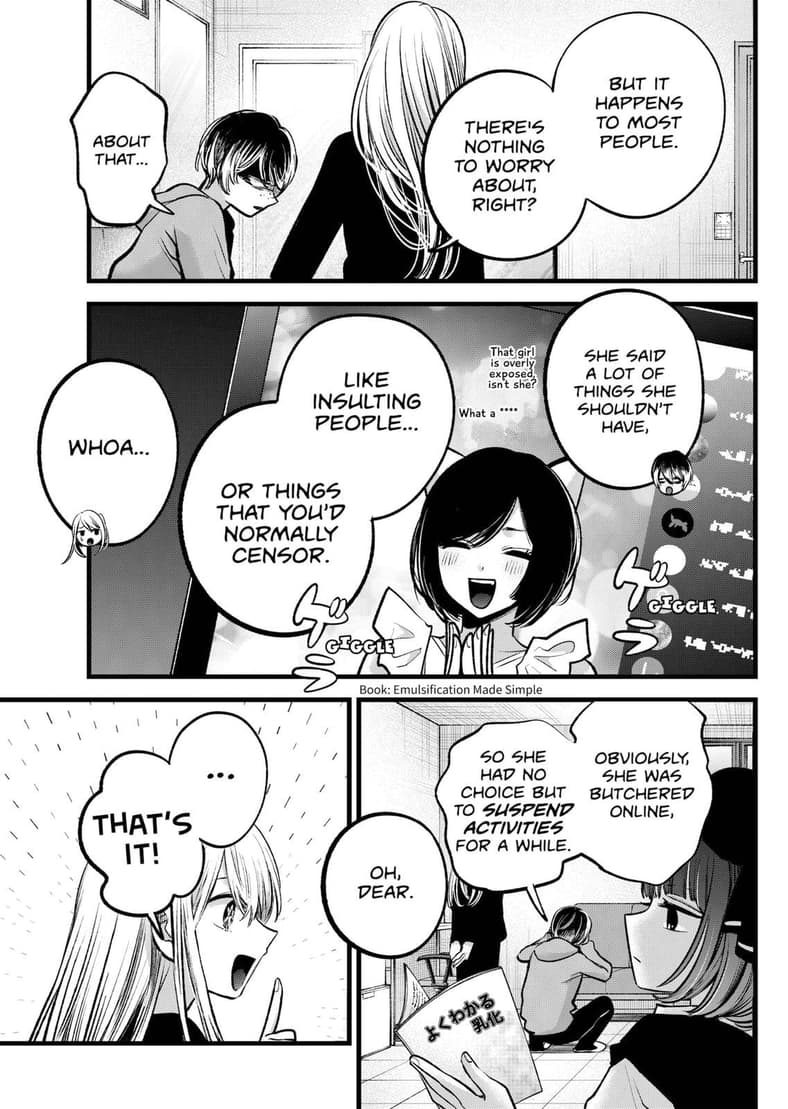
- Episode 4 ("Blind"): A dialogue regarding online lynch mobs was altered from a metaphor about "burning at the stake" to contemporary terms like "dogpiling" and "getting canceled."
- Episode 5 ("Casting"): A character’s description of being "butchered" or "slaughtered" online was replaced with the phrase "mega-cancelled."
These changes have sparked a broader discussion regarding the "faithful" translation of Japanese media versus the "adaptation" of concepts for a Western audience. While some defend the changes as making the dialogue more relatable to English speakers, others contend that it dates the work and strips it of its unique cultural and literary flavor.
Chronology of the Dispute
The tension regarding the localization of Oshi no Ko did not emerge in a vacuum. It follows a series of high-profile disputes involving other major streaming platforms and localization houses.

The Precursor: Netflix’s Blue Box
Prior to the Oshi no Ko Season 3 release, Netflix faced similar backlash for its localization of the anime Blue Box. In that instance, a character who was described as "feminine" in the Japanese script was referred to as "feminist" in the English subtitles. This sparked allegations that localizers were intentionally rewriting scripts to align with Western political ideologies rather than adhering to the character’s intended traits.
The Release of Oshi no Ko Season 3, Episode 4
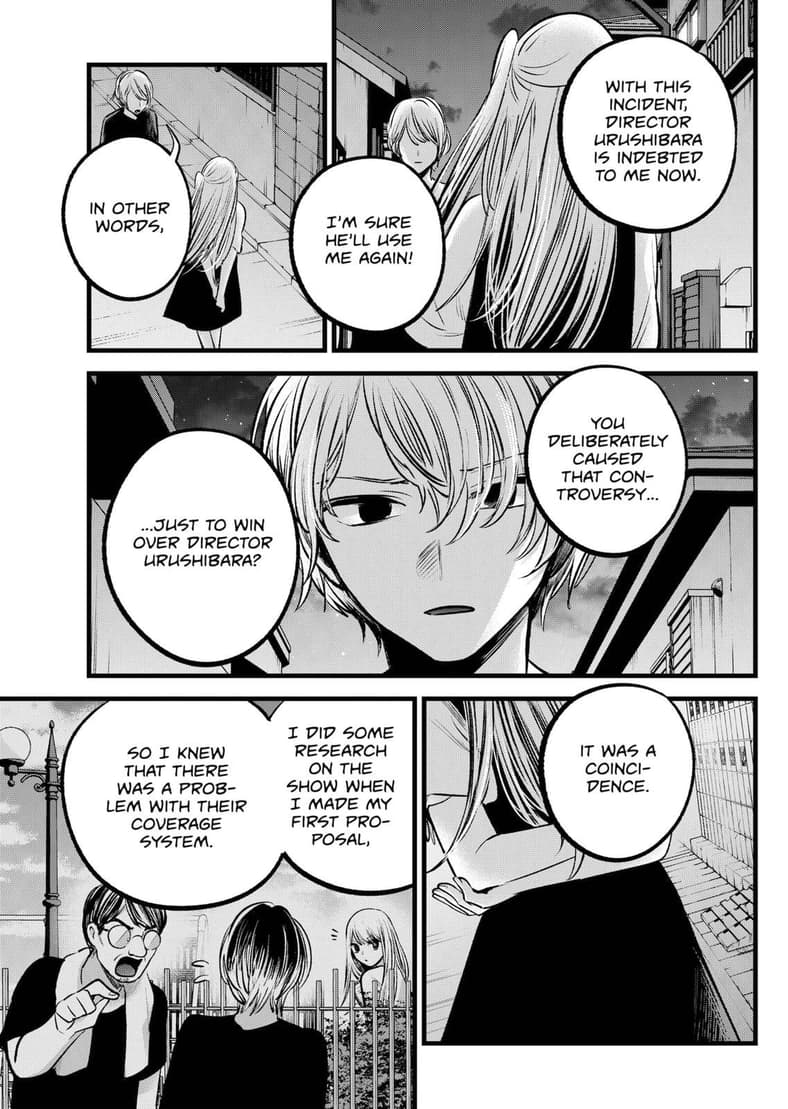
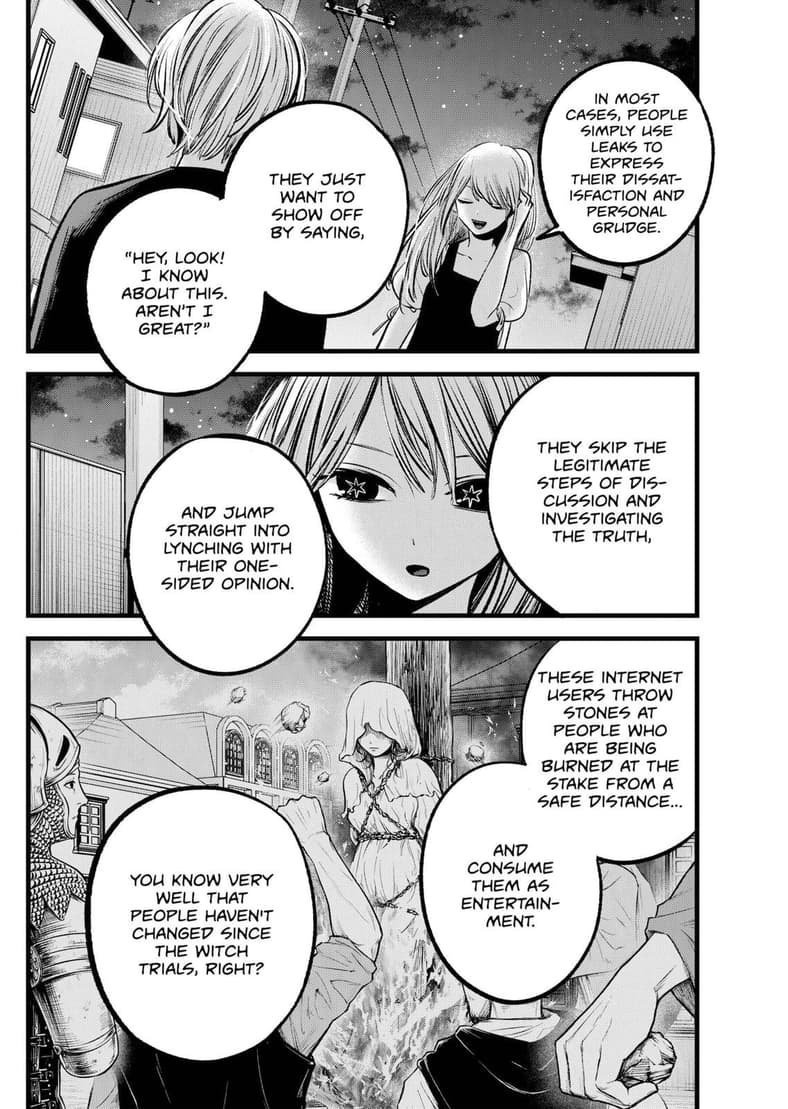
In the episode titled "Blind," the character Ruby Hoshino (voiced by Yurie Igoma) discusses the darker side of internet anonymity. In the original manga (Chapter 93, "Leak"), Aka Akasaka uses a vivid metaphor: "These internet users throw stones at people who are being burned at the stake from a safe distance and consume them as entertainment."
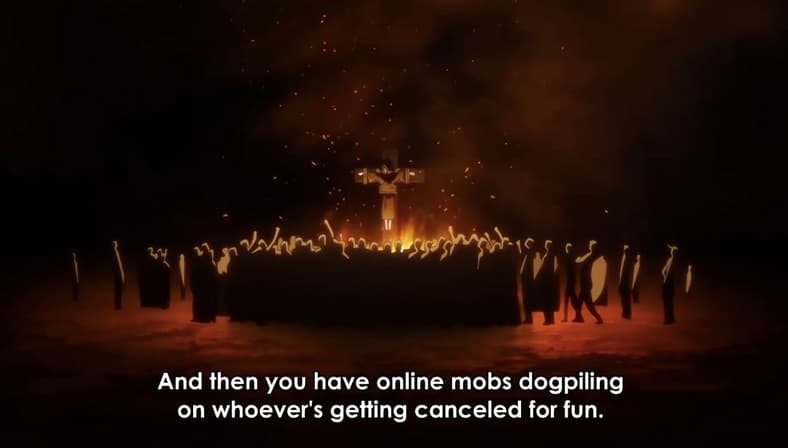
When the anime aired in 2026, the Sentai Filmworks translation shifted the tone significantly. The line was rendered as: "And then you have online mobs dogpiling on whoever’s getting canceled for fun." This substitution of a classical "burning at the stake" image for the modern "canceled" terminology was immediately flagged by fans who follow the manga.

The Escalation in Episode 5
The issue intensified with the release of Episode 5, "Casting." The plot involves Mimi Yoshizumi, a Vtuber facing a scandal after an old video surfaced. In the manga, her brother Shun states, "She was obviously butchered online, so she had no choice but to suspend her activities." The use of "butchered" (or "slaughtered" depending on the literal translation of tatakaremakutte) conveys a sense of violence and victimhood.
The Sentai Filmworks localization opted for: "Naturally, she got mega-cancelled and has to stop streaming for a while!" The use of "mega-cancelled" was viewed by critics as a flippant use of slang that trivialized the psychological weight of the scene.
Supporting Data: Translation vs. Transcreation
To understand the weight of these changes, one must look at the linguistic choices made by the author, Aka Akasaka. Akasaka is known for his sharp, cynical commentary on the entertainment industry. His writing often utilizes traditional Japanese idioms and dramatic metaphors to highlight the cruelty of the "idol" system.
Linguistic Comparison
| Source Material (Manga/Literal) | Sentai Filmworks Localization | Impact of Change |
|---|---|---|
| "Burned at the stake" | "Getting canceled" | Moves from a timeless historical metaphor to a 2020s-specific buzzword. |
| "Throwing stones" | "Dogpiling" | Replaces a physical, visceral image with digital terminology. |
| "Butchered/Slaughtered online" | "Mega-cancelled" | Softens the impact of the attack, making it sound like a social trend rather than a targeted assault. |
The debate often falls between two schools of thought: Equivalence and Localization. Equivalence advocates for a translation that stays as close to the original meaning and tone as possible. Localization (or "transcreation") argues that scripts should be adapted so that the target audience feels the same emotional resonance as the original audience, even if it requires changing specific words.
Critics of the Sentai Filmworks script argue that "cancel culture" is a highly polarized and specific Western term that does not perfectly map onto the Japanese concept of 炎上 (Enjō)—which literally means "flaming" or "going up in flames." By using "cancel culture," the localizers are accused of inserting Western social baggage into a Japanese context where the social dynamics of "shaming" are different.
Official Responses and Industry Trends
As of this report, Sentai Filmworks has not issued a formal statement regarding the specific criticisms of the Oshi no Ko script. Historically, localization companies have remained silent on individual phrasing choices, treating them as creative decisions made by the translation and ADR (Automated Dialogue Replacement) teams.
However, the broader industry is currently grappling with the "AI threat." In early 2024, several Japanese publishers and production committees expressed interest in using AI to speed up the localization process and ensure "purity" of the translation. This was largely a response to fan complaints about Western localizers "censoring" or "reinterpreting" content.
The current situation with Oshi no Ko is being used by proponents of AI translation as an example of why human intervention can sometimes be detrimental. The argument is that if human localizers cannot resist the urge to "fix" or "modernize" a script with their own biases, then a literal AI translation—while perhaps less "flowery"—would be more respectful to the original creator’s intent.
Implications: The Future of Anime Localization
The controversy surrounding Oshi no Ko Season 3 highlights a growing rift between the producers of anime and the Western teams responsible for its distribution. Several long-term implications are emerging from this trend:
1. The Erosion of Consumer Trust
Anime fans are increasingly bilingual or have access to "fan-translations" that are often more literal. When a professional localization deviates significantly from the source, it creates a "trust gap." Fans may begin to view official subtitles as "unreliable" or "politicized," leading them back toward unofficial piracy sites that offer more literal translations.
2. The "Dating" of Content
By using hyper-specific slang like "mega-cancelled" and "dogpiling," localizers run the risk of dating the series. While these terms are prevalent in 2024-2026, they may become obsolete or cringeworthy in a decade. In contrast, the original author’s use of "burning at the stake" is a metaphor that has remained relevant for centuries.
3. Cultural Homogenization
There is a concern that by "Westernizing" the dialogue of Japanese characters, the unique cultural perspective of the story is lost. Oshi no Ko is a deeply Japanese story about the specific pressures of the Tokyo entertainment scene. When the characters speak in the cadence of Western social media activists, the sense of place and cultural identity is diluted.
4. Pressure on Japanese Rights Holders
If the backlash continues to grow, Japanese production committees (like those at Shueisha or Kadokawa) may begin to exert more control over the English scripts. We have already seen "localization guides" become more common, where Japanese creators provide strict lists of terms that cannot be changed. The Oshi no Ko incident may lead to even tighter restrictions on Western localization houses.
In conclusion, the localization of Oshi no Ko Season 3 serves as a case study in the modern struggle for the "soul" of translated media. As the line between global accessibility and creative integrity continues to blur, the industry must decide whether its primary goal is to "bridge" cultures or to "rebrand" them for a local audience. For the fans of Aka Akasaka’s work, the hope remains that the "creative vision" will eventually take precedence over "social media buzzwords."