Ammar Sabilarrohman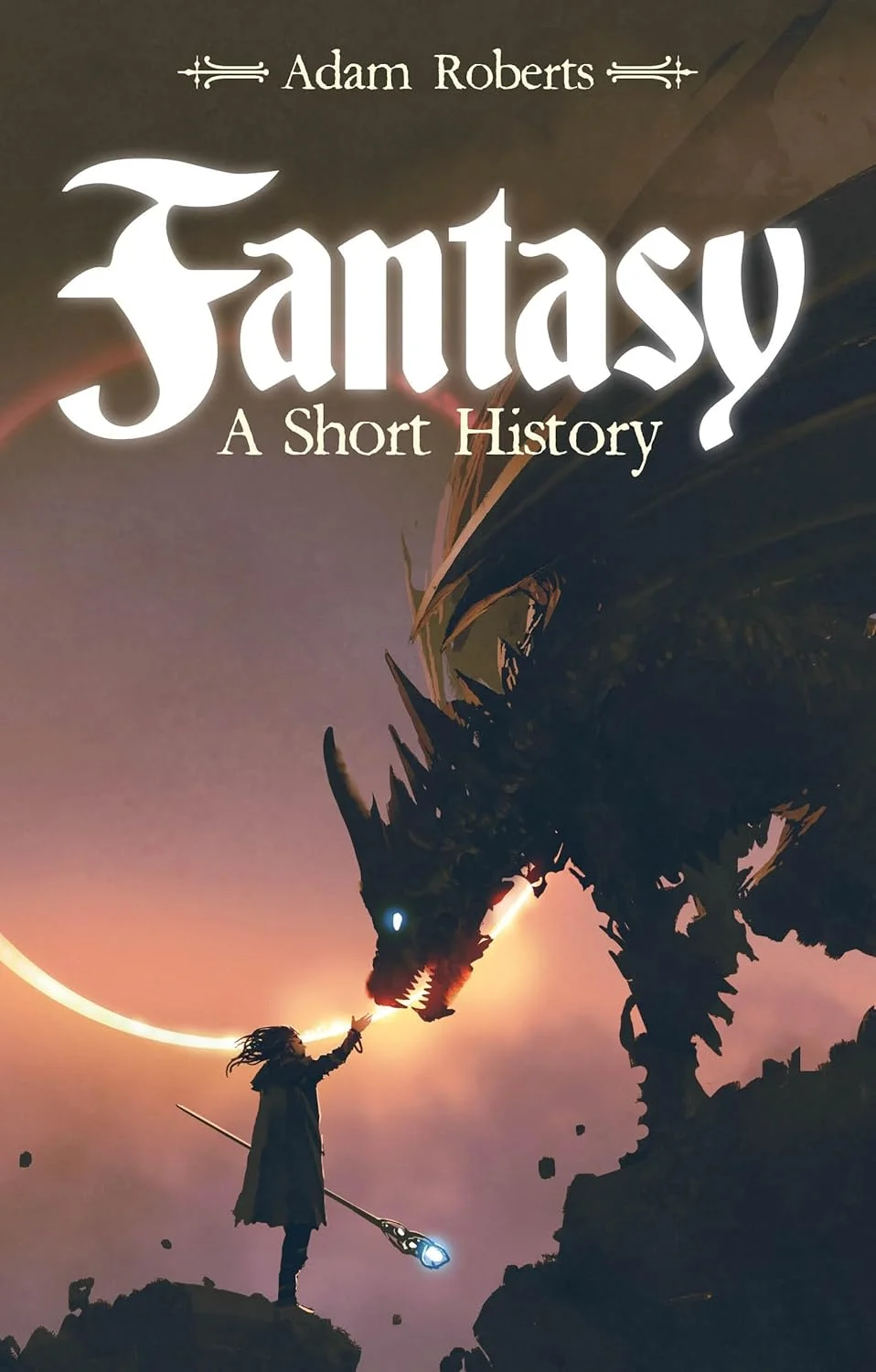
In the crowded lecture halls of university literature departments, the definition of genre is a perennial battleground. Ask a student to define "Science Fiction," and you will be met with a cacophony of competing theories: Is it the literature of technological change? Is it the cold, cognitive estrangement of the unknown? Or is it simply a marketing label for the future? Yet, when the conversation turns to "Fantasy," students often find themselves on more confident, albeit simplistic, ground. They describe a world of magic, myth, and legend—a pastoral antithesis to the cold, metallic precision of the machine age.
In his latest work, Fantasy: A Short History, Adam Roberts—a scholar already renowned for his seminal 2006 text, The History of Science Fiction—seeks to unpack this dichotomy. If Roberts once defined SF as "disorderly technology fiction," inseparable from the scientific and religious upheavals of the Reformation, he now positions fantasy as its necessary, reactive counterpart. Fantasy, in Roberts’ estimation, is the genre that seeks to re-enchant a world rendered disenchanted by the relentless march of industrial modernity.
The Chronology of Re-Enchantment: From Bunyan to Middle-Earth
To understand the trajectory of fantasy, one must first accept that it is a surprisingly modern phenomenon. While myth and epic are as old as humanity, "fantasy" as a distinct literary genre is a recent arrival. Roberts argues that one cannot effectively re-enchant the world unless it has first been stripped of its magic by the Enlightenment and the Industrial Revolution.
The genealogy of the genre, as presented by Roberts, is a sturdy, sprawling tree. Its roots run deep into Victorian medievalism, the allegorical storytelling of John Bunyan, and the folk-tale collections that defined the nineteenth-century Romantic consciousness. From these diverse sources, the genre found its modern anchor in the works of J.R.R. Tolkien and C.S. Lewis.
Tolkien’s Middle-earth and Lewis’s Narnia established the blueprint for the "secondary world"—a self-enclosed space that implicitly critiques our own reality. This contrast is maintained through various narrative devices: the "portal fantasy" (where characters transit from our world to another), urban fantasy (where the magical leaks into our own), and the "reverse portal" (where the fantastical entities invade our mundane sphere). Writers like Philip Pullman and Seanan McGuire have built upon these foundations, crafting tales where protagonists are trapped in the volatile spaces between worlds.
The Political Mechanics of Myth and Magic
Roberts offers a sobering assessment of the ideological underpinnings of fantasy. He posits that because the idioms of magic and myth are inherently non-rational, they can never truly be "liberal" in the contemporary sense. The genre is frequently rooted in Romantic nationalism, utilizing sagas and folklore to construct an idealized, often violent, feudal past.
However, the genius of the genre lies in its ability to adapt. Roberts highlights how authors like Lois McMaster Bujold, in her Chalion series, use the framework of the divine to explore homeostatic, pluralistic orders. Similarly, Sofia Samatar’s A Stranger in Olondria (2013) moves away from the tired tropes of good-versus-evil, instead centering the existential threat of literacy and historical preservation. These works demonstrate that fantasy is not a monolith; it can just as easily exalt patience and interdependence as it can the warrior-ethos of a "shame culture."
Supporting Data: Examining the Pillars and the Prolific
The scope of Roberts’ analysis is vast, touching upon the evolution of the genre from its literary roots into the digital age. He navigates the landscape of video games, acknowledging the cultural significance of titles like Skyrim and Myst. Yet, he remains critical of the medium, noting that the "instrumentalizing" nature of gameplay often flattens the nuanced world-building that the genre requires.
The book also addresses the "pollinators" of the genre—the massive commercial successes that have defined the public’s perception of fantasy. From the ubiquity of Dungeons & Dragons to the sprawling televised narratives of Game of Thrones, Roberts examines how these works have shaped the reading habits of millions.
Critical Perspectives on Modern Tropes
- The Grimdark Trend: Roberts identifies Joe Abercrombie as a master of the "sanguinary" style, though he notes that the genre’s shift toward cynicism—where everyone is morally compromised—is a reaction to the earlier, more optimistic mythologies.
- The Prolixity Problem: He provides a scathing, if necessary, critique of the "epic" length of many modern series. Brandon Sanderson is noted for his productivity, though Roberts suggests that the sheer volume of modern series can feel like an "imaginative theme park" that prioritizes endless expansion over narrative economy.
- The Panopticon of Hogwarts: In a striking analysis of J.K. Rowling’s work, Roberts characterizes the wizarding school as a "Panopticon-like space"—an over-surveilled environment that demands the sacrifice of the young to satisfy the agendas of the old.
Official Critiques and Omissions
Any attempt to condense the history of a genre as expansive as fantasy into a single volume is bound to face scrutiny. Roberts is no John Clute; he does not attempt an encyclopedic sweep. Consequently, the work is distinctly English-centric. There is little mention of the foundational myths of the Americas or Africa, such as Quetzalcoatl or Mami Wata. Furthermore, the absence of a deep dive into the graphic novel and comic book medium is a notable gap, especially given the visual nature of contemporary world-building.
However, these omissions do not necessarily detract from the strength of the core argument. Roberts is not attempting to catalogue every leaf on the tree; he is tracing the trunk and the primary limbs. His focus remains on the "instauration"—a term borrowed from Clute to describe the modern trend of "fix-it" fiction. This movement, seen in the works of N.K. Jemisin, attempts to rectify the exclusionary limitations of the past, rebuilding the "temple" of fantasy to be more inclusive and reflective of a global reality.
Implications: The Future of the Genre
The final chapters of Fantasy: A Short History serve as a meditation on why the genre endures. Despite the "copyediting bobbles" and the inherent limitations of his chosen focus, Roberts succeeds in demonstrating that fantasy is a vital, living mode of expression.
The implication of his work is clear: fantasy is not merely an escape from reality. It is a laboratory for testing the limits of human experience, ethics, and societal structure. When we read fantasy, we are participating in a ritual of re-enchantment. We are acknowledging that while the world may be governed by science and capitalism, the human heart remains tethered to the mythic.
As we move further into the twenty-first century, the genre’s capacity to "rerun the ritual" will become increasingly important. Whether through the lens of a high-fantasy novel or an interactive digital world, the need to build temples—to create meaning in a secular age—remains a fundamental human drive.
Roberts concludes his study with a nod to the most bittersweet line in English literature: "Well, I’m back." For the reader, the journey through this history feels much the same. We depart the enchanted woods of the narrative only to find that our own world, while still "disenchanted," now looks slightly different. We have the tools to understand the tropes, the courage to critique the hierarchies, and, perhaps, the imagination to build something better in their place. Adam Roberts has provided the map; it is now up to the next generation of authors and readers to decide where we go from here.

 Iffa Jayyana
 Siti Muinah