

The Japanese writing system is a fascinating, multi-layered architecture that often serves as the first major hurdle for language learners. While many students begin their journey with the flowing, cursive nature of Hiragana, it is the sharp, angular strokes of Katakana that complete the essential foundation of Japanese literacy. Understanding Katakana is not merely an academic exercise; it is the gateway to reading loanwords, foreign names, and onomatopoeia, which are ubiquitous in modern Japanese signage, media, and technology.

The Strategic Importance of Katakana
While Hiragana is primarily used for native Japanese words and grammatical particles, Katakana serves a distinct, specialized purpose. It is the script for foreign words (gairaigo), scientific names, and emphasis.
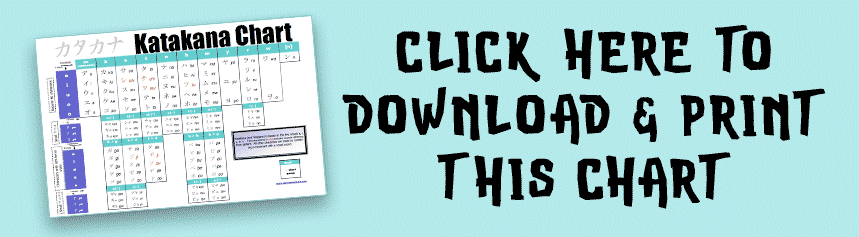
Experts in Japanese pedagogy strongly advocate for learning Katakana immediately following the mastery of Hiragana. The reason is twofold: first, the two systems share a phonetic structure (the "sounds" are identical), meaning the student is not learning a new language, but rather a new way to transcribe the sounds they have already internalized. Second, because Hiragana is fresh in the learner’s mind, the brain is primed for character acquisition. Tackling Katakana while the Hiragana foundation is still "warm" prevents the confusion that often occurs when students delay their study of the second script.

Chronology of Learning: A Systematic Approach
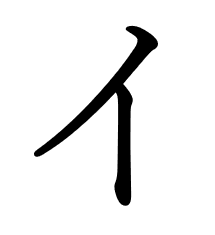
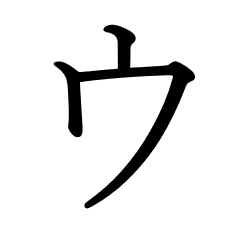
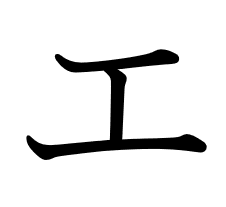
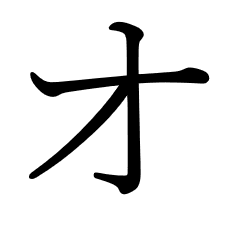
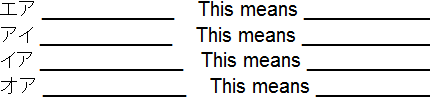
For the novice, the Katakana chart is not a chaotic list of symbols, but a logical grid. To achieve fluency, learners should view the chart as a matrix: columns represent vowels (A, I, U, E, O) and rows represent the consonant sounds.
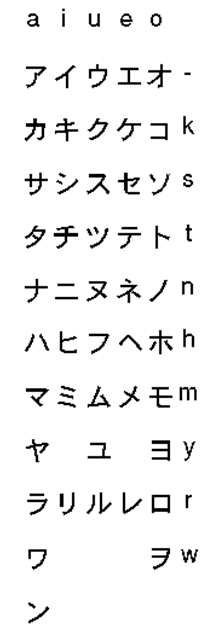
- The Vowel Foundation: Start with the base vowels: A, I, U, E, and O. These are the building blocks for every other row.
- Consonant Rows: Progress through the K, S, T, and N rows. Each row follows the consonant + vowel pattern (e.g., KA, KI, KU, KE, KO).
- Irregularities: As you advance, you will encounter irregularities—sounds that defy strict logic, such as shi instead of si, and tsu instead of tu. Identifying these early in the learning process is crucial for long-term pronunciation accuracy.
- Advanced Modifications: Only after mastering the core 46 characters should the student move on to Ten-Ten (diacritical marks) and small Ya, Yu, Yo combinations.
Supporting Data and Character Mechanics
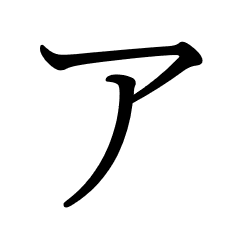
Success in learning Katakana lies in understanding stroke order and mnemonics. Stroke order is not merely a stylistic choice; it provides the "rhythm" of the character, which aids in muscle memory.
The Role of Ten-Ten and Maru
The language provides a sophisticated method for expanding the basic character set. By adding a Ten-Ten (") to characters in the K, S, T, and H rows, the sound becomes "voiced" or "harder." For instance, the K-row transforms into a G-row, while the H-row transitions to a B-row. The Maru (°) is a specific, limited modification that turns the H-row into a P-row. These modifications are essential for correctly identifying words that would otherwise be phonetically ambiguous.

The Complexity of Small Characters
One of the most vital aspects of Katakana is the use of small characters to create "contracted" sounds. When a small ya, yu, or yo is placed next to an i-row character, it creates a single, blended sound. For example, KI + small YA becomes KYA. Mastering these combinations is the final step toward full literacy, allowing the student to read complex loanwords that appear frequently in daily life.
Navigating Common Pitfalls
One of the most persistent challenges for students is distinguishing between similar-looking characters. A classic example is the confusion between SO and N. While they appear nearly identical to the untrained eye, their stroke directionality and starting points differ significantly.

- The SO Rule: In SO, the longer stroke begins at the top, mimicking the movement of a person looking down.
- The N Rule: In N, the stroke typically begins at the bottom and moves horizontally.
Learners should also exercise caution with SHI and TSU. While they are distinct, they are frequently confused. Dedicated practice, such as the use of Katakana-specific quizzes and flashcards, is the most effective way to solidify these distinctions.
Professional Insights: How to Study Effectively
Pedagogical research suggests that passive reading is insufficient for character retention. Instead, learners should employ "active recall." This involves:

- Handwriting: The physical act of writing characters engages the motor cortex, strengthening memory far more than digital typing.
- Mnemonic Association: Linking characters to visual images is a time-tested strategy. For example, the character for NI looks like two horizontal lines, which is also the Japanese kanji for the number two.
- Contextual Immersion: Attempting to read Japanese menus or product labels—which often use Katakana—provides the necessary "real-world" reinforcement that keeps the knowledge relevant.
Implications for Language Acquisition
The acquisition of Katakana marks a significant milestone. Once a student can confidently identify these characters, they are no longer restricted to simplified textbooks. They gain the ability to navigate the Japanese landscape, from reading the names of international brands to deciphering the titles of films and foreign literature.
Furthermore, mastering Katakana is the prerequisite for moving into the world of Kanji. Because Katakana is often used to provide the reading (furigana) for complex characters, knowing the script is essential for expanding one’s vocabulary in the long term.

Official Resources and Further Education
For those looking to formalize their study, reputable organizations and educational platforms provide structured paths for progress. Resources such as The Japanese Page offer extensive documentation, charts, and diagnostic tests designed to evaluate a learner’s progress row by row.
Additionally, supplemental materials—such as the Beri-Beri-Shoshinsha (Very, Very Beginner) bundle—can provide the necessary scaffolding for learners who find themselves struggling with the transition from basic characters to word recognition. These bundles often include audio files, which are critical for mastering the nuanced pronunciation of sounds like tsu.

Conclusion: The Path Forward
Learning Katakana is an exercise in patience and precision. It is a fundamental step that, once taken, opens the doors to the richness of the Japanese language. By following a structured approach, utilizing mnemonic devices, and engaging in consistent practice, any student can move from frustration to fluency.
Whether your goal is to travel through Japan, engage with Japanese media, or pursue a deeper understanding of the culture, the 46 characters of the Katakana script are your essential allies. As you embark on this chapter of your learning journey, remember that each stroke brings you closer to literacy. The patterns are there, the logic is sound, and with enough dedication, the script will eventually become as natural as reading your native alphabet. Keep practicing, utilize the resources available to you, and, most importantly, enjoy the process of discovering a new way to communicate.












No comments yet. Be the first to join the conversation!