For a generation that grew up on digital-first experiences, Facebook has often been dismissed as a relic of the mid-2000s—a social network relegated to checking in on distant relatives or monitoring local community updates. Yet, beneath the surface of the main social feed, a different, more lucrative reality has taken hold. Facebook Marketplace has successfully rebranded the social giant as the modern-day digital bazaar, a peer-to-peer commerce engine that has largely eclipsed the cultural influence of Craigslist.
Recognizing that this commerce engine is now a cornerstone of its ecosystem, Meta has taken a significant leap forward. On Friday, the company officially launched "Seller," a standalone mobile application specifically designed for the power users who keep the Marketplace gears turning: the merchants, the resellers, and the local vendors.
Main Facts: The Launch of the ‘Seller’ Ecosystem
The Seller app represents a departure from Meta’s traditional "everything-in-one-app" strategy. By decoupling the listing and management tools from the primary Facebook interface, Meta is acknowledging that professionalizing the Marketplace experience is essential for long-term retention.
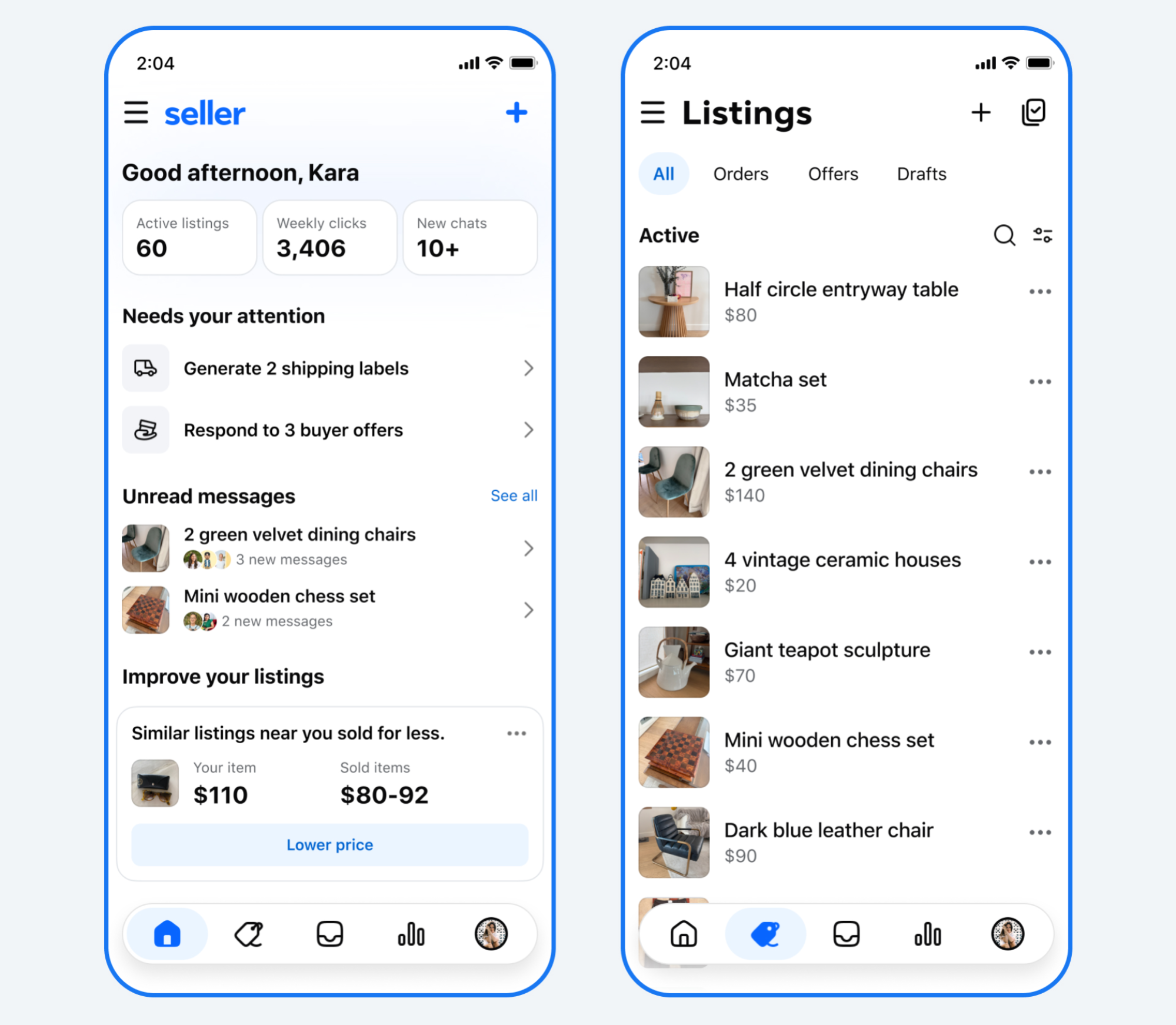
Available to users starting today, the app is free to download and integrates seamlessly with existing Facebook credentials. It functions as a specialized command center, allowing users to:
- Create and Manage Listings: A streamlined interface for uploading wares.
- Centralized Inbox: A dedicated communication portal to manage inquiries from prospective buyers without the clutter of personal Facebook messages.
- Performance Analytics: Detailed insights into how listings are performing, offering data on views, clicks, and engagement.
- AI-Driven Automation: Perhaps the most significant feature is the integration of generative AI, which allows sellers to scan products via their smartphone camera. The app then automatically populates the title, description, and suggested pricing, drastically reducing the time it takes to get an item live.
Chronology: From Side Project to Pillar of Growth
The evolution of Facebook Marketplace from a niche feature to a global retail behemoth did not happen overnight.
- 2016 – The Launch: Facebook introduced Marketplace to capitalize on the organic "buy-and-sell" groups that had spontaneously formed on the platform. At the time, it was a modest effort to compete with the likes of Craigslist and OfferUp.
- 2019–2021 – The Pandemic Surge: During the global health crisis, Marketplace saw a massive spike in usage as supply chains faltered and people sought local, contactless alternatives for goods. This period cemented Marketplace as a daily habit for millions.
- 2024 – The Pivot to Power Users: Meta began identifying that a segment of its audience was using the platform not for social networking, but as a primary source of income.
- May 2026 – The Prelude: Meta launched "Forum," a standalone app for Facebook Groups administrators, signaling a shift in company philosophy toward creating specialized tools for "power users."
- July 2026 – The Seller Launch: The release of the Seller app marks the latest milestone in Meta’s effort to segment its user experience, providing professional-grade tools to those who treat the platform as a business.
Supporting Data: Why Marketplace Matters
The sheer scale of the Marketplace operation is difficult to overstate. Meta’s internal data suggests that the platform is far from a stagnant feature; it is, in fact, one of the most vibrant corners of the internet.
- Usage Frequency: Meta reports that one-third of young adults currently active on Facebook engage with Marketplace on a regular basis. This demographic shift is crucial, as it suggests that even as younger users flock to TikTok or Instagram for entertainment, they return to Facebook for utility.
- Volume: The scale of inventory is staggering. Every single month, more than 420 million items are listed on the Marketplace platform. This volume creates a "network effect"—the more items that are listed, the more buyers flock to the site, which in turn attracts more sellers.
- Monetization Strategy: Notably, the app remains free. Unlike eBay or Poshmark, Meta does not currently take a commission or percentage of sales. Instead, the company monetizes the ecosystem through integrated advertising and promoted listings. By keeping the barrier to entry at zero, Meta ensures a massive inventory, which keeps users within the broader Facebook orbit for longer periods.
Official Responses: Insights from Meta Leadership
The decision to build a standalone app for sellers was not a casual one. It was born out of a desire to treat Marketplace with the same architectural respect given to creator tools on Instagram or professional tools on LinkedIn.
In an exclusive interview with The New York Times, Tom Allison, the head of Facebook, provided clarity on the company’s vision. He compared the Seller app to a professional video editing suite. "Just as we provide advanced tools for creators to produce high-quality video content, we owe it to our most active sellers to provide a workspace that is efficient, intuitive, and powerful," Allison stated.

Allison’s remarks highlight a broader internal shift at Meta. The company is currently experimenting with a suite of "standalone products" intended to cater to specific user cohorts. By identifying that Marketplace sellers and Group administrators have vastly different needs than the average "scroll-and-like" user, Meta is effectively modularizing Facebook. This strategy aims to keep the core Facebook app lean, while allowing power users to dive deeper into specialized applications that enhance their productivity.
Implications: A New Era for Social Commerce
The release of the Seller app carries profound implications for both the digital marketplace and the future of Facebook as a platform.
1. Professionalizing the "Gig" Economy
By providing AI-powered listing tools and robust analytics, Meta is inviting a new wave of semi-professional sellers to the platform. Small businesses and side-hustlers who previously found the Facebook interface clunky will likely find the new app a compelling reason to shift more of their inventory to the platform. This professionalization could eventually lead to higher quality listings and increased consumer trust.
2. Defensive Strategy Against Competitors
As the social media landscape fractures, Facebook faces fierce competition from short-form video platforms like TikTok, which have begun integrating their own "Shop" features. By doubling down on the local, utility-driven nature of Marketplace, Meta is playing to its strengths. While TikTok is for discovery, Facebook is increasingly becoming the digital "town square" for commerce and community management.
3. The Future of the "Unbundled" Facebook
The success of the "Forum" app for group admins and the new "Seller" app for merchants suggests that the future of Facebook may not be a single app at all, but a collection of interconnected utilities. If this trend continues, we may see further unbundling—perhaps a standalone app for Facebook Events or Marketplace Local Services.
4. Data Harvesting and AI Training
The introduction of an AI tool that identifies and categorizes items based on camera input serves a dual purpose. While it undoubtedly helps sellers, it also provides Meta with a vast, high-quality dataset of consumer goods. This information is invaluable for refining the company’s AI models, which could eventually power a more predictive and personalized shopping experience across the entire Meta family of apps, including Instagram and WhatsApp.
Conclusion
The launch of the Seller app is more than just a software update; it is a declaration of intent. Meta is signaling that it understands the changing nature of its platform. While the "social" aspect of Facebook may continue to evolve, the "commerce" aspect is currently its most potent asset.
By investing in the tools that empower sellers—the individuals who keep the Marketplace alive—Meta is ensuring that even as the digital landscape shifts, the local economy remains anchored to the blue-and-white icon on millions of home screens. As the platform continues to refine its AI-assisted tools and standalone utility apps, the line between a "social network" and a "digital economy" will only continue to blur. For the users who rely on Marketplace to clear their clutter, launch a business, or find a bargain, the future of Facebook looks significantly more functional, efficient, and profitable.