In the realm of contemporary illustration, the boundaries between traditional media and organic materials are increasingly blurred. Yet, few artists achieve the seamless synthesis of biology and design with the grace of Helen Ahpornsiri. Using nothing more than pressed wildflowers, delicate ferns, and carefully curated leaves, Ahpornsiri constructs intricate, life-like animal portraits that challenge our perceptions of what constitutes an illustration.
To the uninitiated, the concept of "pressed-leaf art" might evoke memories of primary school craft projects—a whimsical, perhaps amateurish hobby. However, a single glance at Ahpornsiri’s portfolio dispels such notions instantly. Her work is a masterclass in precision, patience, and ecological storytelling, elevating the humble detritus of the forest floor into fine art that rivals the technical execution of traditional painting or digital rendering.
The Anatomy of the Natural Canvas: Main Facts
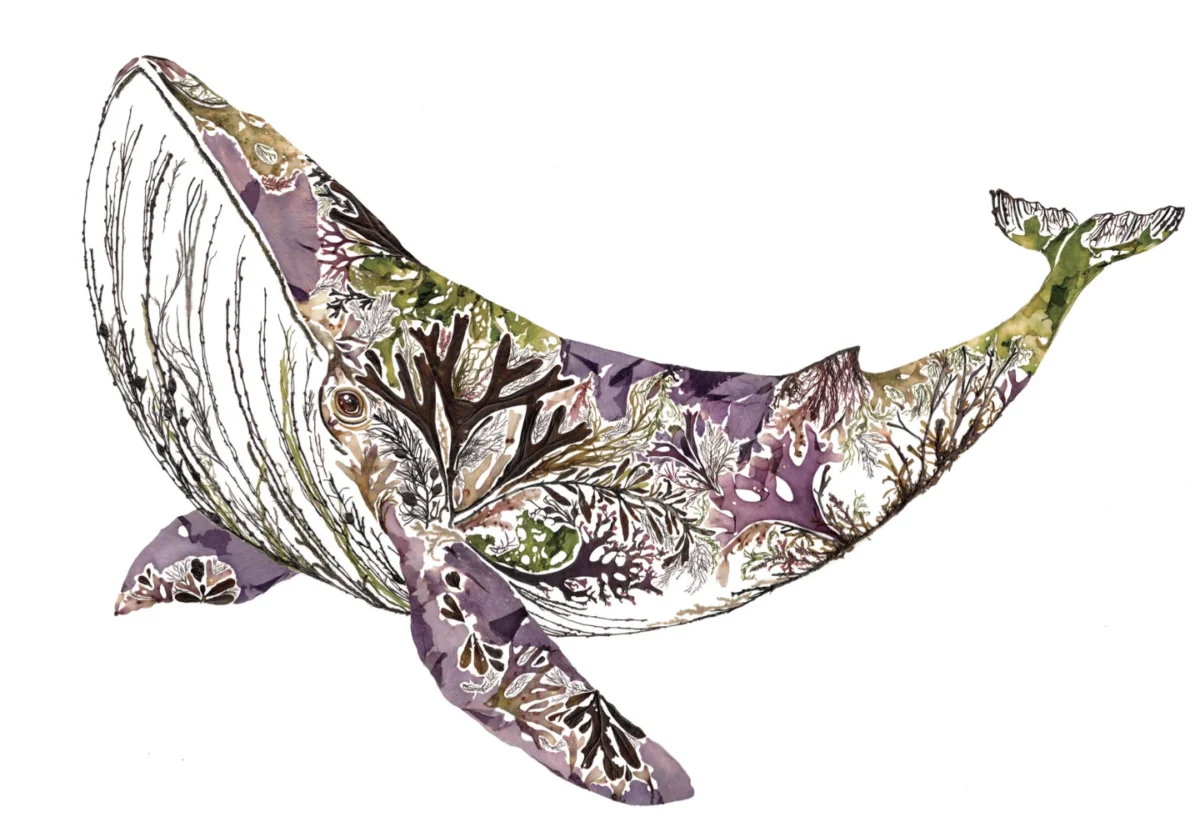
At the heart of Ahpornsiri’s work is a profound respect for both form and habitat. Her process is not merely an assembly of plant matter; it is a meticulous study of anatomy. Whether it is the soft curvature of a hare’s ear or the imposing silhouette of a humpback whale, each piece is constructed with an architectural understanding of the subject’s physical structure.
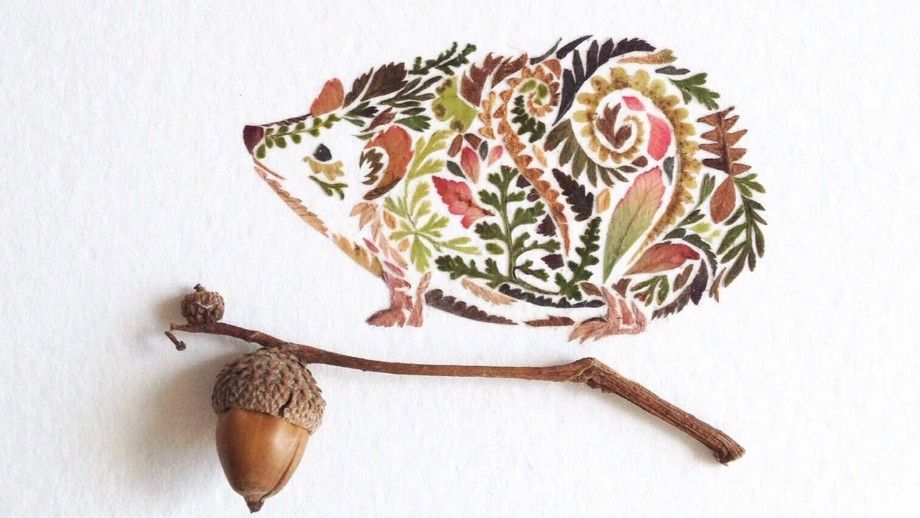
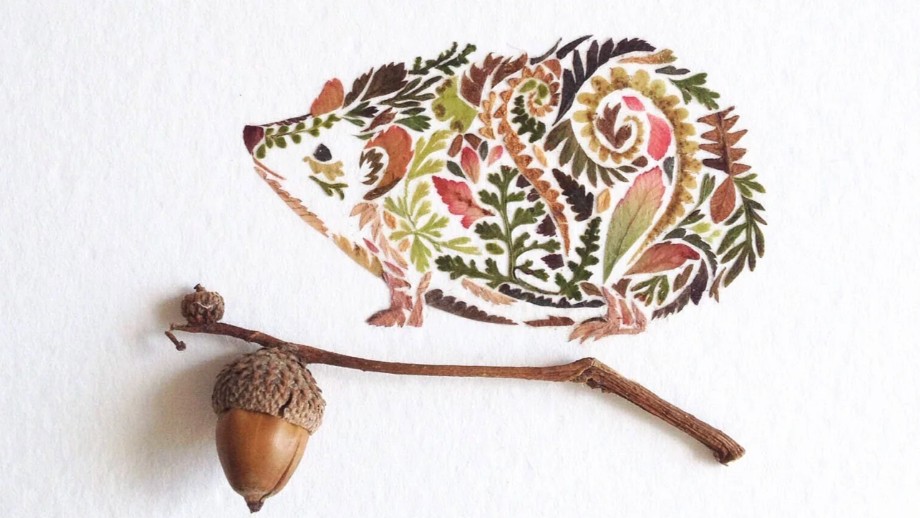
The "hedgehog" illustration, which serves as a flagship of her aesthetic, perfectly encapsulates her philosophy. Every spine is a deliberate placement of foliage, mimicking the natural directional growth of the animal’s protective coat. The palette—composed of rich browns, deep ochres, and vibrant mossy greens—is not a stylistic choice, but a literal representation of the autumnal woodland floor. By using the very materials that define the creature’s environment, Ahpornsiri creates a "circularity" in her art: the habitat becomes the medium, and the medium breathes life into the habitat.
A Botanical Chronology: From Foraging to Fine Art
The lifecycle of one of Ahpornsiri’s pieces begins long before a single leaf is glued to the page. Her creative process is an exhaustive, seasonal undertaking that demands a rhythm dictated by the natural world.
- Foraging and Collection: The journey begins in the field. Ahpornsiri is deeply involved in the acquisition of her materials, often growing and pressing her own flora. This ensures that the texture, color, and integrity of the leaves and petals are preserved exactly as she requires for her compositions.
- The Pressing Phase: This is a period of patient waiting. Plants must be dried and flattened under carefully controlled conditions to maintain their structural integrity without losing their vivid hues. It is a stage of technical preservation, where the biological specimen is prepared for its transition into art.
- Conceptual Mapping: Before any adhesive is applied, the artist must understand the skeletal and muscular structure of the subject. She sketches the outline, planning the "feathering" or "layering" of the leaves to ensure the final piece captures the animal’s character and movement.
- Assembly: This is the most delicate stage. Using specialized adhesives and tools, she layers the pressed foliage. The density of the work is variable—some areas require a heavy, complex accumulation of petals to create shadow and depth, while others utilize translucent ferns to convey lightness and motion.
- Final Curation: The finished piece is photographed or scanned, allowing the delicate textures to be shared with a wider audience while the original remains a fragile, organic masterpiece.
Supporting Data: The Symbiosis of Habitat and Form
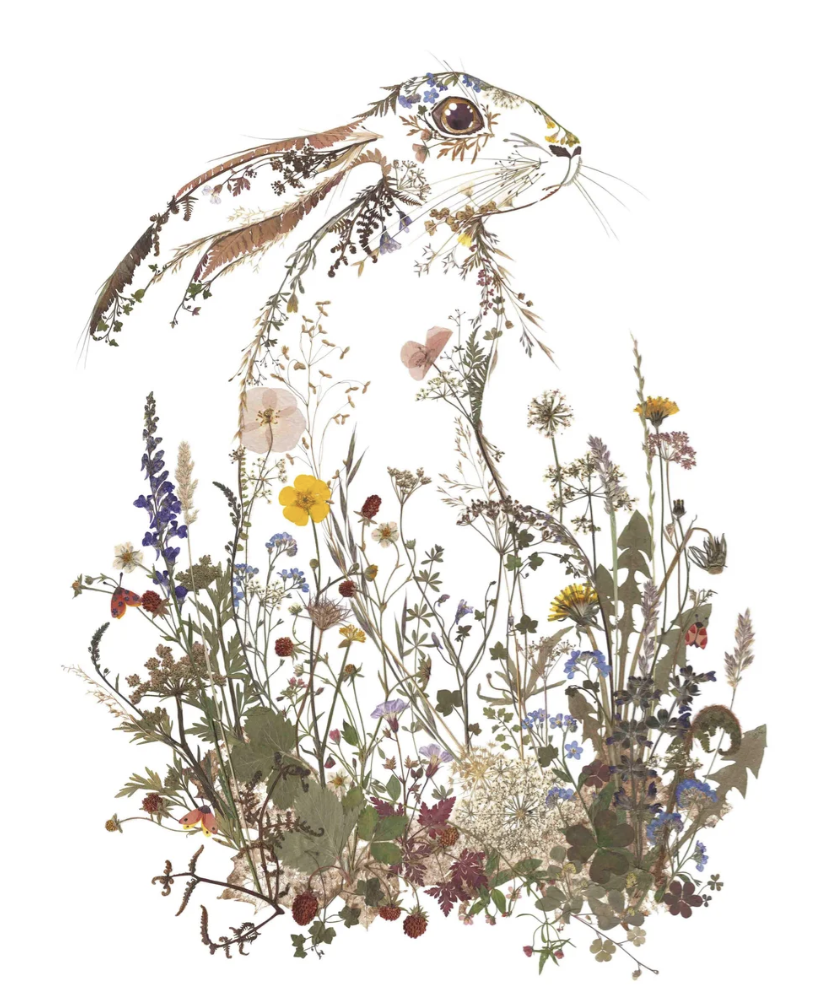
The efficacy of Ahpornsiri’s work lies in the viewer’s immediate recognition of the subject, followed by the slow, rewarding discovery of the material. When viewing her depiction of a hare, the eye initially registers the animal’s alert, inquisitive posture. It is only upon closer inspection that the "fur" resolves into a complex tapestry of pressed buttercups, cow parsley, and clover.
This technique serves as a powerful visual metaphor. By building the hare out of the very wildflowers it grazes upon, she creates an inseparable link between the creature and its ecosystem. The same logic applies to her marine subjects; her whales are composed of sea-grasses, kelp fronds, and coral-like textures.
This thematic consistency provides data points for the art historian:
- Texture as Tone: Ahpornsiri uses the inherent roughness of dried ferns to depict the coarse fur of land mammals, while utilizing the sleek, elongated shapes of seaweed to mimic the fluid, streamlined bodies of marine life.
- Density Variance: Unlike digital art, which can rely on uniform brush strokes, her work is dictated by the availability and size of her materials. This forces an organic "surging and receding" of detail that gives her work a kinetic energy that is difficult to replicate through synthetic means.
Insights and Perspectives: The Professional View
The professional design community has taken note of Ahpornsiri’s work, not just for its aesthetic beauty, but for its role in the "slow art" movement. In an era dominated by AI-generated imagery and high-speed digital rendering, her commitment to the physical, the fragile, and the ephemeral acts as a grounding force.
Critics have noted that her work succeeds because it does not try to hide the medium. Instead, it celebrates the limitations of the plant life. There is no attempt to "paint" with the leaves; rather, the leaves are allowed to be themselves, forming a mosaic that suggests the subject rather than forcing a hyper-realistic imitation. This "suggestive realism" is what makes her work feel alive. It invites the viewer’s brain to participate in the image, filling in the gaps between the pressed leaves with the viewer’s own memories of nature.
The Wider Lesson: Implications for Modern Design
For students and professionals in the creative industries, Ahpornsiri’s career offers a profound lesson in the value of the "unlikely idea." The temptation for any designer is to find a successful workflow and replicate it with unwavering consistency. However, Ahpornsiri reinvents her process with every new piece. She embraces the irregularity of her materials, allowing the medium to dictate the final form.
Her work suggests that:
- Constraint is a Catalyst: By limiting herself to seasonal, organic materials, she forces innovation. If a specific fern is not available, she must find a new way to represent the texture, leading to creative breakthroughs that a wider array of standard tools might not trigger.
- The Importance of Research: Her work is not just pretty; it is scientifically grounded. Her understanding of how a hedgehog’s spines lie or how a whale’s skin folds under pressure is evident. This attention to detail is what separates a "craft project" from a professional illustration.
- Embracing Impermanence: There is a vulnerability in using materials that are inherently fleeting. This adds a layer of emotional weight to the work, reminding the audience that both the art and the wildlife it depicts are precious and deserving of protection.
Conclusion: A Call to Experiment
Helen Ahpornsiri’s body of work stands as a testament to the idea that the most profound artistic breakthroughs often occur when we return to the basics. By stepping away from the screen and looking at the ground beneath our feet, she has found a way to bridge the gap between fine art and the natural world.
For the rest of us, the takeaway is clear: we should not fear the strange, the unlikely, or the difficult. Whether you are an illustrator, a graphic designer, or a creative hobbyist, there is immense value in experimenting with non-traditional materials. Trust the process, respect your subject matter, and never underestimate the power of a leaf to tell a story. As Ahpornsiri’s work so beautifully demonstrates, sometimes the best way to capture the essence of life is to use the very things that grow from it.