Lina Hope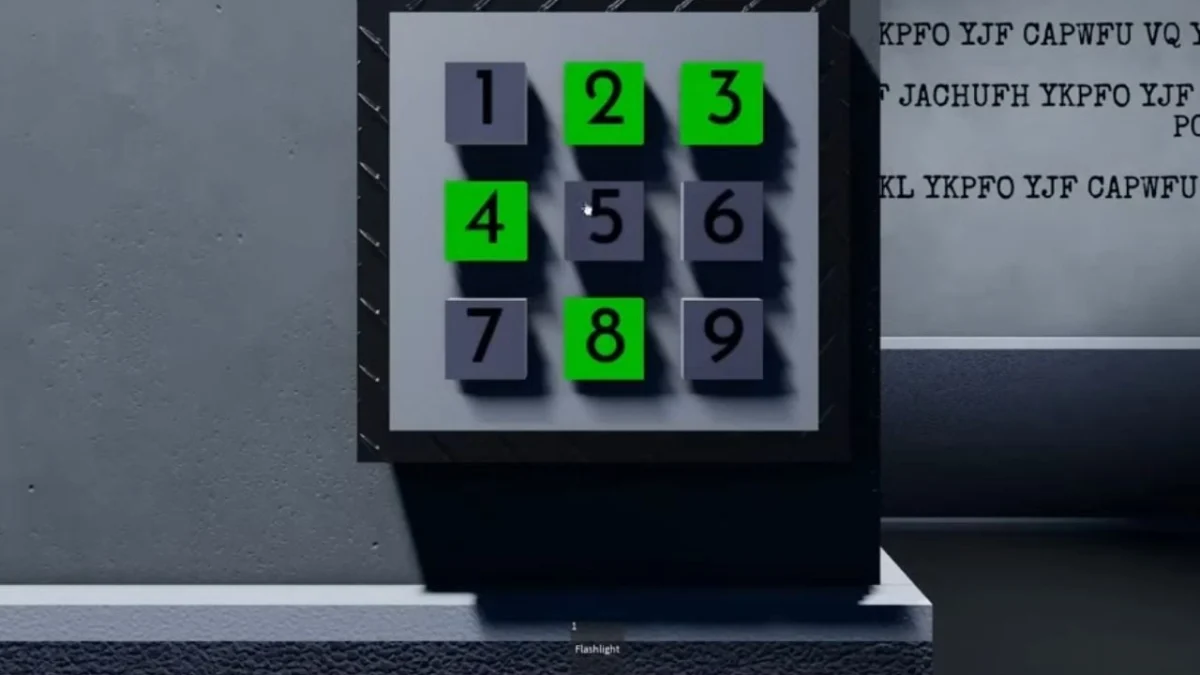
Main Facts: The Digital Evolution of the Escape Room Genre
In the rapidly expanding universe of Roblox, a platform that now boasts over 66 million daily active users, certain genres have begun to dominate the cultural zeitgeist of younger gamers. Among the most enduring is the "Escape Room" genre—a digital translation of the physical puzzle-solving experiences that became a global phenomenon in the 2010s. The latest entry to capture the community’s attention is Project Escape Room: Prison, a high-stakes, logic-driven simulation that challenges players to navigate a high-security correctional facility through a series of increasingly complex environmental puzzles.
Developed within the Roblox ecosystem, Project Escape Room utilizes the platform’s proprietary Luau scripting language to create interactive physics-based challenges. The "Prison" map, in particular, has seen a surge in concurrent players due to its balance of atmospheric tension and intellectual rigor. Unlike many "Obby" (obstacle course) games on the platform that rely purely on mechanical skill and platforming, Project Escape Room emphasizes lateral thinking, pattern recognition, and environmental storytelling.
The game places players in a locked cell with minimal instructions, forcing an intuitive exploration of the surroundings. To succeed, players must interface with a variety of digital assets—from hidden tally marks to intricate wiring panels—each requiring a specific logic-based solution. As the platform continues to evolve from a simple "game engine" into a sophisticated social hub, titles like Project Escape Room demonstrate the growing appetite for high-fidelity, cognitive-heavy experiences in virtual spaces.
Chronology: A Step-by-Step Walkthrough of the Prison Escape
Escaping the "Prison" map requires a chronological adherence to a specific set of logic gates. Below is the definitive sequence of events necessary to transition from an inmate to a fugitive within the game’s mechanics.
Step 1: Breaking the Initial Confinement
The journey begins within the confines of a standard 6×8 digital cell. The primary objective is to find a way out without alerting the automated security systems.
- Search the Bedding: Players must interact with the pillow or mattress assets. Often, a small tool—such as a makeshift shim or a loose floorboard—is randomized in its placement.
- The Ventilation Shaft: Once a tool is acquired, players must locate the vent. In the Prison map, this is usually located behind the toilet or high on the back wall. Using the tool allows the player to enter the crawlspace, bypassing the locked cell door.
Step 2: Deciphering the Tally Marks
Upon exiting the cell, players encounter the "Tally Wall." This is a classic cryptogram puzzle.
- Observation: The walls of the hallway contain groups of scratched lines.
- The Code: Players must count the total number of marks in specific quadrants. These numbers correspond to a keypad found at the end of the corridor. The sequence is not static; it often rotates based on the server instance, requiring players to actually perform the count rather than memorizing a static code from online forums.
Step 3: The Electrical Bypass (Wire Cutting)
Transitioning into the security hub requires disabling the electronic locks. This is achieved through the "Wire Puzzle."
- The Logic: A panel reveals four to six colored wires (Red, Blue, Green, Yellow).
- The Clue: A nearby clipboard or monitor provides a sequence (e.g., "The sky precedes the blood"). This translates to cutting the Blue wire before the Red wire. Failure to follow the sequence resets the puzzle and triggers an alarm sound, though in this specific map, it usually results in a time penalty rather than an instant "Game Over."
Step 4: The Shower Block Pattern
The shower area serves as a transition zone. The floor tiles here are pressure-sensitive.
- The Pattern: On the wall of the communal shower, a series of damp patches or tiles of a slightly different hue indicate the safe path.
- Execution: Players must jump or walk only on the tiles that match the visual pattern provided on the wall. Stepping on the wrong tile resets the player to the entrance of the room.
Step 5: The Gymnasium and Dumbbell Weight Logic
One of the more unique puzzles involves the prison gym.
- The Scale: A large industrial scale sits in the corner, requiring a specific weight to trigger a door release.
- The Dumbbells: Scattered around the room are dumbbells labeled with different weights (5kg, 10kg, 25kg).
- The Solution: Players must find a note—often hidden behind a weight rack—that specifies a target weight (e.g., 45kg). Players must then physically drag the correct combination of dumbbells onto the scale to reach the exact sum.
Step 6: Securing the Gate Padlock Key
The final hurdle is the "Gate Padlock."
- The Search: The final key is rarely in plain sight. It is typically hidden within a "Searchable" asset, such as a locker in the guard station or inside a hollowed-out book in the library.
- The Exit: Once the "Gate Padlock Key" is in the inventory, players must navigate to the main yard gate. Interacting with the padlock triggers the final escape animation, successfully concluding the map.
Supporting Data: The Rise of Roblox as a Puzzle Hub
The popularity of Project Escape Room is backed by significant industry data regarding Roblox’s demographic shift. While historically viewed as a platform for children, the fastest-growing demographic on Roblox is the 17-to-24-year-old age group. This shift has necessitated more complex game design.
- Engagement Metrics: Puzzle-based games on Roblox, such as the "Escape Room" category, maintain a higher "Average Session Time" (AST) compared to standard "Clicker" games. While a clicker game might have an AST of 12 minutes, complex escape rooms often see sessions exceeding 40 minutes as players collaborate to solve riddles.
- Social Connectivity: According to Roblox’s 2023 internal reports, games that require communication (like sharing codes found in Step 2 or Step 5) see a 30% higher retention rate. Project Escape Room leverages this by making certain puzzles difficult to solve without a second player’s perspective.
- Technical Scalability: The game utilizes "Server-Side Validation" for its codes. This means that unlike older Roblox games where players could "exploit" or "hack" the code by looking at the game’s local files, the solutions for Project Escape Room are generated on the server, making every playthrough a legitimate test of skill.
Official Responses and Developer Context
While the developers of "Project Escape Room" operate as an independent studio within the Roblox ecosystem, the Roblox Corporation has frequently highlighted the importance of such high-quality User-Generated Content (UGC).
In a recent developer symposium, Roblox executives emphasized that the platform is moving toward "Age Guidelines," allowing developers to tag their games as "9+," "13+," or "17+." Project Escape Room fits firmly into the "9+" category, providing a safe yet challenging environment.
The developers of the game, often communicating through community hubs like Discord and Twitter (X), have noted that the "Prison" map was specifically designed to address player feedback regarding previous maps being "too linear." In a developer log, the lead designer stated:
"We wanted the Prison to feel oppressive but fair. Every clue is in the room with you; there are no ‘moon logic’ puzzles that require outside knowledge. It’s about observation and the thrill of the breakthrough."
This philosophy of "Fair Challenge" has been a cornerstone of the game’s success, leading to a high "Like" ratio on the platform’s discovery page.
Implications: The Future of Virtual Problem Solving
The success of Project Escape Room: Prison carries broader implications for the future of digital entertainment and education.
1. The Gamification of Logic
As schools and educational institutions look for ways to engage students in STEM and critical thinking, platforms like Roblox provide a "stealth learning" environment. The logic gates found in the "Wire Cutting" (Step 3) and "Weight Calculation" (Step 5) are, at their core, basic algebra and Boolean logic.
2. The Shift in the Escape Room Industry
Physical escape rooms face high overhead costs and geographic limitations. Virtual escape rooms, however, offer infinite scalability. A single map like "Prison" can be played by millions of people simultaneously across the globe, a feat impossible for a brick-and-mortar business. We are likely to see more "hybrid" experiences where physical escape rooms launch digital counterparts on Roblox to build brand loyalty.
3. Economic Opportunities for Creators
The monetization of Project Escape Room—through "Hints," "Flashlights," or "Skins"—showcases the robust digital economy within Roblox. High-quality puzzle design is becoming a lucrative career path for young developers, with top-tier creators earning six-figure incomes through the platform’s "Developer Exchange" (DevEx) program.
4. Psychological Resilience
From a psychological perspective, these games foster "grit" and problem-solving resilience. By placing players in a "Prison" from which they must escape, the game provides a safe environment to experience frustration, trial-and-error, and the eventual "Eureka!" moment that comes with a successful escape.
In conclusion, Project Escape Room: Prison is more than just a digital pastime. It is a testament to the sophistication of modern UGC platforms and a clear indicator that the future of the escape room genre lies in the limitless, code-driven corridors of the metaverse. Whether you are a casual player or a self-proclaimed "escape room specialist," the Prison map offers a masterclass in virtual puzzle design. Congratulations on your escape—but remember, in the world of Roblox, there is always another room to break out of.


 Laily UPN