

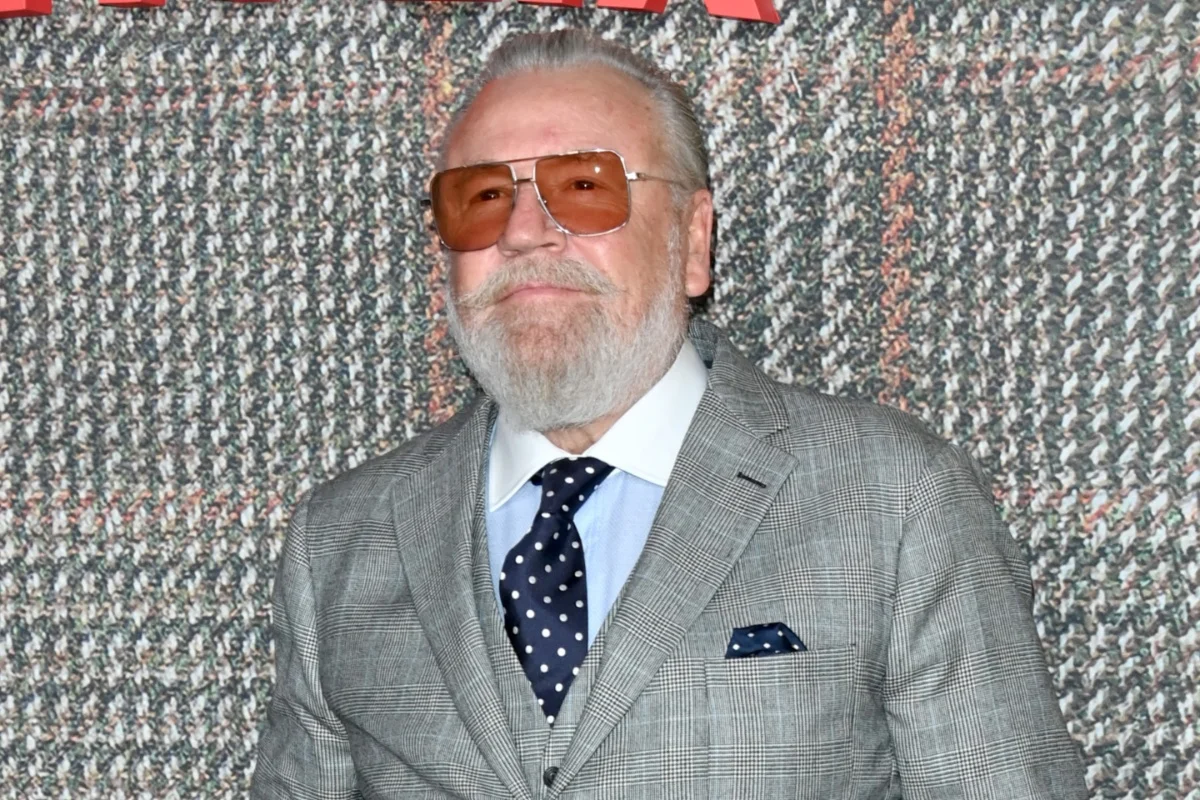
In a candid and wide-ranging interview with The Times of London, veteran British actor Ray Winstone—known for his formidable screen presence and quintessential "hard man" persona—has pulled back the curtain on the changing landscape of film production. From his early days on sets where physical confrontations were often the primary method of conflict resolution, to his current status as a seasoned patriarch in Guy Ritchie’s hit series The Gentlemen, Winstone offers a stark contrast between the "Wild West" of 20th-century filmmaking and the modern, regulated studio environment.
The Confrontation: Protecting a Co-Star
The most striking revelation from Winstone’s interview concerns a past incident of workplace misconduct. While the actor declined to name the specific production or the director involved, he recounted a harrowing moment on set that compelled him to step outside his role as a performer and act as an enforcer of basic decency.
According to Winstone, the situation arose during a scene that required him to physically interact with a younger female co-star. The director, allegedly under the guise of providing performance notes or "demonstrating" how the move should be executed, began to grope the actress.
"I was in a scene where I had to pick up this girl, and the director wanted to show me what to do," Winstone told The Times. "But he was groping her. That was it. I said, ‘Don’t you dare do that.’ He abused his power, took advantage, and she was a good kid, you know, who seemed a little lost. Anyway, it was dealt with."
When pressed on the nature of how such a situation was resolved in the era before modern HR departments and sensitivity coordinators, Winstone was blunt. He described a culture where the film crew—the riggers, the sparks, and the technical staff—often acted as the unofficial moral compass of the set.
"Back in the day, if there was a wrong ‘un on set, 99 times out of 100 it was sorted, either by the hairy-arse riggers or sparks," Winstone explained. "I’ve done it myself too, taken someone to the side to give them a slap or to tell them, in no uncertain terms, to behave. But it’s a different world today."
Chronology of an Industry Shift
To understand the weight of Winstone’s comments, one must view them through the lens of his career trajectory. Rising to prominence in the late 1970s and early 80s—most notably with his breakout performance in Alan Clarke’s Scum (1979)—Winstone emerged during a period where British cinema was characterized by gritty realism and, often, a lack of institutional oversight.
- The 1970s–1980s (The Formative Years): During this era, film sets were often insular, hierarchical environments. The director’s word was law, and safety protocols were largely focused on physical stunt work rather than interpersonal conduct.
- The 1990s–2000s (The Rise of Global Stardom): Winstone became a fixture in both independent and blockbuster cinema, working with directors like Anthony Minghella and Martin Scorsese. As productions became larger and more corporate, the "hairy-arse rigger" style of conflict resolution began to clash with increasing studio liability concerns.
- The 2010s–Present (The Era of Accountability): Following the #MeToo movement and the widespread adoption of intimacy coordinators, the industry has undergone a radical transformation. What Winstone characterizes as "taking someone to the side" is now largely replaced by formal reporting channels and legal interventions.
Winstone’s remarks serve as a historical bridge, acknowledging that while the "old way" was often effective at stopping immediate abuse, it lacked the transparency and procedural fairness that define modern professional standards.
Supporting Data: The Evolution of Set Safety
The shift Winstone describes is backed by significant institutional changes in how Hollywood and the UK film industry handle on-set conduct. In the wake of the 2017 cultural pivot, the industry saw the widespread implementation of:
- Intimacy Coordinators: Now standard on most major productions, these professionals mediate physical contact between actors, ensuring that scenes are choreographed, consensual, and strictly professional.
- HR Oversight: Major streaming platforms like Netflix (home to The Gentlemen) have implemented robust reporting mechanisms that allow crew members to flag misconduct without fear of retaliation from directors or producers.
- Code of Conduct Training: Most major unions, including Equity (the UK performers’ union), now mandate that productions adhere to specific codes of conduct regarding harassment and bullying.
While Winstone notes that it is a "different world today," his anecdote reminds audiences that the vulnerability of young, "lost" actors was a systemic issue long before it reached the public consciousness.
Official Responses and Industry Implications
While there has been no official statement from unions or production houses regarding Winstone’s specific anecdote, the industry at large has generally moved toward a stance of "zero tolerance."
Industry experts suggest that Winstone’s story underscores why the current, highly regulated environment is necessary. While the "vigilante justice" of the riggers and sparks may have served a purpose in a vacuum, it lacked the documentation and psychological support that victims of abuse require. Furthermore, the reliance on the physical intimidation of a director by a lead actor—as Winstone described—is a double-edged sword; it places the burden of protection on the co-stars rather than the institution itself.
The implications for the industry are clear: the power dynamic that allowed a director to "abuse his power" by hiding behind the pretense of professional instruction is being systematically dismantled.
The Next Chapter: "The Gentlemen" and Beyond
Despite his reflections on the past, Winstone remains firmly focused on his future. He is currently starring in the highly successful Netflix series The Gentlemen, created by Guy Ritchie. The show, which explores the intersections of British aristocracy and the criminal underworld, has been a critical and commercial hit, recently receiving a green light for its third season.
In the series, Winstone portrays Bobby Glass, a high-level kingpin whose influence permeates the narrative. Reflecting on the role, Winstone offered a humorous, albeit poignant, observation on his own aging process within the industry.
"When you’re not the young lead but the old boy, who everyone says they’ve got to look after because he’s getting on a bit," Winstone remarked. His self-deprecating humor serves to highlight his transition from the firebrand of his youth to the elder statesman of British drama.
When asked if he has any intention of slowing down his prolific output, Winstone’s response was characteristically pragmatic. "Well, you’ve got to pay the taxman, haven’t you?" he quipped.
Conclusion: A Legacy of Integrity
Ray Winstone’s recent interview provides more than just a glimpse into his personal history; it offers a vital critique of the evolution of the film industry. By acknowledging both the necessity of past interventions and the benefits of today’s safer sets, Winstone highlights the journey toward a more equitable workspace.
His willingness to speak out about protecting his co-star, even while acknowledging the rough-and-tumble methods of the past, speaks to a career defined by a consistent, if rugged, moral compass. As he continues to dominate the screen in The Gentlemen, Winstone remains a reminder of an older generation of actors who, for better or worse, were often the first line of defense in an industry that is only now learning how to protect its own.
As Hollywood continues to grapple with its past, the stories of veterans like Winstone remain essential to understanding how far the industry has traveled, and the distance that remains between the "wild" sets of the past and the professional, protected sets of the future.










