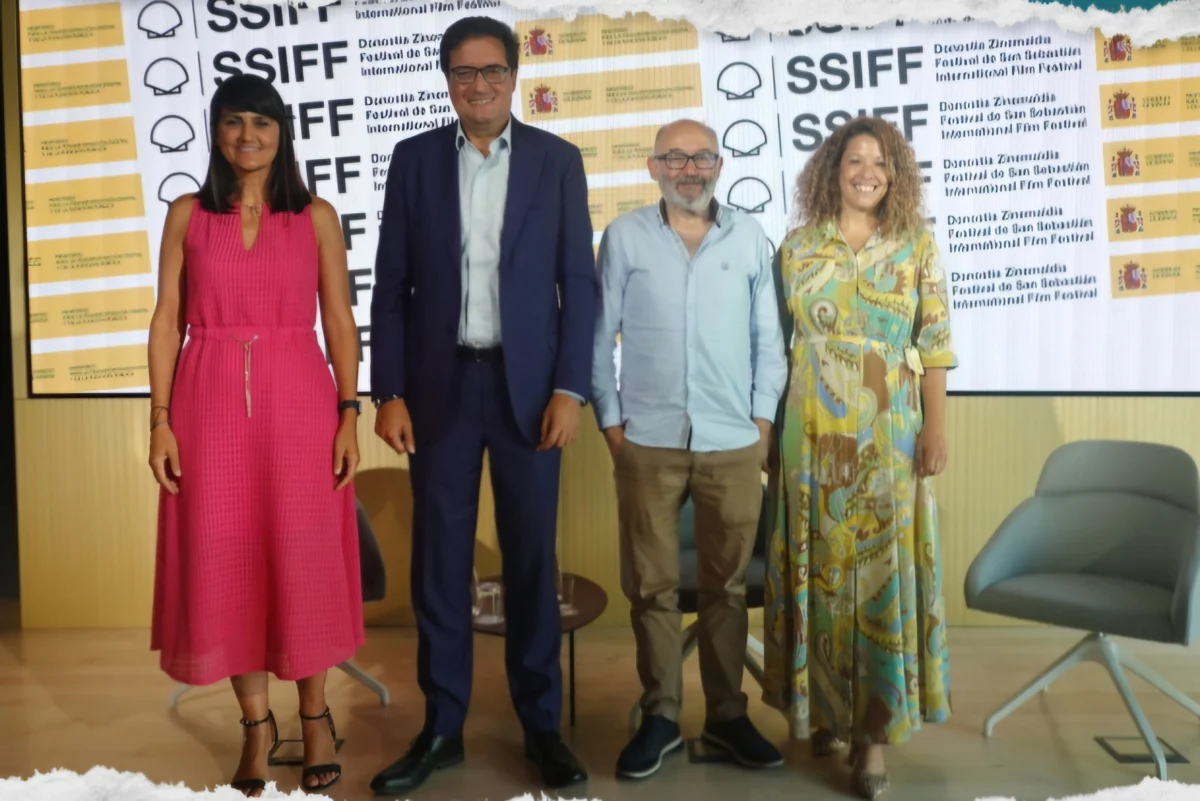
The San Sebastián Film Festival (SSFF), one of the most prestigious cultural events on the European calendar, has secured a significant strategic partnership with Spain’s Ministry of Digital Transformation and Civil Service. This multi-faceted economic boost is designed to solidify the festival’s growing reputation as a critical nerve center for the global audiovisual industry.
By formalizing a €500,000 ($580,000) grant, the Ministry has positioned itself as the sole sponsor of the festival’s professional industry events. This infusion of capital serves a dual purpose: it stabilizes the festival’s high-profile Creative Investors’ Conference—co-organized with the powerhouse CAA Media Finance—and facilitates the "Conference on Leading the Audiovisual of the Future," a strategic summit scheduled for Sunday, September 20.
A New Era of Professionalization: Main Facts
The partnership represents more than just a financial transaction; it is a declaration of intent. For years, the festival has evolved from a purely cinematic exhibition into a functional, albeit informal, marketplace. Under the leadership of director José Luis Rebordinos, the festival has successfully leveraged its late-September slot to capture sales agents and distributors who are looking to maximize the momentum generated by the earlier Venice and Toronto festivals.
The funding will specifically bolster:
- The Creative Investors’ Conference: A high-level, two-morning summit that has become a staple for executives looking to bridge the gap between creative talent and international financing.
- The Zinemaldia Startup Challenge: Recognizing the intersection of cinema and technology, the festival has increased the prize money for the best Spanish tech-pitching project to €30,000 ($34,800), incentivizing innovation within the domestic audiovisual ecosystem.
- Industry Infrastructure: By underwriting the operational costs of the festival’s industry wing, the Ministry is allowing the SSFF to scale its reach, accommodating a record-breaking 2,411 industry delegates who attended last year.
The Chronology of an Audiovisual Evolution
The trajectory of San Sebastián’s industry growth has been a decade-long project, marked by strategic shifts in focus.
Pre-2010s: Historically, the festival was known primarily for its competitive film program and its unique cultural atmosphere. While it attracted talent, it lacked the formal "market" structure seen in Cannes or Berlin.
2010–2020: Under the stewardship of José Luis Rebordinos, the festival began a pivot toward professionalization. The creation of the Europe-Latin America Co-Production Forum transformed the festival into the primary gateway for Latin American cinema into the European market. During this time, the festival began to curate a permanent contingent of Spanish and French sales agents, effectively turning the festival into a secondary market for titles that premiered in Venice or Toronto.
2021–2023: The launch of the "Spain Audiovisual Hub of Europe" plan signaled a national shift. With a €1.6 billion budget funded by the EU’s Recovery and Resilience facility, the Spanish government began aggressive intervention to modernize its media sector.
2024: The current sponsorship agreement represents the maturation of these efforts. By aligning the SSFF with the Ministry of Digital Transformation’s broader agenda, the festival is no longer just a host for films; it is now an integrated partner in Spain’s mission to become a global audiovisual production hub.
Supporting Data: The Power of the Market
The festival’s success is built upon a foundation of consistent growth. Last year’s record-breaking attendance of over 2,400 industry professionals serves as the primary metric for the festival’s utility.
The 5th edition of the Creative Investors’ Conference (Sept. 22-23) serves as a microcosm of this growth. This year’s roster of participating firms underscores the festival’s reach into the global market, with confirmed attendees including representatives from:
- Acme AI & VFX (Technical innovation)
- Black Bear International (Global sales and production)
- Media Capital Technologies (Financing)
- MUBI and Neon (Distribution and exhibition)
- Studiocanal and Sumerian Pictures (Content production)
This concentration of power players is supported by the Spanish government’s broader economic maneuvers. The Spanish Society for Technological Transformation (SETT), the sovereign state-backed venture capital fund, has injected approximately €215 million into the film, TV, video game, and tech sectors. This investment has successfully triggered an additional €230 million in private sector capital, creating a synergistic effect that the festival is now positioned to host and highlight.
Official Responses and Strategic Vision
The importance of this partnership cannot be overstated, as articulated by the leadership on both sides of the deal.
Spanish Minister for Digital Transformation, Oscar López, framed the investment as a national priority. "With this commitment to the San Sebastián Festival, we reinforce an infrastructure which is strategic for the Spanish audiovisual world," López stated. "It has the proven ability to attract investment, create opportunities, and connect talent with international financing. This is how we project the image of the ‘Spain Audiovisual Hub of Europe’ to the world."
José Luis Rebordinos, who has been the architect of the festival’s modern professional wing, emphasized the long-term nature of this development. "This support will serve to consolidate the growth of our Industry department, which we have been building consistently for more than a decade," Rebordinos noted. "This sponsorship will give an even greater boost to activities such as Zinemaldia & Technology and to the Creative Investors’ Conference, an event which assembles the most important international leaders from the sector right here in San Sebastián."
Implications: A New Competitive Landscape
The implications of this government-backed support are significant for the international festival circuit.
First, it signals that San Sebastián is moving aggressively to lock in its role as a "post-summer" market. While Venice and Toronto remain the primary launching pads for prestige cinema, San Sebastián is effectively capturing the "second wave" of deals. For sales agents working in long-term sales cycles, the SSFF has become an essential stop to close deals that may have been initiated earlier in the fall but require the concentrated industry presence that San Sebastián offers.
Second, the move reflects a broader European trend of state-funded industrial policy in the arts. By using the SSFF as a vehicle for the "Spain Audiovisual Hub of Europe," the government is attempting to move beyond mere tax breaks and credit facilities. They are now investing in the infrastructure of networking—the forums, conferences, and startup challenges that turn a festival into a functional marketplace.
Finally, the focus on the "Conference on Leading the Audiovisual of the Future" suggests that the festival is preparing for a shift in the medium. By incorporating AI, VFX, and tech-driven production, the festival is signaling that it is not just interested in the cinema of the past, but in the technological future of storytelling.
As the 5th edition of the Creative Investors’ Conference approaches, the mood in the industry is one of cautious optimism. The SSFF has successfully bridged the gap between a boutique cultural event and a global business hub. With the weight of the Ministry of Digital Transformation behind it, the San Sebastián Film Festival is poised to remain a vital—and increasingly influential—component of the global entertainment industry for years to come.