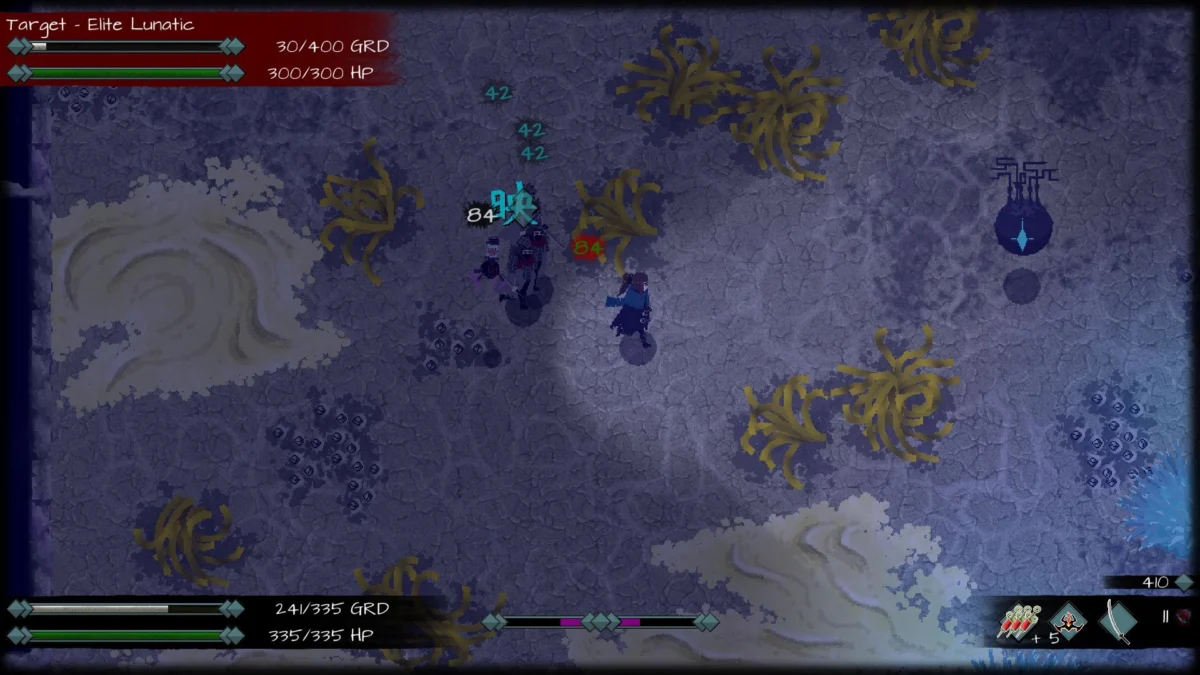
In the ever-crowded landscape of the Metroidvania genre, standing out requires more than just tight platforming and interconnected maps; it demands a distinct identity. Skautfold: Moonless Knight, the latest entry in the Skautfold series, stakes its claim through a brutal marriage of Soulslike mechanical depth and oppressive cosmic horror. Set against the backdrop of an alternate-history Japan fractured by a cataclysmic lunar event, the game offers a punishing, atmospheric, and deeply rewarding experience that challenges the player’s dexterity and resolve.
The Premise: A World Under a Broken Moon
The narrative foundation of Skautfold: Moonless Knight is as grim as its gameplay. In this reimagined Japan, the moon has shattered, an event that serves as the catalyst for the arrival of eldritch horrors that have bled into reality. Players find themselves navigating a sprawling, labyrinthine palace—a microcosm of a world gone mad. This is not merely a setting; it is a character in itself. The architecture, inspired by historical Japanese design, is twisted and warped by the influence of these cosmic entities, creating a visual language of decay, cultism, and ancient malice.
The game eschews traditional storytelling in favor of environmental cues and lore drops, demanding that the player piece together the history of this dying world through the artifacts they collect and the monstrous remnants they encounter. It is an exercise in isolation, where the silence of the palace is broken only by the clash of steel and the guttural shrieks of the otherworldly threats lurking in the shadows.
Chronology of the Skautfold Experience
While Moonless Knight is an entry in a larger series, it functions as a standalone experience for those unfamiliar with the franchise’s history. However, for returning players, the evolution of the series’ combat mechanics is clear.
The Skautfold lineage has always been defined by its commitment to deliberate, high-stakes combat. Over the years, the developers have refined their approach, moving away from the more traditional "stamina management" found in early iterations and toward a more focused, skill-based system. Moonless Knight represents the pinnacle of this evolution, placing the "Guard" mechanic at the very center of the gameplay loop.
This progression—from experimental indie titles to this highly polished, albeit brutal, Metroidvania—reflects a trend in the genre where developers are increasingly willing to alienate casual players in favor of creating a "pure" mechanical experience that rewards those who dedicate the time to master it.
The Mechanics of Mastery: The Guard System
The core of Skautfold: Moonless Knight is its combat. Unlike many of its peers, which prioritize rapid-fire attacks and dodge-rolling, Moonless Knight forces the player to engage with the environment and their enemies with calculated precision.
The Guard Mechanic
The Guard meter is the game’s defining feature. It serves as both your primary defense and your endurance. When you block, your guard meter depletes; if it breaks, you are left vulnerable to devastating attacks. This creates a constant, high-tension risk-versus-reward loop. Players must decide in a fraction of a second whether to commit to an aggressive offensive, parry an incoming blow, or retreat to recover their guard. Mastering this timing is not optional—it is the prerequisite for survival.
Weapon Variety and Progression
The game provides a diverse arsenal of weapons, each offering a different approach to the game’s various boss encounters. These weapons are complemented by a suite of relics. These items serve a dual purpose: they act as passive buffs for combat and as essential exploration tools. As you progress, finding new relics allows you to access previously unreachable areas, adhering to the classic Metroidvania design philosophy while layering on the depth of an RPG progression system. You are not just upgrading stats; you are expanding your capabilities.
The Challenges of Exploration
While the combat is exemplary, the exploration aspect of Skautfold: Moonless Knight presents a more divisive experience. The game world is vast and deeply interconnected, filled with hidden shortcuts and secret passages that reward the curious. However, the game lacks a traditional "hand-holding" approach.
Navigation can, at times, become frustrating. The map design, while intricate, does not always provide the player with clear indicators of their next objective or the path forward. For players accustomed to the modern convenience of quest markers and guided paths, the early hours of Moonless Knight can feel akin to stumbling through a dark room. This design choice is clearly intentional—a way to force the player to truly learn the layout of the palace—but it creates a steep learning curve that may discourage those who prioritize pacing over discovery.

Aesthetic and Atmosphere: The Pixelated Abyss
Visually, Skautfold: Moonless Knight eschews the current trend of vibrant, hand-drawn art for a gritty, dark, and deeply evocative pixel-art style. The color palette is muted, dominated by shadows and the unnatural glow of cosmic entities. This visual identity perfectly complements the game’s oppressive atmosphere.
The soundtrack is equally vital to this experience. Composed of haunting, melancholic tones, the music acts as a constant companion, ratcheting up the tension during exploration and reaching a crescendo during the game’s difficult boss battles. It is not a soundtrack designed for background noise; it is an active participant in the game’s horror, reminding the player that they are an intruder in a space that was never meant for them.
Official Responses and Developer Intent
While the developers have maintained a relatively low profile regarding their design choices, the consistency across the Skautfold series suggests a clear philosophy: "Difficulty as a Narrative Tool." By refusing to simplify the mechanics or offer significant accessibility options, the developers ensure that the player’s journey mirrors that of the protagonist—a struggle against overwhelming odds where every victory is earned.
In interviews and dev-logs, the creators have emphasized that the "confusion" and "frustration" felt by players in the early game are intended feelings. They want the player to feel lost, to feel the weight of the cosmic horror, and to experience the genuine relief of finding a shortcut or defeating a boss that had previously seemed insurmountable.
Implications for the Metroidvania Genre
Skautfold: Moonless Knight sits at an interesting intersection in the gaming industry. It represents the "hardcore" wing of the Metroidvania genre, standing in stark contrast to more accessible titles that focus on fluidity and ease of movement.
A Shift Toward Niche Appeal
The success of games like Moonless Knight implies that there is a growing, dedicated audience for titles that do not compromise on difficulty. As the indie market becomes increasingly saturated, titles that lean into a specific, "unapologetic" identity often find more long-term success than those trying to appeal to a broad demographic. By prioritizing a deep, mechanical combat system over mass-market accessibility, the developers have ensured that Moonless Knight will be remembered as a cult classic rather than a generic entry in the genre.
The Future of Soulslike Hybrids
The integration of Soulslike combat into 2D Metroidvanias is no longer a novelty; it is an established sub-genre. Moonless Knight pushes this further by stripping away the safety nets, proving that the genre can support deeper, more punishing systems without losing the sense of exploration that makes Metroidvanias compelling.
Final Assessment: Who is this for?
Skautfold: Moonless Knight is not a game for everyone. It demands a high degree of patience, a willingness to learn from failure, and an appreciation for bleak, atmospheric storytelling. Its deliberate pacing and lack of guidance are hurdles that some players will find insurmountable.
However, for those who crave the thrill of the struggle, for those who want to master a combat system that feels fair but uncompromising, and for those who enjoy the dark, cosmic dread of a world that has already lost its future, Moonless Knight is an essential experience. It is a testament to the idea that games do not need to be easy to be rewarding, and that the best experiences are often those that force us to confront our own limitations.
In the fractured halls of its central palace, Skautfold: Moonless Knight offers a challenging, memorable journey that lingers long after the final boss is defeated. It is, at its heart, a game about endurance—both for the character on the screen and the player behind the controller.