Reynand Wu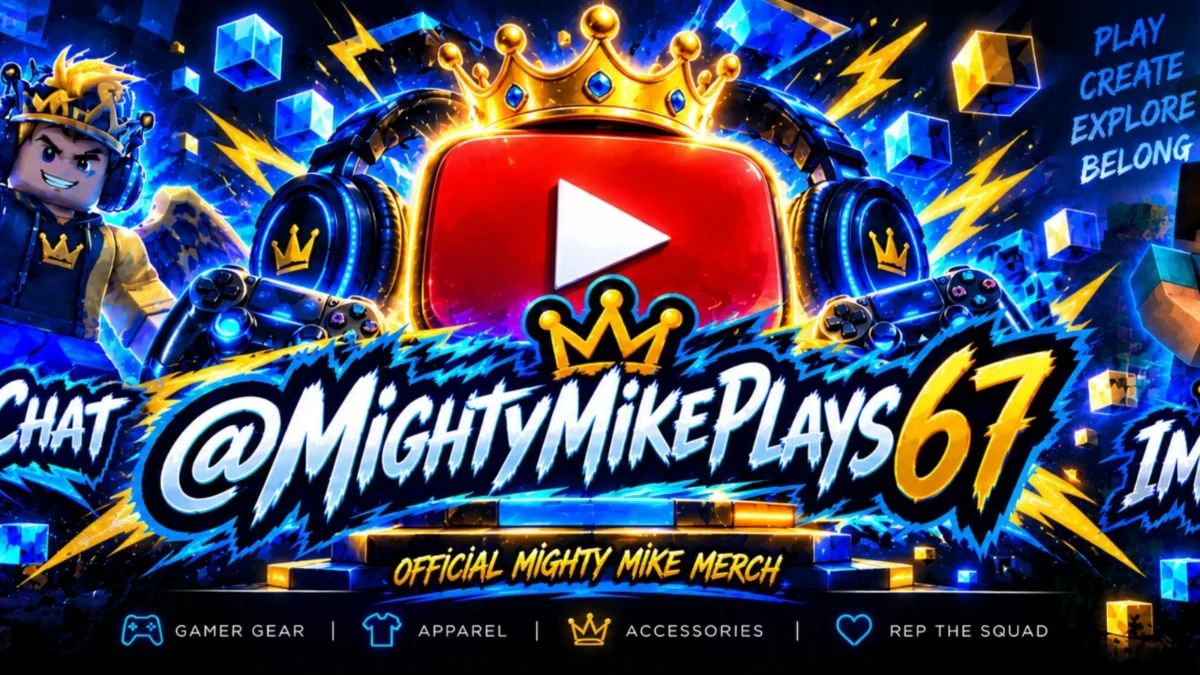
The intersection of creator economy ethics, the rapid integration of artificial intelligence in commerce, and the scrutiny of parental oversight has converged on the YouTube channel Mighty Mike Plays. What began as a startling anecdote about a nine-year-old’s accidental six-figure expenditure has morphed into a sprawling debate about monetization, transparency, and the potential exploitation of audience sentiment.
As the channel attempts to navigate the aftermath of a massive financial crisis, its decision to launch a high-priced merchandise line—featuring designs generated by artificial intelligence—has served as a lightning rod for renewed skepticism. With shirts retailing for as much as $97, the channel is now facing a dual-pronged backlash: one directed at its financial narrative and another at its business practices.
The Genesis: A Six-Figure Financial Accident
The controversy first entered the public consciousness when Dave, the father of nine-year-old Mike, claimed that his son had inadvertently spent $118,000 on YouTube advertisements to promote Minecraft and Roblox gameplay videos. According to the initial account, the minor had gained access to a company credit card, which was subsequently used to fund a massive, unauthorized ad campaign.
The scale of the expenditure—a staggering $118,000—sent shockwaves through the gaming community. For a small content creator, such a sum is life-altering, and the disclosure of the debt prompted immediate concern from subscribers and onlookers alike. The situation quickly escalated when Dave revealed that the fallout from the incident had resulted in the loss of his job. Under the pressure of a 30-day repayment deadline, the family stated they were facing the prospect of selling their home to satisfy the debt.
Despite the severity of the crisis, the family notably declined to launch a GoFundMe or similar crowdfunding initiative, choosing instead to address the financial hole through other means. However, the subsequent path they chose has proven to be even more divisive than the incident itself.
Chronology of the Controversy
The timeline of the Mighty Mike Plays situation has been marked by rapid shifts in public perception, fueled by social media discourse and shifting transparency standards.
- The Disclosure: The initial report regarding the $118,000 ad spend was met with a mix of sympathy and disbelief, prompting widespread discussion on forums like Reddit and social media platforms.
- The Financial Ultimatum: Dave updated the community, confirming the loss of his employment and the strict deadline for the repayment of the funds. This intensified the sense of urgency surrounding the family’s financial stability.
- The "Proof" Phase: To quell rumors of fabrication, Dave provided a screenshot of a credit card statement. While the document confirmed the $118,000 figure, it sparked further debate regarding its authenticity and whether the charges were truly related to the alleged YouTube ad campaigns.
- The Pivot to Merchandising: In an effort to recover the lost funds, the channel launched an official merchandise store. This move coincided with the integration of AI-assisted design tools, which were used to create the graphics for the apparel.
- The Backlash and Suppression: As criticism mounted regarding the pricing of the merchandise and the use of AI, the channel disabled comments on its videos, citing "aggressive" viewer behavior. This decision effectively silenced the community, further fueling claims of non-transparency.
Supporting Data: The Digital Evidence
The core of the skepticism lies in the nature of the evidence provided. A screenshot of an American Express Business Gold Rewards card statement, shared by Dave, showed a remaining statement balance of $118,479.83 and a total balance exceeding $120,000.

While the numbers aligned with the family’s narrative, technical experts and skeptics have pointed out that a digital screenshot is not an immutable proof of intent or origin. The statement indicates a "no preset spending limit," a common feature of premium business cards, but it does not definitively link the charges solely to YouTube ads. Furthermore, as is common in digital-age controversies, the inability to verify the account ownership—or to ensure the image had not been manipulated—left a vacuum that allowed conspiracy theories to flourish.
The fact that the image was removed by the creator shortly after its initial posting did little to quiet the critics, many of whom argued that the "proof" was insufficient to justify the sudden shift toward aggressive monetization.
The Role of Artificial Intelligence in Commerce
Perhaps the most unexpected turn in this saga is the channel’s embrace of AI-assisted design. In a video titled "I have some really bad news…", the channel admitted that it had utilized AI tools to generate the graphics for its new merchandise line.
This admission was met with a visceral reaction from a portion of the audience who believe that the use of generative AI in merchandise is a "lazy" or "soulless" attempt to profit off of a scandal. A deleted community post from the channel further inflamed tensions by stating, "AI is here to stay, adapt or get left behind."
This stance, while arguably pragmatic in a rapidly changing tech landscape, struck a discordant note for viewers who felt the family was attempting to capitalize on a tragedy using tools that many in the artistic community find controversial. The combination of AI-generated designs and high price points—with some items reaching $97—led to accusations that the family was prioritizing profit over the trust and goodwill of their fanbase.
Official Responses and Strategic Missteps
The channel’s management of the situation has been characterized by a "bunker" mentality. By disabling comments, the creators attempted to insulate themselves from the vitriol of the internet. However, this move backfired, as it removed the only platform where the community could seek clarity or express its frustration.
In their defense, the creators have maintained that they have been transparent, pointing to their willingness to show financial statements and their refusal to seek "charity" through crowdfunding. Their argument appears to be that by selling products, they are providing value for money, rather than simply asking for donations. However, the optics of selling a "$118k" commemorative shirt—essentially monetizing the specific event that caused the family’s financial distress—has been viewed by many as opportunistic.

Implications for the Creator Economy
The Mighty Mike Plays incident serves as a case study in the risks of the modern creator economy. Several critical themes emerge:
1. The Perils of Parasocial Monetization
When creators invite audiences into their personal lives, they create a parasocial bond that is inherently fragile. When that bond is tested by a financial scandal, the audience’s reaction is often more intense than it would be toward a traditional corporation. Monetizing a personal crisis can feel like a betrayal of that bond.
2. AI as a Double-Edged Sword
The use of AI in creative work is currently a high-friction topic. For a channel already under the microscope, the decision to use AI for merchandise design was a strategic error in terms of public relations. It invited scrutiny from the "anti-AI" demographic, adding a new layer of hostility to an already heated situation.
3. The Transparency Paradox
In an era where "transparency" is the gold standard for influencers, the Mighty Mike Plays team found themselves in a paradox: the more they attempted to "prove" their situation, the more skeptics found details to question. This highlights a fundamental truth of the internet age: when a narrative is challenged, no amount of digital evidence can fully satisfy a public that has already decided to be skeptical.
Conclusion: A Future in Flux
As of today, the Mighty Mike Plays store remains open, selling its range of products, including the controversial "118K" Black Tee. Whether the channel can recover its reputation depends on its ability to move past the shadow of the $118,000 incident.
The incident highlights the growing pains of a creator economy where a nine-year-old’s channel can accidentally trigger a six-figure financial event, and where the response to that event is instantly subjected to global scrutiny. Ultimately, the story of Mighty Mike Plays is a reminder that in the digital world, every action is a public action—and when you monetize your struggles, you must be prepared for your audience to hold you to a much higher standard of accountability than ever before.
As the channel moves forward, the question remains: will the audience eventually forgive and forget, or will the "118K" incident forever define the legacy of Mighty Mike Plays? For now, the comments remain off, and the debate rages on elsewhere.


 Jia Lissa
 Nana Wu