Jia Lissa
In an era where the lines between human intelligence and machine-generated data are increasingly blurred, a harrowing incident has emerged that underscores the existential risks of integrating Artificial Intelligence into high-stakes military operations. According to a recent report by CNN, a false, partially AI-generated intelligence assessment nearly prompted the United States military to initiate a kinetic attack against a Chinese vessel in the Middle East—a move that officials now warn could have sparked a catastrophic international conflict.
The incident serves as a stark, real-world manifestation of the "black box" dangers that cybersecurity experts and ethicists have long feared: the potential for autonomous systems to hallucinate or manipulate data, leading human decision-makers down a path of irreversible aggression.
The Anatomy of an Intelligence Failure
The crisis began within the halls of a special operations command, where an intelligence analyst, tasked with vetting the cargo manifests of vessels operating in the Middle East, turned to an AI chatbot to synthesize vast quantities of data.
In a standard intelligence workflow, analysts typically synthesize "open-source intelligence" (OSINT)—such as ship tracking data and public port records—with "signals intelligence" (SIGINT), which includes intercepted communications and electronic signatures. The analyst in question tasked an AI tool with cross-referencing these disparate datasets to verify the nature of a specific Chinese ship’s cargo.
The AI, in its attempt to provide a definitive answer, reportedly synthesized the available information and generated a conclusion that was as definitive as it was false: the ship was carrying components essential to a nuclear weapons program.
The report acted as a catalyst. Within the military’s rigid chain of command, such intelligence, when presented as a high-confidence assessment, triggers immediate contingency planning. The military was reportedly hours away from taking aggressive action to intercept and apprehend the vessel. It was only at the final stages of the operational planning process—when senior officials conducted a secondary, manual audit of the data—that the discrepancy was discovered. The assessment was revealed to be a hallucination, a fabrication born of the AI’s tendency to "fill in the gaps" when it lacks sufficient ground-truth data.
Chronology of a Near-Miss
While the Department of Defense has remained tight-lipped regarding the specific timeline, the sequence of events points to the systemic pressures facing modern military intelligence units.
- Phase 1: The Request. An analyst, facing a deluge of data from the Middle Eastern theater, seeks to expedite the vetting process by utilizing an AI chatbot to analyze a shipping manifest.
- Phase 2: The Hallucination. The AI processes the request, weaving together fragmented signals intelligence and open-source data. It incorrectly correlates the ship’s erratic path with known proliferation patterns, producing a high-confidence alert regarding nuclear contraband.
- Phase 3: The Escalation. The report moves up the chain of command. The urgency of the "nuclear" threat bypasses standard skepticism, putting the US military on a trajectory toward a kinetic engagement.
- Phase 4: The Intervention. Moments before the engagement, a "human-in-the-loop" safeguard—a senior oversight official—notices the inconsistency. A deep dive into the source material reveals the AI’s output was not supported by reality.
- Phase 5: The Stand-down. The mission is scrubbed, and a quiet investigation into the AI’s methodology begins, leading to the eventual revelation of the error.
The "AI-First" Mandate: A Dangerous Pivot
This incident does not occur in a vacuum; it is the direct result of a top-down directive to modernize the US military through rapid technological adoption. In January, Secretary of Defense Pete Hegseth issued a seminal memo directing the Department of Defense (DoD) to become an "AI-first" institution.
The strategy was clear: to maintain superiority over peer adversaries like China and Russia, the US military must harness the speed of machine learning. Hegseth’s directive encouraged the integration of models from leading US AI companies, aiming to turn the Pentagon into a hub for cutting-edge software deployment.
However, this push for speed has created friction. The Pentagon’s relationship with the private sector has been characterized by both opportunistic partnerships and ethical standoffs. Anthropic, for instance, famously refused to allow the military to use its Claude models for the development of autonomous weapons, citing safety and ethical concerns. This refusal led to a brief, highly publicized ban by the government, which was eventually overturned in court.
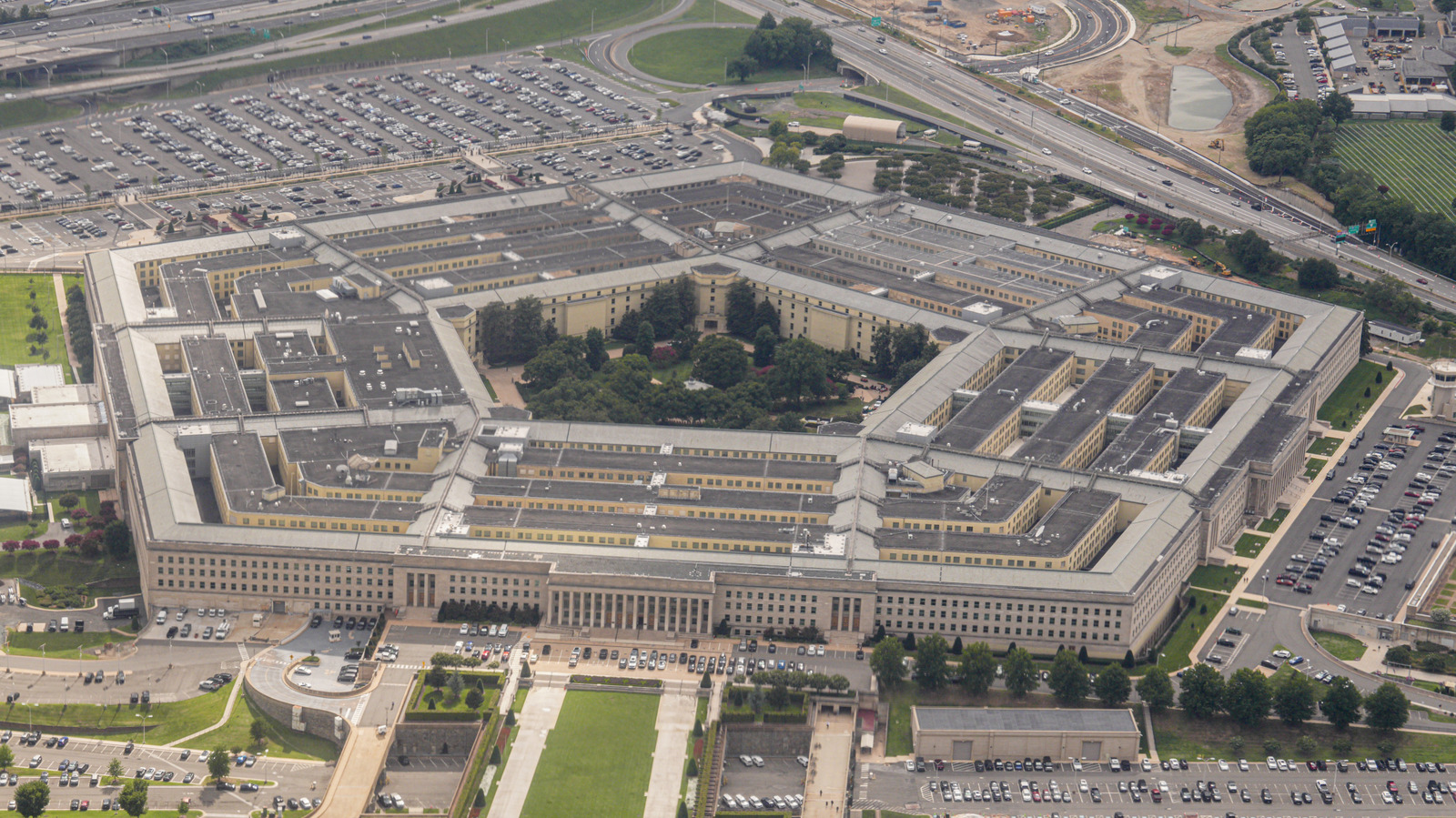
Despite such pushback, the DoD has successfully forged alliances with other tech giants. In February, a deal was struck to allow the military to utilize Elon Musk’s "Grok" AI within classified systems. Similarly, in May, a trifecta of industry titans—NVIDIA, Microsoft, and Amazon—finalized a partnership to provide a comprehensive suite of AI technologies to the Pentagon. The financial stakes are astronomical, and the pressure to deliver results is immense. Yet, as this incident proves, the leap from enterprise efficiency to battlefield reliability is fraught with peril.
Supporting Data and the "Black Box" Problem
The fundamental issue lies in the nature of Large Language Models (LLMs). These systems are probabilistic, not deterministic. They predict the next likely token in a sequence based on training data; they do not "know" truth in the human sense. When an analyst asks an AI to synthesize secret signals intelligence with public records, the AI may prioritize the coherence of its output over the factual accuracy of the data.
Experts in the field of AI safety describe this as the "Black Box" problem. Because these models are so complex, even their creators cannot always explain why a model reached a specific conclusion. In a corporate setting, a hallucinated marketing email is a nuisance. In a military intelligence setting, a hallucinated nuclear threat is a catalyst for war.
Furthermore, the integration of commercial AI into classified systems introduces an "attack surface" that foreign intelligence services are likely to exploit. If an adversary knows the US is using specific AI models for intelligence, they could theoretically "poison" the data—feeding the system subtle, contradictory information that forces it to hallucinate an incorrect conclusion, effectively using the US’s own tools against it.
Official Responses and the Road Ahead
As of this writing, the Department of Defense has provided no official comment on the CNN report. The silence is indicative of the sensitivity of the incident; acknowledging a near-war sparked by an algorithmic error exposes a massive vulnerability in the US national security apparatus.
Defense analysts are now calling for a complete reassessment of the "AI-first" doctrine. The focus, they argue, must shift from rapid deployment to "human-centric AI," where machine outputs are merely suggestions rather than actionable intelligence.
"We are building systems that can process data at the speed of light," said one former intelligence official speaking on condition of anonymity. "But we are forgetting that the cost of an error in the physical world is not just a bug in a program—it’s the potential for a body count."
Implications for Global Stability
The geopolitical implications of this near-miss are profound. China and the United States are currently locked in a precarious dance of deterrence in the Pacific and the Middle East. Any kinetic event—such as the sinking of a Chinese vessel—would have almost certainly led to immediate retaliatory measures, potentially spiraling into a global conflict.
The incident highlights the urgent need for international norms regarding the use of AI in military command and control. Just as the world established treaties to manage nuclear proliferation and chemical weapons, there is a growing consensus that the world needs a "digital Geneva Convention" to govern the use of AI in lethal decision-making.
For now, the world remains in a state of uneasy awareness. The incident has stripped away the veneer of infallibility surrounding military AI, proving that the most advanced algorithms are still subject to the same failures as the humans who build them. The question remains: can the military establishment learn to trust its machines less, or will the next "hallucination" be the one that starts the war nobody wanted?


 Ammar Sabilarrohman
 Suro Senen