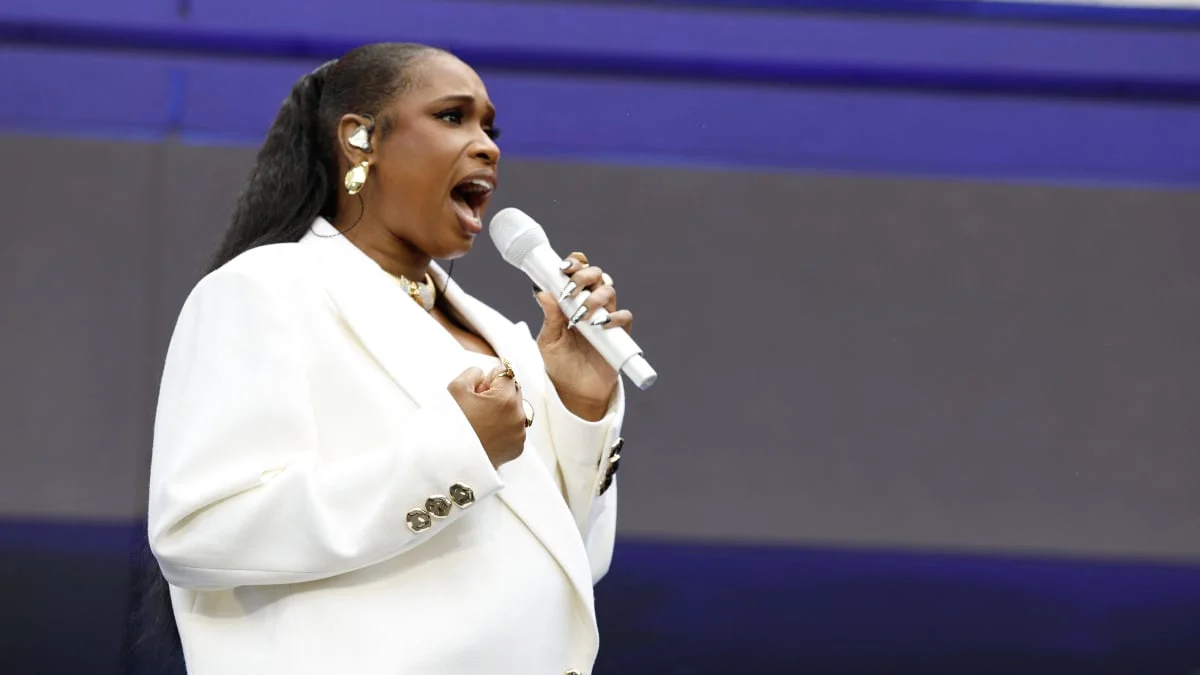
The stage is set for the climax of the 2026 FIFA World Cup, but the buildup to the final between Spain and Argentina has been marked by a controversy as unexpected as it is culturally charged. As the world turns its eyes to the New York-New Jersey Stadium (MetLife Stadium) this Sunday, July 19, the inclusion of a "special rendition" of "The Star-Spangled Banner" by Grammy-winning powerhouse Jennifer Hudson has sparked a fiery debate among the global soccer faithful. While the United States national team was eliminated from the tournament earlier in the competition, the decision to elevate the American anthem has left many international fans questioning the boundaries between global sporting tradition and the "Americanization" of the beautiful game.
The Chronology of the Controversy
The discord began on July 14, when FIFA officially announced its pre-match entertainment lineup. The schedule confirmed that the closing ceremony would commence at 1:30 p.m. ET, ninety minutes prior to the 3:00 p.m. kickoff. Among the star-studded list of performers—including Post Malone, Robbie Williams, and Tom Cruise—was Jennifer Hudson, tasked with performing the U.S. national anthem.
For traditionalist soccer fans, the news was jarring. The FIFA World Cup final has historically been a showcase of the two participating nations, beginning with the anthems of the competing teams. While anthems are standard, they are almost exclusively reserved for the representatives of the teams playing. To include the host nation’s anthem—when the host is not a participant—struck many as a departure from the sport’s international ethos.
Social media platforms erupted, with fans from Europe, South America, and beyond expressing confusion. The sentiment was clear: Why prioritize the anthem of a country that is merely the "landlord" of the event, rather than a participant in the match? As the discourse escalated, it became evident that this was not merely a scheduling decision, but a symbolic move that reflects the changing priorities of FIFA’s commercial landscape.
A Legacy of Precedent and Performance
Despite the outcry, FIFA has defended the decision by framing it as a celebration of the tournament’s geography. This year’s World Cup is a tripartite effort, hosted by Canada, Mexico, and the United States. FIFA argues that as the final takes place on American soil, the performance serves as a tribute to the host nation.
It is worth noting that this is not entirely unprecedented. During the 1994 World Cup, which was also held in the United States, legendary saxophonist Kenny G performed a rendition of "The Star-Spangled Banner" during the closing ceremony, which preceded the final match between Brazil and Italy. However, in 1994, the scale of global digital discourse was non-existent. Today, every decision made by FIFA is scrutinized in real-time by a global audience of billions, making the "host nation tribute" appear to modern fans as an attempt to force-feed American sports culture into a global phenomenon.
The pre-game spectacle is set to be one of the most elaborate in the history of the sport. Beyond Hudson, the ceremony will feature a diverse array of artists, including Nicole Scherzinger and Laura Pausini, alongside the viral internet sensation IShowSpeed. The sheer volume of non-footballing talent scheduled to take the stage has led to accusations that the sport is becoming secondary to the "show."
The Halftime Pivot: A Historic First
If the pre-game anthem sparked the debate, the halftime show has solidified the criticism. For the first time in World Cup history, FIFA has sanctioned an 11-minute halftime performance, curated by Coldplay frontman Chris Martin. The lineup is undeniably star-studded, featuring Madonna, Shakira, BTS, and Justin Bieber.
FIFA has positioned this as a charitable endeavor, noting that the performance will support the FIFA Global Citizen Education Fund, aimed at expanding access to education and soccer programs worldwide. Yet, for many purists, the introduction of a Super Bowl-style halftime show is a bridge too far.
Critics argue that the integrity of the match—a 90-minute test of physical and mental endurance—is compromised by a lengthy, production-heavy interval. The logistical challenges, including the need for a rapid pitch setup and breakdown, have raised concerns about the playing surface, a common point of contention throughout this tournament. For those who view soccer as a continuous, flowing narrative, the injection of a "concert" mid-match is viewed as a blatant attempt to import the American broadcast model, which prioritizes advertisement and entertainment slots over the sanctity of the game.
The Economic Engine: Why the Shift?
To understand why FIFA is risking the ire of its traditional fanbase, one must follow the money. FIFA has projected a record-breaking $13 billion in revenue for the current World Cup cycle. A significant portion of this growth is predicated on capturing the American market—a demographic that has historically been the final frontier for global soccer expansion.
The strategy appears to be working. Data from Fox Sports indicates that group-stage broadcasts averaged over 5 million viewers, nearly double the figures from the 2022 tournament. Simultaneously, Spanish-language broadcasts on Telemundo and Peacock have shattered previous records. By weaving American cultural touchstones—like a halftime show and a national anthem performance—into the fabric of the tournament, FIFA is lowering the barrier to entry for casual American viewers who are accustomed to the high-gloss production values of the NFL or NBA.
This commercial reality creates a tension between FIFA’s global roots and its financial aspirations. While the organization maintains that these decisions are about "celebrating the tournament," the data suggests they are about "scaling the audience."
The Broader Implications for Global Sport
The controversy surrounding Jennifer Hudson’s performance and the halftime show is symptomatic of a larger shift in global sports. As soccer moves toward a model that mimics the entertainment-first approach of American leagues, the sport faces a identity crisis.
For the international fan, the World Cup is a sacred space where the sport is the undisputed protagonist. For FIFA, the World Cup is a platform that must be optimized for the largest possible global footprint. When the two philosophies collide, the result is the current confusion.
Furthermore, the exclusion of the Canadian and Mexican national anthems from the final ceremony has added another layer of complexity. If the goal is to honor the "hosts," many ask why the tribute is restricted to the U.S. alone, given the shared hosting duties. This perceived favoritism has fueled the belief that the tournament’s identity has been disproportionately shifted toward American viewership at the expense of regional inclusivity.
Final Logistics: How to Watch
Despite the controversy, the match remains the main event. Spain and Argentina are prepared to contest the trophy at the New York-New Jersey Stadium, with kick-off scheduled for 3:00 p.m. ET.
For those tuning in:
- English-Language Coverage: Available on Fox, with streaming options via Fox One and the Fox Sports app.
- Spanish-Language Coverage: Available on Telemundo and Peacock, which will be streaming all 104 matches of the tournament live.
As the curtain rises on the 2026 final, the world will be watching not only to see who lifts the trophy but to see how the sport navigates its own future. Jennifer Hudson’s performance of "The Star-Spangled Banner" will likely be a technically flawless moment, but it will be remembered as a marker of a new era. Whether that era represents the successful globalization of soccer or the dilution of its traditional soul is a question that will be debated long after the final whistle blows on July 19.
Ultimately, while the American team is no longer in the tournament, their influence has never been more palpable. FIFA has made its bet: it is willing to trade a measure of tradition for the massive, untapped potential of the American sporting audience. As the anthem rings out across the stadium, the world will see whether that gamble pays off in the long run.