Layla Zulfa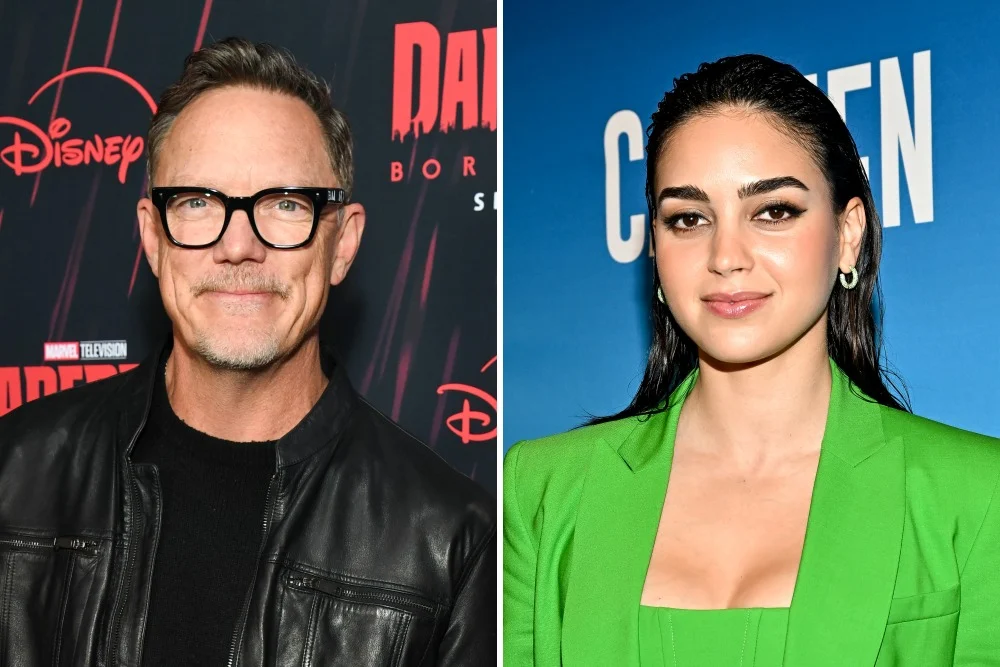
In an era where the intersection of celebrity, political activism, and corporate branding has never been more fraught, few figures navigate the terrain with as much raw candor as Matthew Lillard. The veteran actor, beloved for his portrayal of Stu Macher in Wes Craven’s seminal 1996 horror classic Scream, recently found himself in a moment of profound personal reflection. During a candid Q&A session at a 30th-anniversary screening of the original film, Lillard addressed the controversy surrounding his return to the Scream franchise for the latest installment, Scream 7, expressing deep-seated “shame” over his decision to participate following the firing of co-star Melissa Barrera.
Lillard’s remarks have reignited a conversation about the boundaries of artistic freedom, the pressures of franchise loyalty, and the moral weight of silence in the face of industry-wide political shifts.
The Chronology of a Controversy: From Social Media to Blacklisting
The friction within the Scream universe began in late 2023, shortly after the outbreak of the war in Gaza. Melissa Barrera, who had become the face of the revitalized franchise following her lead roles in the fifth and sixth installments, utilized her Instagram platform to share commentary regarding the humanitarian crisis. Barrera’s posts were explicitly critical of Israel, with the actor employing terms such as “genocide” and “ethnic cleansing” to describe the military actions in Gaza.
In response to these posts, Spyglass Media Group, the production company behind the franchise, took swift and decisive action. In a statement that sent shockwaves through Hollywood, the studio announced it had terminated its relationship with Barrera. The studio’s official stance cited a “zero tolerance” policy regarding what it characterized as antisemitism, Holocaust distortion, and the incitement of hate.
The fallout was immediate. The firing triggered a massive public outcry, with fans, human rights advocates, and fellow industry professionals questioning the studio’s interpretation of political speech versus hate speech. The controversy reached a boiling point during the promotional cycle for Scream 7, which hit theaters this past February. As the film went on to achieve significant commercial success—grossing an impressive $214 million worldwide to become the highest-earning entry in the series—it was simultaneously dogged by protests. Demonstrators appeared outside the film’s Los Angeles premiere, calling for a boycott and signaling that for many, the brand had become synonymous with the suppression of dissenting voices.
A Reckoning for the “Stu Macher” Legacy
Matthew Lillard’s return to the fold was meant to be a nostalgic victory lap. By reprising his role as the fan-favorite killer Stu Macher, Lillard’s involvement served as a bridge between the franchise’s legendary past and its contemporary success. However, as the political temperature rose, Lillard found himself increasingly at odds with the optics of his own professional choices.
When asked by a fan during the anniversary event about the difficulty of maintaining a political voice while working within the Hollywood studio system, Lillard did not mince words. Known for his outspoken nature—most notably his viral “fuck ICE” comment at a previous Scream event—Lillard framed his activism as an extension of his personal life.
“I don’t know how else to do it,” Lillard told the audience, as reported by Entertainment Weekly. “For me, I have queer kids. If I’m not standing up for queer kids or kids in the trans community, then what the fuck am I doing? If I’m not standing up against ICE, then what the fuck am I doing?”
It was when the conversation turned to Barrera that Lillard’s tone shifted from defiant to contemplative. Admitting he had been “so excited” to return to the Scream universe that he failed to fully account for the ethical implications of the studio’s treatment of his colleague, Lillard expressed a palpable sense of regret.
“I went back to do Scream, and I got called out. And I’m like, ‘Oh, fuck. That’s brutal,’” he confessed. “I feel bad about that. I feel ashamed about that. Because in that moment I was so excited to go back, I didn’t really think about Melissa and that journey. I didn’t say no. I’m embarrassed; that’s the truth… I blew that. I’m on the wrong side of history for that.”
Supporting Data: The Commercial vs. Moral Dilemma
The Scream franchise sits in a unique position within the horror genre. Historically, the films have functioned as meta-commentary on the state of cinema itself. By casting actors like Barrera—and then losing them to political controversies—the franchise inadvertently became a real-world participant in the very “slasher” dynamics it often satirizes.
Despite the boycott calls and the moral friction described by Lillard, the financial data suggests that the franchise’s core audience remained largely unfazed by the off-screen drama. The $214 million gross for Scream 7 demonstrates a "blockbuster immunity" often seen in established IP (Intellectual Property). However, the internal toll on the creative team is harder to quantify.
Industry analysts point out that Lillard’s public admission is a rarity in a business that usually demands strict adherence to public relations scripts. By admitting he was “on the wrong side of history,” Lillard has effectively placed himself in a precarious position—one that risks alienating the very studio that invited him back, while simultaneously validating the concerns of the activists who campaigned against the film.
Official Responses and the Corporate Stance
Spyglass Media Group’s original statement remains the definitive anchor of the corporate perspective. Their assertion that Barrera’s posts crossed the line into “hate speech” is a position they have held firmly, even as the discourse around the conflict in the Middle East has evolved.
In the industry at large, the firing of Melissa Barrera was seen by many as a litmus test for how production companies would handle the rising tide of geopolitical tension. Organizations such as the Writers Guild of America (WGA) and the Screen Actors Guild (SAG-AFTRA) have seen a marked increase in inquiries regarding "morality clauses" and the extent to which a studio can penalize an actor for social media activity.
While Spyglass has not issued a new response to Lillard’s recent comments, the silence from the studio is telling. In the current climate, studios are increasingly opting for risk-aversion, preferring to distance themselves from any project that sparks a boycott, regardless of the artistic merit of the performers involved.
The Implications: What Does This Mean for Hollywood?
Lillard’s candidness raises a fundamental question about the future of celebrity activism: Is it possible to remain a working actor in a major franchise while maintaining a radical political stance?
The implications are twofold. First, there is the matter of the “culture of silence.” If performers like Lillard feel “ashamed” for prioritizing their careers over their political principles, it suggests that the current Hollywood ecosystem is one of fear. Actors are increasingly finding that the price of admission to a major franchise is a degree of political neutrality—or at least, the willingness to ignore the professional "purges" of their peers.
Second, there is the question of the audience’s role. The fact that Scream 7 became the highest-grossing film in the series despite the controversy highlights a disconnect between the political priorities of vocal online communities and the general movie-going public. This, in turn, provides studios with the data necessary to continue making these decisions, knowing that the commercial fallout is rarely catastrophic.
Matthew Lillard’s reflection serves as a bridge between these two worlds. By using his platform to apologize and acknowledge his complicity, he has opened a window into the inner life of an actor who is forced to navigate the tension between artistic legacy and moral integrity. His admission that he “blew that” is not just a personal sentiment; it is a critique of the industry’s tendency to demand silence in exchange for success.
As the dust settles on the Scream 7 cycle, the conversation is unlikely to vanish. Lillard has proven that even decades into a career, one can still be forced to confront their own values in the face of a rapidly changing world. His "shame" may be personal, but the questions it raises are universal—challenging every artist to ask, as Lillard did, "If I’m not standing up… then what the fuck am I doing?"

 Dwi Wanna