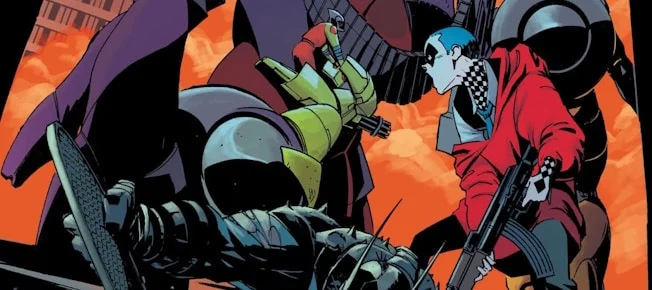
The landscape of Gotham City has shifted. In the latest installment of the Batman saga, readers are thrust into a world where the familiar pillars of justice are crumbling, and the dark underbelly of the city is rising to claim the throne. With Batman facing what appears to be his ultimate defeat, the narrative spotlight has expanded to include the growth of the Robins and a long-awaited, chilling revelation regarding Harley Quinn’s true origins.
This latest issue, penned by the legendary Scott Snyder and brought to life by the visceral art of Werther Dell’Edera, represents a pivotal moment in DC Comics’ current run. As the title challenges the conventional boundaries of the Dark Knight’s mythos, fans are left to grapple with questions that have haunted the edges of the panels for months.
The Creative Team: A Masterclass in Gotham Noir
To understand the weight of this narrative, one must first look at the caliber of the talent behind the pages.
- Story: Scott Snyder
- Art: Werther Dell’Edera
- Colors: Frank Martin
- Letters: Tom Napolitano
Snyder, known for his definitive runs on Batman: The Court of Owls and Dark Nights: Metal, brings a claustrophobic intensity to this issue. His ability to weave historical lore with modern stakes is on full display here. Complementing his script is the gritty, kinetic line work of Werther Dell’Edera, whose depictions of Gotham’s decaying architecture and the raw physicality of the characters provide the necessary atmosphere for a story centered on survival. Frank Martin’s color palette—heavy on deep shadows and neon-soaked anxiety—serves as the final layer in creating a Gotham that feels both dangerous and inevitable.
Chronology: From Hatchlings to Birds of Prey
A significant portion of the discourse surrounding this issue focuses on the evolution of the Robins. The "hatchling to bird of prey" metaphor used in the promotional material is not merely poetic; it is the central thematic anchor of the story.
The Formative Years
Historically, the Robin mantle has served as a symbol of hope—a bright counterpoint to Batman’s somber disposition. However, the current narrative trajectory posits that the traditional training methods have been insufficient for the threats Gotham now faces. The story moves through a chronological breakdown of the Robins’ development, contrasting their early, idealistic skirmishes against petty criminals with the brutal, tactical warfare they are forced to engage in now.
The Turning Point
The narrative shifts toward the "fledging" process—a moment in the timeline where the Robins were forced to cut ties with their mentor’s shadow to survive on their own terms. By exploring this transition, Snyder addresses the generational trauma inherent in the Bat-Family. The Robins are no longer merely sidekicks; they have been tempered by the fire of Batman’s potential defeat, forced to adapt to a world where the protector is no longer the immovable object he once was.
Supporting Data: The Ark M Connection and Harley Quinn’s Past
Perhaps the most startling development in this issue is the revelation regarding Harley Quinn’s origin and her deep-seated connection to "Ark M." For years, Harley’s history has been inextricably linked to the Joker’s manipulation and her time at Arkham Asylum. However, this issue pivots toward a more complex, systemic history.
What is Ark M?
"Ark M" represents a shadowy evolution of the Arkham ethos. It is depicted not just as a location, but as an institutional project—a facility designed to categorize and "reprogram" the anomalies of Gotham. The connection between Harley and Ark M suggests that her descent into madness was not a random occurrence, but a predetermined outcome of an experiment that has been running in the background of the city for decades.
Implications for Harley Quinn
By tying Harley’s origin to Ark M, the narrative shifts her character from a victim of circumstance to a key figure in the history of Gotham’s institutional failures. This revelation forces readers to reconsider her interactions with Batman and the Joker, framing them through the lens of a clinical study rather than a purely romantic or chaotic obsession.
Official Responses and Editorial Direction
While DC Comics has remained tight-lipped regarding the specific spoilers contained within the climax, editorial comments suggest that this issue is a foundational step toward a "New Gotham" era. In a recent press briefing, editorial staff noted that the goal of this arc was to strip away the "invulnerability" of the Batman brand.
"We wanted to see what happens when the bird is kicked out of the nest, not by choice, but because the nest itself is on fire," one representative stated. The decision to bring in Werther Dell’Edera—known for his more grounded, visceral approach to character anatomy—was a deliberate choice to move away from the "super-heroic" aesthetics of the past and toward a more human, fragile representation of the Bat-Family.
Implications: A New Era for Gotham
The ramifications of this issue are vast. As Batman faces what the narrative describes as "ultimate defeat," the implications for the future of the DC Universe are significant:
- The Decentralization of Justice: With Batman compromised, the responsibility for Gotham’s safety has fragmented. The Robins are no longer operating as a cohesive unit, but as independent operators. This decentralization creates a power vacuum that several antagonists are currently racing to fill.
- The Re-evaluation of Villainy: The link between Harley Quinn and Ark M suggests that many of Gotham’s "rogues" are products of institutional engineering. This could lead to a broader narrative arc involving the dismantling of the city’s psychiatric and legal infrastructure.
- The Changing Role of the Mentor: The "ultimate defeat" of Batman suggests that the era of the singular, all-knowing mentor is over. The coming issues will likely focus on how the protégés reconcile their respect for Batman’s legacy with the reality that his methods failed to protect them.
Conclusion: Why This Issue Matters
In the grand tapestry of Gotham’s history, some issues act as filler, while others act as turning points. This installment is undoubtedly the latter. By forcing the Robins to grow into their own as predators and by peeling back the layers of Harley Quinn’s traumatic origins, Scott Snyder has successfully re-contextualized the stakes of the series.
Whether one is a long-time reader of the Batman mythos or a newcomer drawn in by the intrigue of the Ark M project, this issue demands attention. It is a sobering reminder that in Gotham City, the only thing more dangerous than the villains is the truth behind the heroes.
Where to Purchase
For those looking to catch up on this critical chapter of the Batman canon, copies are available at local retailers and via digital distribution.
- Find a Shop: Visit Comic Shop Locator or call 1-888-comicbook.
- Digital/Online: The issue is currently available through Zeus Comics and Kindle.
As the Robins continue to navigate the ruins of their former home, one thing remains clear: the call of the predator is loud, and in this issue, it has finally been answered.
Disclaimer: This post contains affiliate links. If you click on one of the product links and make a purchase, we will receive a percentage of the sale. Graphic Policy prides itself on providing independent coverage of the comic book industry; your support through these links directly contributes to the maintenance and growth of our site.