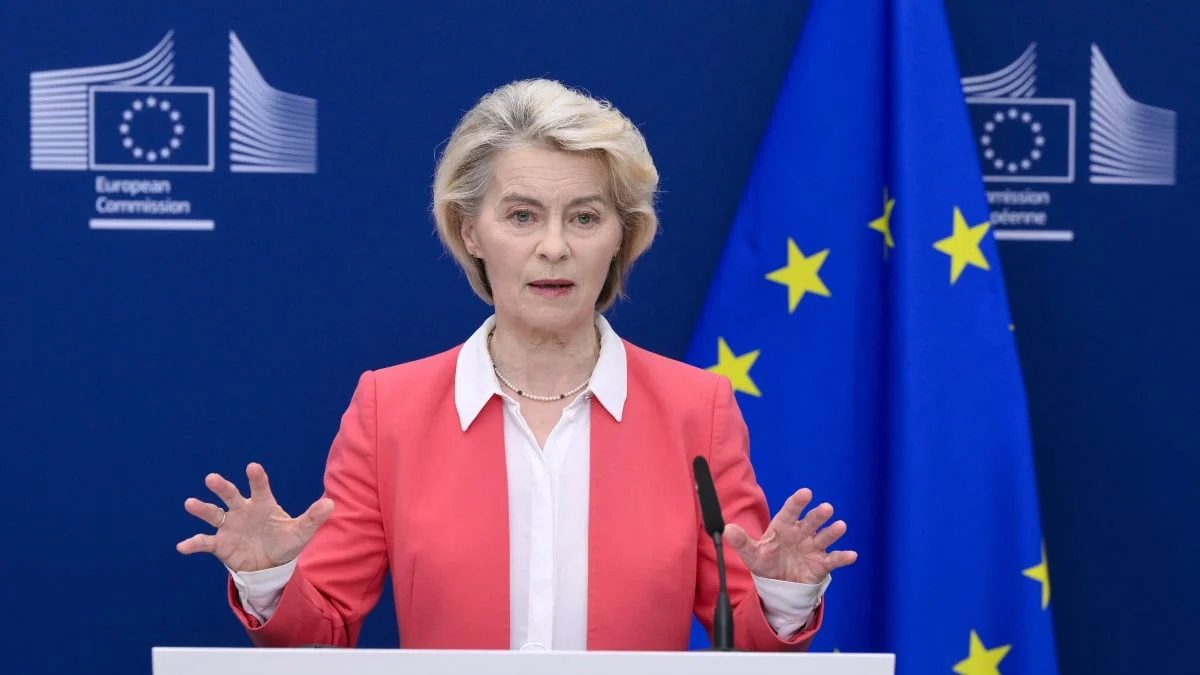
In a sweeping move to reshape the digital landscape for the next generation, Ursula von der Leyen, President of the European Commission, has announced a landmark initiative to restrict access to social media platforms and a broad range of "digital services" for children under the age of 13. The proposal, which follows the release of a comprehensive report on online child safety, signals a paradigm shift in how the European Union intends to govern the relationship between tech giants and its youngest citizens.
By framing the issue not as a denial of access to technology, but as a protective boundary against the predatory nature of algorithm-driven platforms, the European Commission is signaling that the era of "self-regulation" for Big Tech is effectively coming to a close within the bloc.
Main Facts: A New Regulatory Framework
The proposed restrictions go far beyond simple age gating. The European Commission’s strategy, informed by a specially convened panel of experts, aims to enforce rigorous safety standards across the digital ecosystem. This includes not only traditional social media networks but also video-sharing platforms, AI-driven digital companions, and online gaming environments.
At the core of the proposal are three pillars articulated by von der Leyen:
- The "Safety by Design" Mandate: Platforms must now provide verifiable proof that their services do not inflict harm on minors, mirroring the stringent safety testing requirements imposed on the automotive industry.
- Age-Assurance Infrastructure: The Commission intends to utilize its recently launched age-verification app to strictly enforce the under-13 threshold, ensuring that the burden of verification shifts from the user to the provider.
- The "Social Media Start Date": Much like established societal thresholds—such as the minimum age for obtaining a driver’s license or purchasing alcohol—the EU is advocating for a societal consensus on when a child is developmentally prepared to engage with the complexities of social media.
A Chronology of Escalation
The journey toward this legislative tipping point has been marked by mounting public concern and a series of high-profile debates regarding the mental health impacts of constant digital connectivity.
- Pre-2024: Growing discourse within the European Parliament regarding the "attention economy" and its impact on childhood development.
- April 2025: The European Union launches its centralized age-verification application, setting the technical stage for a continent-wide enforcement mechanism.
- Late 2025: A special expert panel is commissioned to evaluate the intersection of digital service design and child safety, leading to the current recommendation for a categorical ban for those under 13.
- Current Day: President von der Leyen formalizes the Commission’s intent, promising a concrete legislative proposal to be presented to the Parliament in the months following the summer recess.
Supporting Data: The Case for Intervention
The push for these restrictions is not anecdotal; it is grounded in a growing body of research that links early social media exposure to increased rates of anxiety, depression, and body dysmorphia among minors.
The report published by the European Commission highlights that the digital environment is currently optimized for engagement, not for safety. For children under the age of three, the report recommends a "zero-screen" policy to protect early developmental stages. For those in the 3–13 bracket, the recommendation suggests that any digital interaction should be strictly time-limited and mediated by adult supervision.
Critically, the debate is global. While the EU moves forward, the international community is struggling with similar legislative hurdles:
- The UK and Canada: Both nations have moved toward legislative frameworks aimed at blocking social media access for those under 16, citing the need for systemic protection.
- Indonesia: A nation currently navigating the complexities of a total ban for the under-16 demographic.
- Australia’s Cautionary Tale: In December 2025, Australia implemented a stringent ban on social media for minors. However, recent empirical studies have cast doubt on its efficacy, suggesting that "workarounds"—such as VPNs and parental account sharing—have rendered the ban largely symbolic. This data point serves as a vital lesson for Brussels: legislation without robust, tamper-proof technical enforcement is likely to fail.
Official Responses and Industry Pushback
The tech industry’s reaction has been largely defensive. Industry lobbyists argue that the European Commission is conflating "social media" with "digital services," potentially stifling innovation and creating a "walled garden" that disconnects European children from global digital discourse.
Conversely, child advocacy groups have lauded the move as a long-overdue correction. "For too long, the digital rights of children have been sacrificed on the altar of corporate profit," said a representative from a leading European digital safety NGO. "Von der Leyen’s comparison to the car industry is apt. We do not let children drive cars without testing, training, and seatbelts. Why should we allow them to navigate the volatile world of social media without similar safeguards?"
The European Commission remains steadfast. As von der Leyen noted, "This is not about whether children can access social media. It is about whether and when social media can access our children."
Implications: The Road Ahead
The implications of these potential regulations are profound. If passed, the EU would effectively create the world’s most restrictive digital environment for minors.
Technical and Economic Hurdles
Implementing these measures will require tech giants to overhaul their data collection and algorithmic delivery systems. If an app cannot "verify" a user is over 13, it will be barred from serving that user. This creates a massive economic disincentive for platforms to cater to younger demographics, effectively forcing a "clean-up" of the digital space.
The "Cultural Shift"
Von der Leyen acknowledged that this process would not be instantaneous or "foolproof." The goal is to embed a cultural change where digital sobriety is the norm. The comparison to drinking alcohol or driving is not accidental—it is an attempt to frame social media usage as a "privilege" associated with growing up, rather than a fundamental right of childhood.
Future-Proofing the Legislation
One of the greatest challenges the Commission faces is the rapid pace of technological change. By the time this legislation is fully implemented, the nature of "social media" may have shifted further into AI companions and virtual reality environments. The proposal is designed to be technology-agnostic, focusing on the impact of the service rather than the specific brand name, which should theoretically allow the law to evolve alongside the technology.
Conclusion: A New Standard?
The European Union is once again positioning itself as the global regulator of the digital age. By moving to restrict social media for children under 13, Brussels is challenging the fundamental business model of the attention economy.
As the proposal heads toward the formal legislative process post-summer, the eyes of the world will be on Europe. Will this legislation successfully foster a safer environment, or will it fall victim to the same technological evasions seen in Australia? Regardless of the outcome, the debate has irrevocably changed. The question is no longer whether social media should be regulated for children, but how strictly the state should define the boundaries of the digital childhood.
For parents, policymakers, and tech executives alike, the "social media start date" is no longer a fringe idea; it is becoming the central focus of digital governance in the 21st century.