

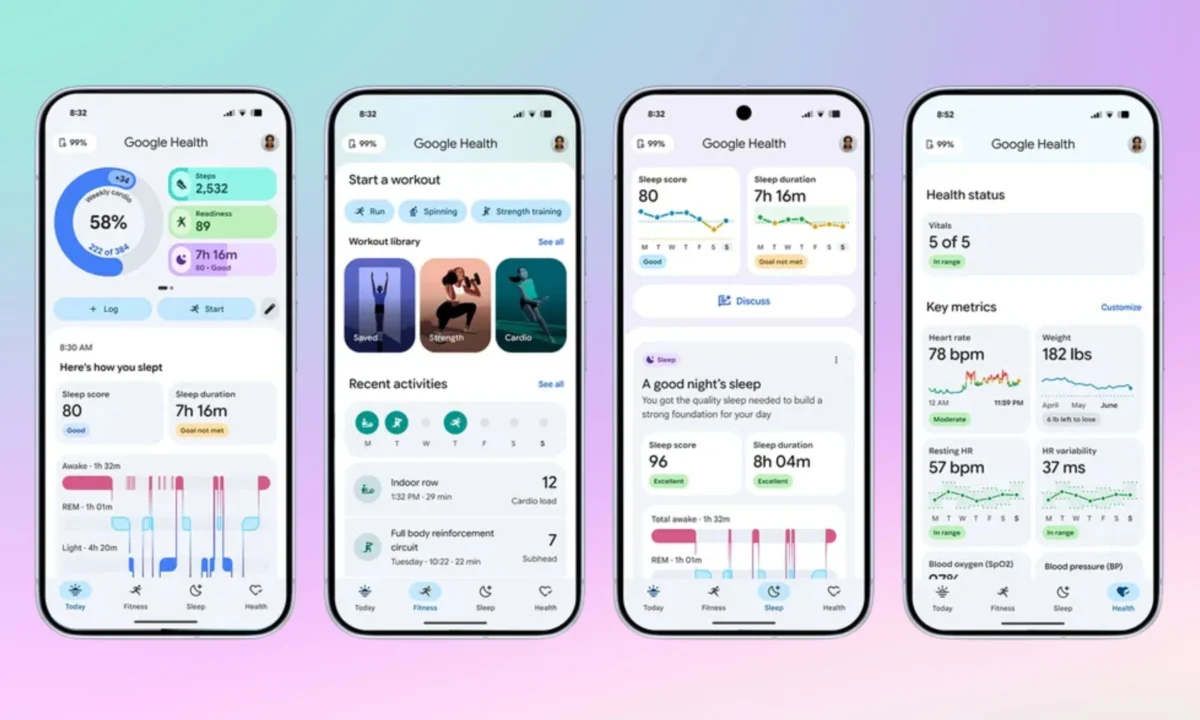
Google has officially initiated the global rollout of Google Health 5.0, a mandatory update that signals the end of the traditional Fitbit app experience and the beginning of a new, AI-integrated ecosystem. While the timing of this update is framed as a foundational move for the upcoming Fitbit Air—Google’s answer to the screenless wearable market—the transition has been met with a mix of excitement for its new interface and skepticism regarding the reliability of its AI-driven features.
Main Facts: A Shift in the Ecosystem
The rollout of Google Health 5.0, which began on May 19, 2026, and is slated for full global saturation by May 26, represents more than a mere software patch; it is a platform migration. Users of Fitbit hardware are finding that their legacy app experience has been fundamentally altered to prioritize the "Google Health" branding and the integration of Gemini-powered AI services.
At the heart of this update is the new "Quick Access" widget. Historically, the Fitbit home screen widget was limited to a static, circular steps counter. The new iteration is a significant leap forward in utility. Depending on user preference, the widget can expand to a 5×3 grid, allowing for the real-time visualization of up to six distinct fitness metrics. Users can customize this grid to monitor steps, distance, hydration, sleep quality, weight, and readiness scores.
Beyond the aesthetic shift, the update serves as the mandatory bridge for the imminent release of the Fitbit Air. By requiring all existing users to update to version 5.0, Google ensures that the infrastructure for its new $99 screenless tracker is pre-installed on millions of devices, streamlining the onboarding process for new hardware customers.
Chronology of the Transition
The timeline for this transition has been aggressive, reflecting Google’s desire to pivot its wearable strategy rapidly.
- Early May 2026: Google begins teasing the convergence of Fitbit services into the unified Google Health platform.
- May 19, 2026: The mandatory rollout of Google Health 5.0 begins for Android and iOS users.
- May 26, 2026: The expected date for full global availability of the update across all app stores.
- Late May 2026 (Scheduled): The retail launch of the Fitbit Air, Google’s direct competitor to the Whoop 5.0, which relies on the Health 5.0 architecture for synchronization.
This timeline suggests a deliberate strategy to ensure the user base is "pre-warmed" before the new hardware hits the shelves. By forcing the update, Google mitigates fragmentation, ensuring that when the Fitbit Air arrives, the software environment is uniform.
Supporting Data: The Power and Pitfalls of AI
While the UI updates—such as the synchronized tiles between the Today tab and the home screen widget—are largely seen as improvements, the technological backbone of the update has sparked controversy.
The centerpiece of Google Health 5.0 is the Gemini-powered "Health Coach." Google’s marketing materials describe this as a personalized AI expert capable of synthesizing complex health data into actionable insights. However, initial hands-on reports from industry analysts, including those from Lifehacker, have raised significant concerns regarding the accuracy of this model.
The Hallucination Problem
The primary issue identified is the tendency for the Health Coach to "hallucinate." In one documented instance, the AI congratulated a user for achieving a sleep score of 99, when the actual recorded score was 85. This 14-point discrepancy is not just a minor error; it undermines the user’s trust in the platform’s analytical capabilities.
Furthermore, the AI’s methodology for citing sources has been called into question. Testing revealed that the Health Coach occasionally references obscure or irrelevant Reddit threads to support its medical advice. In at least one instance, the AI pulled information from a thread where the answer itself had been generated by ChatGPT, creating a feedback loop of potentially inaccurate, synthetic data.

Implications for the User Experience
The migration to Google Health 5.0 is not merely a "skin" change; it involves a significant reduction in the feature set that many long-time Fitbit users held dear.
The Deprecation of Community Features
The update has removed several staples of the social fitness experience. Features that fostered engagement, such as the Community Feed, public/private Groups, and direct messaging, have been stripped away. For many, the "social accountability" aspect was the primary reason for staying with the Fitbit ecosystem. By removing these, Google is signaling a shift toward a more clinical, individual-focused, and AI-centric approach, potentially alienating the community that built the platform’s success.
The Removal of Lifestyle Tracking
Additionally, several utility features have been removed or heavily modified. Stress-check graphs, food plans with calorie targets, and the quirky but popular "sleep animals" have vanished. These removals suggest a move toward a more streamlined, "Google-fied" interface that favors data-density over engagement-driven gamification.
Financial Shifts: The Premium Barrier
Perhaps the most significant implication of the update is the paywalling of previously accessible features. During the Public Preview phase of Google Health 5.0, users were granted free access to the Health Coach and personalized fitness plans. With the official rollout, these features have been locked behind the Google Health Premium subscription.
Priced at $9.99 per month or $99.99 per year, this membership is now the only gateway to the full capabilities of the app. This creates a two-tiered system:
- Standard Users: Retain access to basic metrics and the new widget, but lose historical community features and advanced coaching.
- Premium Users: Access the full AI-coaching suite, despite the lingering concerns regarding the accuracy of the Gemini model.
Official Responses and Strategic Direction
Google has maintained that the consolidation of the Fitbit app into the Google Health brand is essential for the long-term viability of its wearable business. In internal communications and press briefings, the company has emphasized that the Gemini integration will improve over time as it processes more user data.
However, the "hallucination" issues remain a critical hurdle. For a platform dealing with medical and physiological data, precision is paramount. The current perception is that Google rushed the AI integration to compete with Whoop and other subscription-heavy health platforms, potentially at the expense of accuracy and user satisfaction.
Conclusion: The Path Forward
The rollout of Google Health 5.0 is a turning point for Google’s wearable strategy. By forcing a transition that combines a polished, high-utility widget system with an unproven and occasionally inaccurate AI coach, Google is gambling that the convenience of a unified ecosystem will outweigh the loss of legacy features and the growing pains of new technology.
For existing Fitbit users, the path forward involves a choice: embrace the new, AI-heavy subscription model and the potential for a more automated fitness journey, or reconsider their loyalty to a platform that has significantly altered its identity in the span of a few weeks. As the May 26 deadline approaches, the success of the Fitbit Air will likely hinge on whether Google can stabilize its AI coaching and justify the new Premium subscription costs to a base that is currently grieving the loss of its community-driven roots.












No comments yet. Be the first to join the conversation!