
 Asro
Asro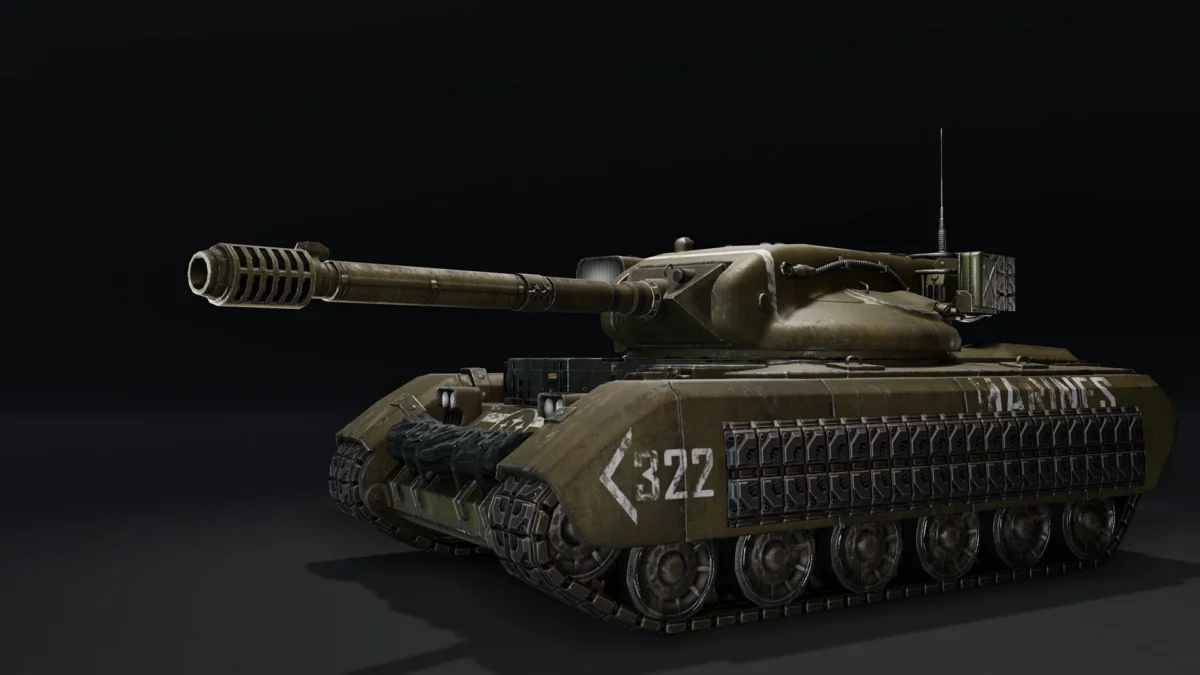
The tactical landscape of Menace, the ambitious sci-fi turn-based strategy game from Overhype Studios, has undergone a radical transformation. In a substantial new update, the developers—best known for the cult classic Battle Brothers—have introduced a suite of changes that simultaneously offer players powerful new tools for survival while drastically raising the consequences of failure.
While the addition of heavy-duty main battle tanks provides a much-needed tactical edge for players struggling against overwhelming odds, these gains are countered by a punishing new reality: the potential for permanent loss of support networks and a significantly more precarious path toward a total campaign "game over."
Main Facts: Tanks, Tillage, and Total War
The latest patch for Menace serves as a study in contrasts. On the battlefield, the introduction of heavily armored tanks fundamentally shifts the power dynamic. These units, which can be acquired via looting or through the game’s black market, offer more than just raw firepower; they serve as mobile, impenetrable barricades. In a game where the ballistic system is notoriously unforgiving—often turning "fleshy" infantry into casualties within seconds—the ability to deploy a moving wall of steel allows players to traverse dangerous, open terrain that was previously suicide for foot soldiers.
However, the update introduces three distinct new failure states that ensure the strategic layer of the game remains as lethal as the tactical one. Additionally, the developers have added wheat fields to the procedural generation of the maps—a neutral environmental change that adds visual variety to the gritty, war-torn star system.
A Chronology of Conflict: From Humble Beginnings to Total System Collapse
To understand the weight of this update, one must consider the trajectory of Menace since its early access launch. The game positions players as the commander of a lone ship of colonial marines, stranded in a hostile star system after a devastating explosion crippled their bridge. Since that initial arrival, the player has been tasked with managing a complex web of alien threats, rebel insurrections, and the encroaching, mysterious entity known simply as the "Menace."
- The Early Access Phase: Over the past several months, Overhype Studios has methodically fleshed out the game’s tactical sandbox. Previous updates introduced various minor vehicles and battle mechs, but these often felt underpowered compared to the sheer volume of opposition.
- The Current Turning Point: With this latest update, the "mid-game" and "late-game" experiences have been overhauled. The introduction of tanks represents the first major attempt to provide the player with top-tier heavy equipment, signaling that the developers intend for the scale of combat to escalate significantly.
- The New Threat Environment: The update concurrently introduced the concept of permanent faction wipe-outs, creating a "ticking clock" mechanic that forces players to prioritize certain sectors of the star system over others, lest they lose access to critical resources forever.
Supporting Data: The Logistics of Failure
The core of Menace’s difficulty lies in its resource management. Players rely on local factions to supply them with Operational Capacity Improvements (OCIs)—bespoke technological upgrades that are essential for keeping pace with the escalating firepower of the Menace forces.
The Cost of Abandonment
The latest patch notes from Overhype Studios confirm a brutal reality for those who fail to protect the planetary populations:
- Faction Extinction: If a planet is fully corrupted by the Menace, the associated story faction is permanently destroyed.
- Resource Stagnation: Once a faction is lost, the OCIs they provided can no longer be installed or maintained.
- Hostile Takeover: Planets lost to corruption cease to host standard missions and instead spawn exclusively high-difficulty, high-threat operations, effectively locking the player out of that territory for the remainder of the campaign.
The Three New "Game Over" Triggers
The update has refined the conditions under which a campaign is considered a total failure. Beyond the previous thresholds, players must now contend with:
![Your allies in turn-based tactics game Menace can now be completely wiped out by the [REDACTED], but at least the new patch gives us battle tanks](https://assetsio.gnwcdn.com/menace-battle-tank.jpg?width=690&quality=85&format=jpg&dpr=3)
- System-Wide Corruption: If all planets in the star system are overrun by the Menace, the campaign ends immediately.
- Authority Collapse: The "Authority" stat, which fluctuates based on mission success and failure, now acts as a death spiral mechanic. If it drops to -30, the campaign terminates. At this level of failure, players are already dealing with internal mutiny and squad disobedience, making the final game-over trigger a mercy for the struggling commander.
- Leadership Vacuum: If a player loses all their squad leaders and lacks the resources or status to recruit replacements from the black market, the mission is effectively impossible to continue, triggering a failure state.
Official Responses and Developer Intent
Overhype Studios has framed these changes as a necessary evolution of the "tactical sandbox." In their official developer log, the team emphasized that the game is intended to be a grueling experience where every decision carries the weight of a potential campaign-ending mistake.
By introducing the tanks, the developers acknowledge that the game’s previous difficulty curve left players feeling too fragile. However, by introducing the faction-wipe mechanics, they are clearly steering the game away from being a traditional power fantasy. The intent is to foster a sense of "circling the drain"—the feeling that the player is barely holding the line against a superior force. The wheat fields and other aesthetic improvements serve as a reminder of what the player is trying to protect, even if those fields are destined to become the site of a last stand.
Implications for the Meta and Player Strategy
The meta-game for Menace is likely to shift dramatically following this update. Previously, players might have prioritized defensive positioning and infantry preservation. Now, the emphasis must shift to sector management.
The "Tank" Strategy
The new main battle tanks are not merely tactical assets; they are strategic requirements. Players should look to hoard resources specifically for acquiring this armor. The ability to push through open fields allows for more aggressive maneuvers, which may be necessary to complete missions quickly enough to prevent planet-wide corruption.
The Prioritization Dilemma
The most profound implication is the shift in how players choose their missions. Because losing a planet means losing its specific OCI upgrades, players can no longer afford to "farm" easy missions. They must now actively defend the factions that provide the most essential upgrades. This creates a "triaging" mechanic: which planet is most vital to hold, and which can be abandoned to the Menace to save the rest of the system?
The Psychological Toll
The game is becoming a psychological endurance test. The new game-over triggers serve to heighten the tension of every turn. A bad mission result no longer just costs the player a squad member; it could potentially lead to the loss of a faction, which in turn weakens the squad for all future missions, making a "game over" even more likely.
Ultimately, Menace has doubled down on its identity as a punishing, high-stakes strategy game. While the addition of tanks offers a glimmer of hope and tactical variety, the underlying message is clear: the system is falling, the threats are growing, and only the most ruthless commanders will survive. At the very least, as the player watches their last squad crumble in a field of golden wheat, they will have the comfort of knowing that the armor plating on their tank was, for a few glorious turns, absolutely impenetrable.



 Muslim





