

The Overwhelming Surge of Literature
In the contemporary literary landscape, the concept of the "To-Be-Read" (TBR) pile has evolved from a simple stack of books on a nightstand into a monumental, often anxiety-inducing, digital catalog. For fans of Young Adult (YA) literature, this phenomenon is particularly acute. Every month, the publishing industry releases hundreds of new titles, each vying for a sliver of the reader’s limited attention span.
The traditional discovery process—scouring bookstore shelves, reading fragmented reviews on social media, or tracking release dates via personal spreadsheets—has become increasingly unsustainable. Compounding this issue is the influence of marketing budgets. Often, the books that dominate the cultural conversation are not necessarily the ones that best align with an individual reader’s tastes, but rather those with the deepest pockets for promotional campaigns. This leaves a vast, diverse ecosystem of brilliant, quieter titles buried beneath the noise of industry giants.
The question facing today’s bibliophiles is clear: How does one stay informed about the latest releases without turning their passion into a part-time administrative job? The answer, according to the editorial team at Book Riot, lies in the newly refined "New Release Index."
The New Release Index: A Technical Overview
At its core, the New Release Index is a centralized, interactive database designed to bridge the gap between publishers’ release schedules and the reader’s personal interests. Rather than forcing users to navigate disparate blog posts, newsletters, or third-party retailer algorithms, the Index aggregates upcoming releases into a single, user-friendly interface.
How the System Functions
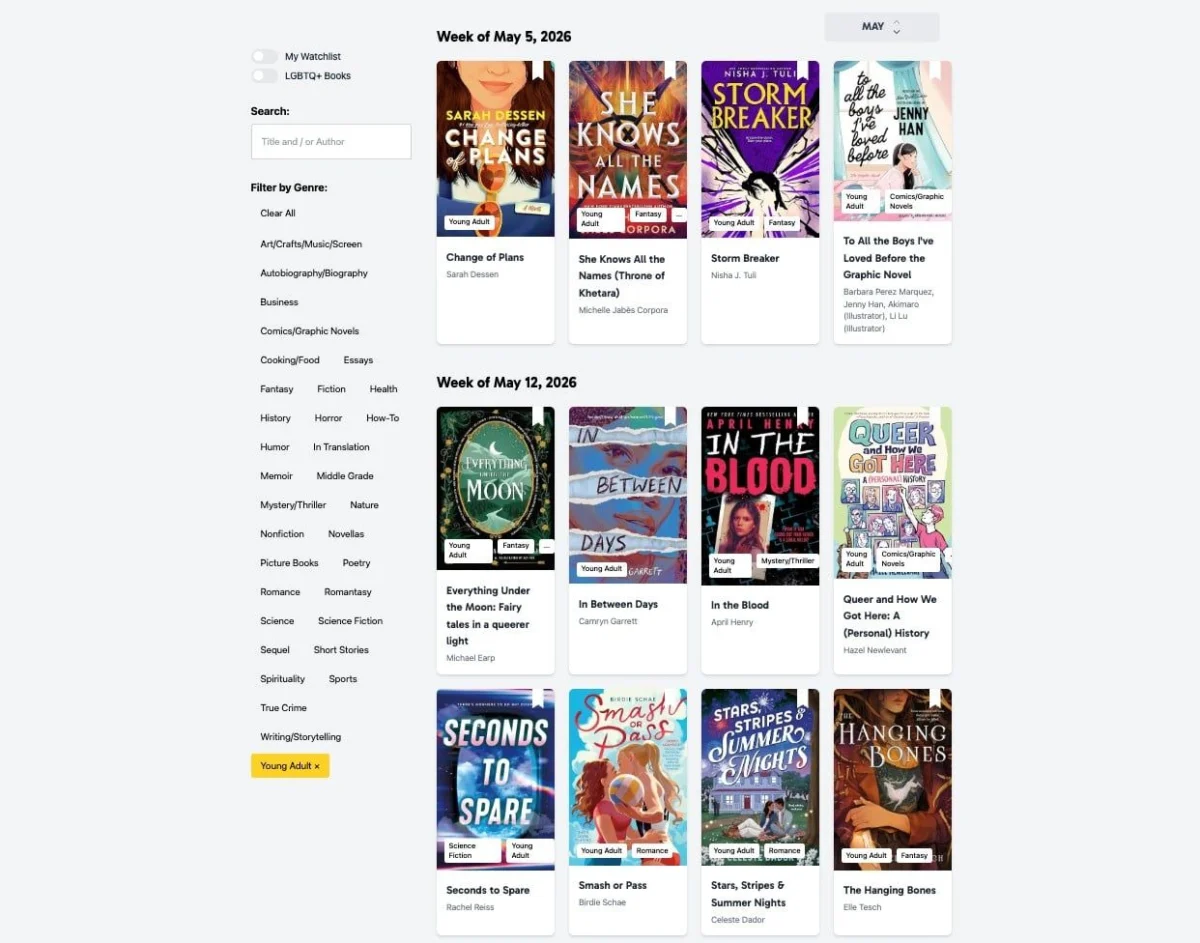
The utility of the tool lies in its simplicity and its robust filtering capabilities. Organized chronologically, the Index allows users to view books based on their specific release dates. This is a critical feature for readers who prefer to plan their monthly reading cycles in advance.
Furthermore, the integration of genre-based filters—such as the YA-specific category—transforms the search process from a chore into a curated experience. Users are presented with a visual grid of book covers. This "visual-first" design philosophy acknowledges that for many readers, the aesthetic appeal of a cover is the first point of emotional connection with a story. By clicking on a cover, the user gains instant access to detailed book descriptions, synopses, and metadata, allowing for a "deep dive" without ever needing to leave the platform.
The "Watchlist" Feature
A standout component of the platform is the "Watchlist" functionality. Once a reader identifies a book that resonates with their preferences, they can save it directly to their account. This serves as a dynamic, personalized library that effectively replaces the cumbersome, manual spreadsheets that many dedicated readers have maintained for years. By digitizing this process, the Index ensures that readers are alerted to their own curated interests rather than being forced to consume content based on mass-market trends.
Chronology of Discovery: From Manual Tracking to Automation
To understand the significance of the New Release Index, one must look at the historical evolution of literary tracking.
- The Pre-Digital Era: Historically, readers relied on printed catalogs and monthly literary magazines to discover new releases. Information was slow, localized, and often limited by the distribution reach of physical bookstores.
- The Early Internet Era (2000–2010): The advent of blogs and forums allowed for faster dissemination of information. However, this period also marked the beginning of "information overload," as the sheer volume of available titles began to outpace the average reader’s ability to track them.
- The Social Media/Spreadsheet Era (2010–2020): With the rise of "Bookstagram" and "BookTok," discovery became decentralized. While this brought more visibility to diverse voices, it also created a fragmented experience where tracking required the use of complex Excel files or third-party tracking apps that lacked integration with industry databases.
- The Current Era (2025 and beyond): The introduction of the New Release Index represents a shift toward "integrated discovery." By consolidating data, the Index attempts to restore a sense of agency to the reader, allowing them to bypass the chaotic, algorithm-driven feeds of social media in favor of a structured, reliable database.
Supporting Data: The Economics of Reader Attention
Industry data confirms that the modern reader is experiencing significant "choice paralysis." A 2024 study on consumer reading habits indicated that approximately 65% of active readers abandon a book search if they cannot find relevant information within the first five minutes of browsing.
The YA sector, in particular, is one of the most volatile segments of the publishing market. With a target demographic that is hyper-connected but also susceptible to "trend fatigue," the need for a streamlined discovery tool is greater than ever.
Marketing vs. Merit
The "marketing gap"—the disparity between a book’s promotional budget and its critical reception—is a documented issue in the publishing industry. Smaller publishers often struggle to place their titles in front of their target audience because they lack the resources to compete with the massive advertising spends of major publishing houses. The New Release Index levels this playing field by placing all titles on equal footing within the database. When every title is presented with the same visual weight, the reader is empowered to make decisions based on subject matter and interest rather than advertising frequency.

Official Perspectives: The Vision Behind the Index
Representatives from Book Riot have positioned the New Release Index as a response to the "over-curated" state of modern media. In various editorial statements, the team has emphasized that the goal is to return the power of discovery to the individual.
"We recognize that the TBR pile is not just a list; it’s an aspiration," says an editorial spokesperson. "Our goal with the Index was to strip away the noise. We wanted to create a space where the book itself—the cover, the premise, the author—is the focus, not the marketing machine behind it. By providing a filterable, chronological view, we’re helping readers move from being passive consumers of marketing content to active curators of their own reading lives."
The design team also noted that user feedback played a pivotal role in the development of the tool. Many early testers reported feeling "exhausted" by the constant influx of promotional emails and social media ads. The Index, by contrast, functions as a "pull" technology—the user seeks out information when they are ready, rather than being "pushed" content at all hours of the day.
Implications for the Publishing Ecosystem
The introduction and adoption of tools like the New Release Index carry significant implications for the future of the book trade.
For Authors
For debut authors or those working with independent presses, such databases are a vital lifeline. When readers use filters to browse by genre or sub-genre, they are likely to encounter books they would never have seen on a "Best Sellers" list. This creates a long-tail effect, potentially increasing sales for mid-list authors and helping to sustain a more diverse literary marketplace.
For Bookstores and Libraries
The Index does not seek to replace independent bookstores; rather, it complements them. Readers who use the Index to identify titles can then take those titles to their local bookseller, effectively bridging the gap between digital discovery and physical acquisition. For libraries, such tools assist in collection development, providing librarians with a clear view of upcoming titles that might be of high interest to their local communities.
The Future of Reader Analytics
As these databases grow, they provide valuable, anonymized data on what readers are actually interested in. Unlike social media metrics, which can be inflated by viral trends, the "Watchlist" data in the Index represents genuine, long-term reader intent. This could eventually provide publishers with a more accurate understanding of reader demand, potentially reducing the industry’s reliance on speculative marketing.
Conclusion: Reclaiming the Reading Experience
The flood of new books is unlikely to subside; if anything, the democratization of publishing means the volume of new titles will continue to grow. In such an environment, the ability to filter, curate, and organize becomes a necessary skill for any dedicated reader.
The New Release Index offers a pragmatic solution to an existential problem for book lovers. By providing a clean, efficient, and user-centric database, it allows readers to step back from the frantic pace of the publishing industry and engage with literature on their own terms.
As we look toward the future of reading, the importance of such tools cannot be overstated. They do not just help us manage our TBR piles; they help us protect the joy of discovery. In a world where every industry is trying to capture our attention, the New Release Index serves as a quiet, effective tool for ensuring that our reading choices remain our own. Whether you are a casual reader or a dedicated bibliophile, the ability to navigate the vast sea of new releases with precision is the key to maintaining a lifelong, healthy, and fulfilling relationship with books.
By leveraging technology to serve the reader, rather than the marketer, the New Release Index stands as a significant milestone in the digital evolution of the literary world. It is a reminder that while the ways we find our next favorite book may change, the fundamental thrill of the discovery remains unchanged.











No comments yet. Be the first to join the conversation!