

This post was sponsored by Trendos. The opinions expressed in this article are the sponsor’s own.
In the rapidly evolving theater of digital marketing, a new battleground has emerged, shifting the focus from traditional search engine results pages (SERPs) to the generative, conversational environment of AI. Since OpenAI officially rolled out ChatGPT ads for US Free and Go users on February 9, 2026, the marketing landscape has undergone a seismic shift. Your highest-intent buyers are no longer just Googling your category; they are asking ChatGPT for recommendations, comparisons, and solutions.
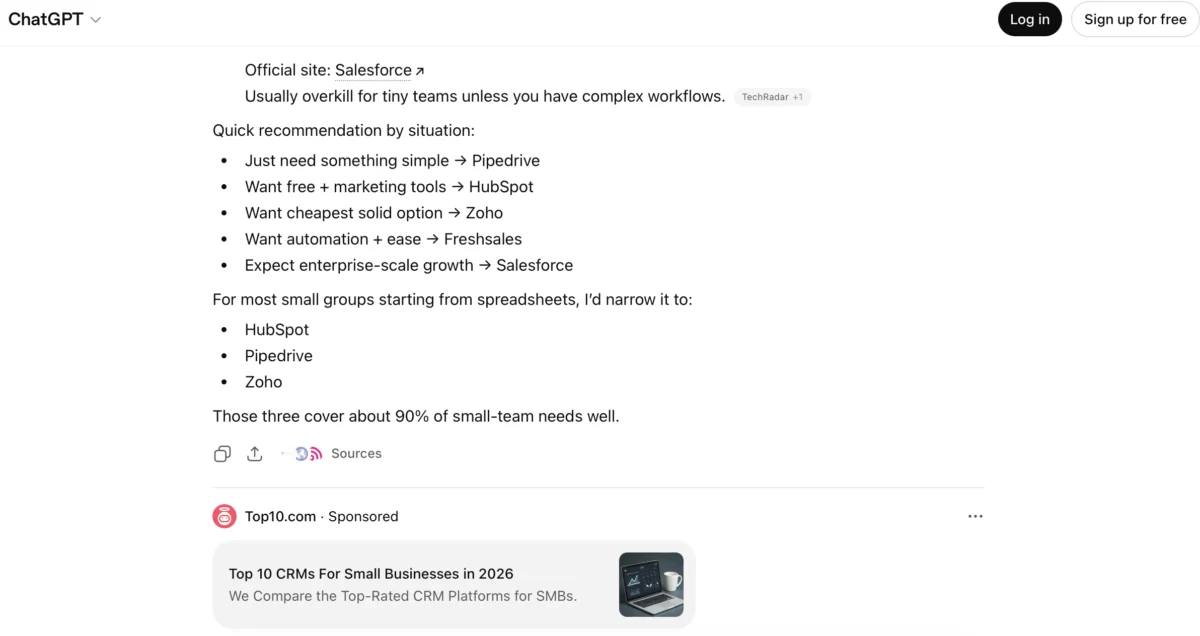
When a sponsored placement appears beneath a generated answer, it is not merely an ad—it is an interception. If a competitor has secured that placement, they are effectively hijacking the buyer’s journey at the precise moment of decision-making. For marketers, the question is no longer just "Are we visible on Google?" but "Are we visible where the AI makes the final recommendation?"
The Chronology of a New Ad Era
The integration of advertising into ChatGPT represents the most significant change in search-adjacent marketing in a decade. Following months of speculation regarding how OpenAI would monetize its massive user base without compromising the integrity of its conversational interface, the February 2026 launch marked a turning point.
By the spring of 2026, the ecosystem had matured rapidly. Over 600 advertisers had already integrated their campaigns into the platform, targeting high-intent queries that previously served as the bedrock of Google Ads strategies. This transition from "search-based intent" to "conversational-based intent" has forced advertisers to rethink how they reach users. The ad experience is subtle yet potent: after ChatGPT provides a comprehensive answer, a clearly labeled "Sponsored" card appears below the response, featuring a favicon, a concise headline, and a short body description averaging 19 words.
The Visibility Gap: Why Traditional Tools Are Failing
In the era of Google, marketers were spoiled by transparency. With access to ad libraries, auction insights, and third-party monitoring software, brands could track competitor strategies with surgical precision.
However, ChatGPT currently operates as a "black box." OpenAI does not provide a public ad library, and there is no centralized database to search for active creative or bidding strategies. This lack of transparency has created a "visibility gap." Unless a brand actively monitors the prompts that drive their business, competitors are effectively operating in the shadows, undermining visibility in the exact moments that matter most.

The Four Pillars of Competitive Intelligence
To gain a competitive advantage in this new environment, marketers must move beyond simple observation. A comprehensive understanding of the ChatGPT ad landscape requires the tracking of four essential data points:
- Ad Copy (Title & Description): These elements reveal the competitor’s positioning strategy. Are they focusing on price, features, or comparison-based messaging?
- Destination URL: This is the most critical indicator of intent. Is the competitor sending traffic to a generic homepage, a dedicated category page, or a direct comparison page?
- Impression Share: By calculating the percentage of total ad impressions a specific advertiser secures for a given prompt, you can move from anecdotes like "I saw them once" to actionable intelligence: "They own this prompt."
- Creative Rotation Patterns: Competitors rarely stick to one ad. Tracking how they cycle through different headlines and URLs provides a roadmap of their testing and optimization strategies.
Mapping the Buyer’s Conversation
Unlike the fragmented, keyword-heavy approach of traditional SEO, ChatGPT requires a shift toward "Conversational Mapping." Users do not interact with an AI as they do with a search engine; they provide context, constraints, and nuanced intent.
To build an effective monitoring strategy, marketing teams should curate a list of 30 to 50 "high-intent" prompts. These should be derived from:
- SQL and CRM Data: Identify the questions prospects ask during the sales cycle.
- Customer-Facing Inputs: Audit support tickets, sales call transcripts, and on-site search logs to understand the exact language customers use when describing their problems.
- Organic Intent: Translate your top-performing Google search terms into natural language queries that a user might pose to an AI.
Without this granular map, you are essentially flying blind. If your competitors are bidding on conversational nuances you haven’t identified, they are capturing your customers while you remain entirely unaware of the competition.
The Rigorous Process of Manual Monitoring
For those attempting to monitor this landscape manually, the process is labor-intensive. A single run of a prompt provides only a snapshot of one auction outcome—it does not account for the dynamic, real-time nature of ChatGPT’s ad delivery.
To achieve statistical significance, experts recommend:
- Multiple Sessions: Run each prompt 20 to 30 times across different days and times.
- Environment Hygiene: Clear cookies and cache between batches to ensure you are seeing a representative sample of the auction.
- Spreadsheet Integration: Log every instance of a competitor ad, tagging it with the prompt, the time of day, and the specific ad creative.
This is where the risk of "noise" becomes prevalent. A one-shot read will almost certainly mislead you. If you base your budget allocation on a single-day snapshot, you are making business decisions based on fluctuations rather than strategy. A recurring, systematic cadence—ideally on a weekly basis—is the only way to establish a true "share of voice" in the AI space.

Implications for Paid Search Managers
The emergence of ChatGPT ads necessitates a new role within the digital marketing department: the AI Search Strategist. These professionals must manage the auction dynamics that exist within the LLM (Large Language Model) environment.
The primary implication is the potential for "pipeline erosion." If your conversion paths are increasingly starting in a chatbot rather than a traditional search engine, your previous attribution models may be missing a significant portion of the user journey. If you are not present in the ChatGPT response, you are effectively ceding that lead to a competitor who is.
The Solution: Automated Intelligence
Given the complexity of the manual process, the industry is already trending toward specialized tools to bridge the visibility gap. Platforms like Ad Radar provide a critical bridge, automating the continuous monitoring of prompt lists and surfacing every competitor, creative iteration, and impression share metric without the need for manual spreadsheet overhead.
By automating the tracking of these auctions, teams can pivot from reactive data collection to proactive strategic planning. This allows managers to:
- Identify new competitor entrants before they gain traction.
- Understand which prompts are the most competitive.
- Align their own ad spend with the areas of highest risk and opportunity.
Final Thoughts: The Cost of Inaction
As we move further into 2026, the divide between those who understand the AI ad landscape and those who ignore it will only grow. Paid search managers have long relied on sophisticated tools for Google, and the current state of ChatGPT advertising is a "Wild West" that demands similar rigor.
If you are not currently monitoring the answers your potential customers are receiving from AI, you are ignoring a significant segment of your market. Competitors are likely already there, testing their messaging, refining their landing pages, and intercepting your leads. The question is no longer whether you should monitor ChatGPT ads, but how quickly you can implement a system to do so. In the world of generative AI, the first to see the competition is the first to win the customer.












No comments yet. Be the first to join the conversation!