For over a decade, the League of Legends community has whispered about the possibility of a "legacy" server—a digital time capsule that would transport players back to the wild, unbalanced, and undeniably charming era of the game’s infancy. Following years of speculation, community petitions, and internal brainstorming, Riot Games has officially pulled back the curtain. League of Legends Classic is not just a dream; it is a reality, and it is arriving on July 29th.
However, those expecting a carbon copy of the 2009 client may be surprised. Riot has positioned this project not as a rigid historical reenactment, but as a "greatest hits" compilation of the game’s formative seasons. By blending the core DNA of the early years with modern accessibility, Riot is attempting to capture lightning in a bottle for a second time.
The Core Concept: A Curated Trip Through Time
The announcement was punctuated by a spectacular showmatch held on the main stage ahead of the MSI Grand Final in Korea. Featuring legendary figures such as William "Scarra" Li and Yiliang "Doublelift" Peng, the match served as a visceral reminder of what defined the early era: the return of iconic, broken, and beloved mechanics.
Players can look forward to the return of the original map, legacy gameplay designs, and the resurgence of infamous strategies that defined the early meta. From the terror of AP Master Yi and the "stunlock" capabilities of pre-rework Sion to the tactical utility of Mana Potions, Crystalline Flasks, and the original Hunter’s Machete, the gameplay experience promises to be a nostalgic rollercoaster.
But why now? According to Executive Producer Paul "Pabro" Bellezza, the project was born in the studio’s "Thunderdome," an internal hackathon designed to foster experimental ideas. A small group of Rioters built a prototype centered around the Season 3 meta. The internal reception was so overwhelmingly positive that the studio decided to expand it into a full-fledged experience.
Chronology of Development: From Prototype to Product
The journey of League of Legends Classic began as a passion project, fueled by the persistent clamor of the player base. Riot’s decision to commit to this development reflects a shifting philosophy within the company: acknowledging that the game’s history is just as valuable as its future.

- The Conceptual Phase: Initially, the team explored a direct "2009 replica" model. However, testing revealed that many early-game designs were, in the words of the developers, "not that great."
- The Refinement Phase: Riot pivoted toward a "Greatest Hits" approach. Rather than forcing players to live through the worst design choices of the past, they are cherry-picking the best moments from the game’s first three years.
- The Showmatch Reveal: By hosting the MSI exhibition match, Riot successfully demonstrated the "vibe" of the game to a global audience, proving that the nostalgia factor holds up in a modern competitive environment.
- The Launch: League of Legends Classic is slated for a worldwide release on Wednesday, July 29, coinciding with Patch 26.15.
Supporting Data: What to Expect at Launch
When the servers go live, players will be greeted by a robust, albeit curated, version of the past. The launch build is designed to be stable, intuitive, and evocative of the early 2010s.
The Roster and Progression
At launch, players will have access to 60 champions, including the original 40 that were available at the game’s inception. The progression system has been overhauled to respect the player’s time while maintaining the old-school feel. Riot has confirmed that while the initial roster is limited, more champions will be unlocked over time. Notably, the infamous "grind" for rune pages has been streamlined: players will start with a base page and naturally unlock more as they progress through the leveling system.
The Systems of Old
The return of the Offense, Defense, and Utility mastery trees is perhaps the most significant mechanical shift for modern players. These trees provided a level of customization that has long been absent from the current, more streamlined keystone-focused system. Coupled with the return of old-school runes, players will have to relearn the art of fine-tuning their stats before a match even begins.
The "Greatest Hits" Philosophy
Pabro describes the game as "wiggling a little bit" around the Season 3 mark. This means players shouldn’t expect a static snapshot of a single patch, but rather a hybrid experience that captures the most "fun" versions of the game’s early balance state. If a champion or item was universally despised or fundamentally broken in a way that hurt the "fun" factor, it has been left on the cutting room floor.
Official Responses and Developer Transparency
Riot Games has shown a surprising level of transparency regarding the limitations and future of this project. Head of League Studio Andrei "Meddler" van Roon has been active on community forums, addressing concerns and managing expectations.
In a recent Reddit thread, Meddler confirmed that the current build is merely the "first wave." He expressed personal excitement for the return of early-era Urgot and Graves, while reassuring fans that "Old Sion" would be present from day one.
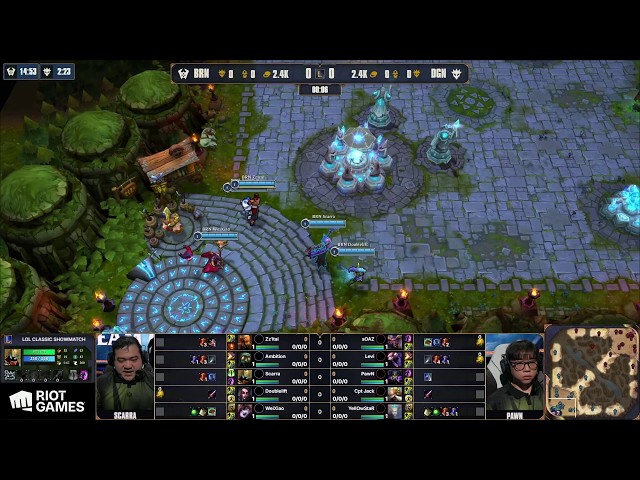
One of the most pressing questions from the community concerns skins and visual updates. Some players noticed during the showmatch that while the gameplay felt classic, some champion models (such as Skarner) used their modern, post-VGU (Visual and Gameplay Update) iterations. Meddler confirmed that a forthcoming developer blog would address how skins and models are being handled, signaling that the visual fidelity of the game is still a subject of ongoing discussion.
Crucially, Riot has committed to community-led evolution. The developers have stated that players will have the opportunity to vote on the future direction of the Classic experience. This suggests that if the community wants to push deeper into specific historical seasons or advocate for certain balance changes, the developers are willing to listen.
Implications for the Future of League
The launch of League of Legends Classic represents a massive gamble for Riot Games. On one hand, it provides a sanctuary for veteran players who feel alienated by the game’s rapid pace and complexity. On the other, it introduces a new generation of players to the origins of the genre, potentially revitalizing interest in the core mechanics of League.
A Buffer Against Modern Complexity
Modern League of Legends is a high-octane, hyper-mobile game where split-second reactions are everything. Classic offers a slower, more deliberate pace. The return of Mana Potions and the classic jungle itemization requires a different kind of macro-management—one where resource conservation and tactical positioning are prioritized over raw mechanical outplays.
The Aesthetic Dilemma
While the mechanical changes are being welcomed, there is a lingering debate regarding the visual presentation. The fact that the game uses the modern client and some modern models is a point of contention for "purists" who were hoping for the janky, low-polygon charm of the original 2009 client. However, from a technical and security standpoint, maintaining the modern client is a necessity for integration and anti-cheat purposes. Whether Riot eventually introduces a "classic visual toggle" remains to be seen, but the appetite for such a feature is clearly present.
A Community-Driven Roadmap
Perhaps the most significant implication of this release is the precedent it sets for player agency. By allowing the community to vote on the future of Classic, Riot is essentially crowdsourcing the game’s roadmap. This is a departure from the studio’s traditionally top-down approach to balancing and design, and it could prove to be the secret ingredient that keeps League of Legends Classic relevant for years to come.

Conclusion: A New Chapter in an Old Story
As we count down the days to July 29, the anticipation is palpable. League of Legends Classic is poised to be more than just a trip down memory lane; it is a testament to the longevity of one of the world’s most influential games.
While it may not satisfy those looking for a perfect 1:1 recreation of the past, it provides a thoughtful, curated, and highly playable homage to the era that built the MOBA empire. Whether you are a veteran longing for the days of the "TP/Revive Karthus" meta, or a new player curious about the history of the Rift, the upcoming launch represents a unique opportunity to experience the foundation of the modern gaming landscape.
With the PBE (Public Beta Environment) updates and the upcoming developer blog, players will have a clearer picture of what to expect in the coming weeks. For now, we wait—with our rune pages ready and our nostalgia levels at an all-time high. The Rift is calling, and this time, it sounds exactly how we remember it.