Suro Senen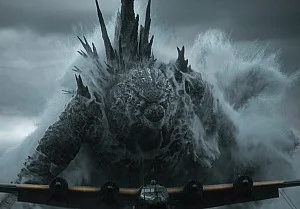
In the current cinematic landscape, where blockbusters are often defined by sterile green-screen environments and bloated, committee-driven visual effects, director Takashi Yamazaki has achieved something startlingly rare: he has returned the "monster movie" to its rightful place as a medium for grand, existential mythology. His latest feature, Godzilla Minus Zero, which premiered to immense acclaim at the New York Film Festival, does not merely serve as a sequel to the 2023 sensation Godzilla Minus One; it acts as a cultural reset, proving that the most profound depictions of the "divine"—or in this case, the monstrous—are found not in the revisionist history of Greek epics, but in the radioactive fire of the kaiju genre.
While critics have spent much of the year debating the merits of modern adaptations of Homer’s The Odyssey—often lamenting the decision to strip away the intervention of the Greek gods—Yamazaki reminds us that the "divine" is not a static concept. In Godzilla Minus Zero, the gods have returned, though they take the form of 72-year-old reptilian icons and three-headed hydras that possess a majesty and terror that transcends mere biology.
The Chronology of Destruction: A Return to the Atomic Age
Godzilla Minus Zero is set in 1949, a period of profound reconstruction and lingering trauma in post-war Japan. The narrative begins with a seismic shift: the arrival of King Ghidorah, the legendary dragon-hydra last seen in the 1964 classic Ghidorah, the Three-Headed Monster. In a visceral opening sequence, the beast descends upon the city of Matsumoto, leaving only ruin in its wake.
The film’s temporal setting is no accident. By placing the narrative in the late 1940s, Yamazaki anchors the film in the spiritual and historical birthplace of the kaiju genre—the Atomic Age. This is the era of the "original" Godzilla, and by returning to this timeline, the film taps into the raw, unprocessed anxiety of a nation grappling with the dawn of the nuclear era.
The timeline of the film unfolds as follows:
- The 1949 Incursion: King Ghidorah makes his terrifying debut, signaling that the era of safety is over.
- The Scientific Response: Professor Murakami (Min Tanaka), a Hiroshima survivor and biological researcher, begins documenting the phenomenon, providing the necessary bridge between human tragedy and mythological horror.
- The Resurrection: Despite being presumed destroyed at the conclusion of Godzilla Minus One, the original Godzilla resurfaces, proving the central tenet of the film: it is nearly impossible to kill a god.
- The Strategic Stand: Kenji Noda (Hidetake Yoshioka) and the Large-Scale Disaster Response Bureau devise a high-stakes, "sandbox-style" tactical maneuver: lure both titans to a single location, force a collision, and finish off the survivor.
Supporting Data: The Artistry of Takashi Yamazaki
What distinguishes Godzilla Minus Zero from its contemporaries—specifically the assembly-line visual effects found in the Marvel Cinematic Universe—is the singular vision of its creator. The credits for the film bear a rare distinction: "VFX, written, and directed by Takashi Yamazaki."
In an industry where thousands of digital artists are often siloed into departments, Yamazaki functions as an auteur in the classic sense. His visual effects are not mere technical overlays; they are extensions of his directorial intent. He treats the destruction of a city not as a series of pyrotechnic explosions, but as a "spectacle out of a dream"—or, more accurately, a national nightmare.
The film’s technical prowess is evident in the depiction of the monsters themselves:
- Godzilla: Now 72 years old, the character has been revitalized with a sense of "transcendent force." His iconic radioactive breath is rendered with a weight and luminosity that feels genuinely apocalyptic.
- King Ghidorah: The creature’s design pays homage to the Golden Dragon Dance, with heads that move with a terrifying, rhythmic grace. His orange lightning volts, which span for half a mile, provide a sharp, terrifying contrast to Godzilla’s blue-hued radiation.
Human Stakes: A Kurosawa-esque Emotional Core
If the kaiju are the gods of this narrative, the humans are its soul. Yamazaki continues the emotional trajectory of Godzilla Minus One, focusing on the family unit of Kōichi Shikishima (Ryunosuke Kamiki), his wife Noriko (Minamo Hamabe), and their adopted daughter, Akiko.
The film elevates the human drama to the level of 1950s Kurosawa cinema. Noriko’s character arc is particularly compelling; as a survivor of the 1947 attack, she carries the physical remnants of the monster—Godzilla DNA embedded in her body—represented by the eyepatch she wears. This is not merely a visual flourish but a narrative device that ties the human experience directly to the monster’s existence.
The performances are grounded and intense. Hidetake Yoshioka’s portrayal of the high-strung, Einstein-haired Noda provides a frantic, intellectual foil to the brute force of the monsters. Furthermore, Min Tanaka’s performance as Professor Murakami is imbued with a quiet, simmering gravity; having been born on the day of the Tokyo firebombing, Tanaka brings a historical weight to the role that anchors the film’s more fantastic elements in reality.
Implications for the Future of the Genre
The success of Godzilla Minus Zero carries significant implications for the future of blockbuster filmmaking. For decades, the kaiju genre was dismissed as a niche fusion of the "colossal and the cheesy." Yamazaki has effectively dignified the genre, proving that monster movies can be intellectually rigorous and emotionally devastating.
1. The Death of "Schlock"
The "shlock" era of kaiju films is officially over. By blending high-concept tactical drama with deep, personal trauma, Yamazaki has set a new bar. If the James Bond franchise—which is currently struggling to find its footing—were to adopt this strategy of rooting its protagonist in a specific, historically resonant era, it could reclaim the vitality it has arguably lost.
2. The Power of the "Auteur" VFX
The film proves that visual effects are most effective when they are the product of a single, cohesive imagination. By merging the roles of writer, director, and VFX supervisor, Yamazaki ensures that every frame serves the narrative. This serves as a stinging critique of the modern "army-of-VFX-teams" approach that currently dominates Hollywood.
3. The International Resonance
Godzilla Minus Zero is positioned to connect with a massive international audience, not because it caters to the lowest common denominator, but because it treats its audience as capable of handling "heavy-metal poetry." The chilling sequences in which Godzilla approaches Manhattan—a direct, unspoken response to the existential dread captured in films like Oppenheimer—prove that the kaiju mythos is a universal language of trauma and renewal.
Conclusion: A Timeless Spectacle
While the final act of the film occasionally gets tangled in the abstract motivations of the Professor’s "hidden agenda," the core emotional stakes remain crystalline. We care about these characters because they feel grounded in a reality that is undeniably fragile.
Takashi Yamazaki has succeeded in proving that when you approach a genre with reverence and artistic vigor, what was once considered "old" can be made timeless. Godzilla Minus Zero is more than a monster movie; it is a profound exploration of how societies process catastrophe. As the credits roll, the audience is left not just with the image of a titan’s roar, but with the haunting, beautiful, and deeply human realization that even in the shadow of giants, the struggle for survival remains the most epic story of all.

 Nana Wu
 Asep Darmawan