Ammar Sabilarrohman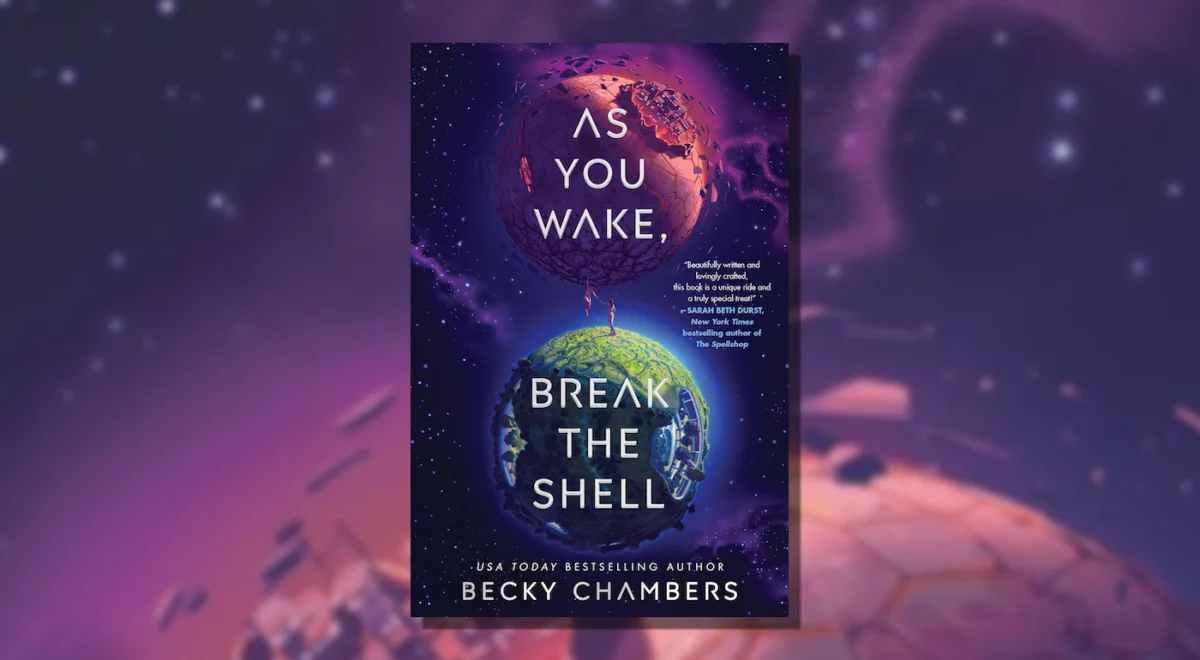
The landscape of modern science fiction has long been defined by its ability to mirror our own societal anxieties through the lens of the interstellar. Few authors have mastered this craft as effectively as Becky Chambers. Known for her deeply humanistic approach to space opera, Chambers is set to expand her literary footprint this autumn with the launch of a new, highly anticipated duology. On October 13th, Harper Voyager will publish the first installment, As You Wake, Break the Shell, a novel that promises to weave the intricate complexities of survival, isolation, and connection on the resource-depleted planet of Fortune.
Main Facts: A New Frontier on Fortune
As You Wake, Break the Shell introduces readers to Fortune, a planet characterized by its scarcity and the harsh, volcanic environment that governs the lives of its inhabitants. While the setting is undeniably bleak, the narrative focus remains firmly on the resilience of the human spirit. The story centers on two disparate protagonists whose lives are set on an inevitable collision course:
- Signy: A brilliant, reclusive botanist who operates a clandestine plant shop. She utilizes her skills to bio-print essential medicines, often operating outside the boundaries of established law to provide aid to those marginalized by the planet’s rigid social systems.
- Cora: A specialized pilot of "rorquals"—massive, sentient living ships that serve as the vital lifelines for the solar system’s fragmented settlements. Cora’s professional life is endangered by the "mindbleed," a neurologically taxing side effect of her symbiotic bond with her ship, Colibri.
The novel explores the delicate intersection of these two lives, positioning their meeting not merely as a plot point, but as a catalyst for a systemic shift in how the people of Fortune survive their hostile reality.
Chronology of the Narrative Arc
The narrative structure of the new duology appears to follow a trajectory of slow-burn tension leading toward a high-stakes discovery. The excerpt provided by the publisher illustrates the initial meeting between Cora and Signy, a moment framed by the oppressive atmosphere of the planet’s "Midtown" district.
- The Arrival: Cora, weary of the external volcanic hazards (specifically the four dominant volcanoes: Tantrum, Clockwork, Pitchfork, and the ominously nicknamed "Bastard"), travels to the nondescript J Street Plant Shop.
- The Threshold: The interaction highlights the stark contrast between the external world—bleached by ash and industrial decay—and the interior of Signy’s sanctuary, which promises a radical departure from the norm.
- The Catalyst: Cora’s search for help regarding her "mindbleed" symptoms forces a breach in Signy’s carefully maintained reclusive lifestyle.
- The Escalation: As the plot progresses, the "delicate balance" between the two women’s worlds is expected to collapse, moving from a personal struggle for survival to an exploration of larger systemic change within the solar system.
Supporting Data: The World-Building of Fortune
The environment of Fortune acts as a third, albeit antagonistic, character in Chambers’ latest work. The planet’s geography—defined by the constant emission of ash and the necessity of domed living—reflects the resource-poor reality of its inhabitants.
- The Berth: The primary settlement area, characterized by its reliance on internal, bubbled infrastructure to protect citizens from the "nasty, glassy residue" of volcanic activity.
- The Rorquals: These living ships represent a unique blend of biology and technology. The "mindbleed" effect suggests that the symbiotic connection between pilot and ship is not merely a technical skill but a biological toll, raising questions about the ethics of utilizing sentient vessels for logistics and transport.
- Botanical Resistance: Signy’s role as a botanist serves as a symbolic counterpoint to the volcanic ash. In a world where even art is bleached by the environment, the cultivation of life—whether it be plant matter or medicine—becomes an act of political defiance.
Official Responses and Publisher Strategy
Harper Voyager has positioned As You Wake, Break the Shell as a flagship title for their late-year catalog. By releasing the excerpt ahead of the October 13th publication date, the publisher is leveraging the established "Chambers aesthetic"—a brand of science fiction that prioritizes emotional resonance over militaristic conflict.
"Becky Chambers has an uncanny ability to find the profound in the mundane," noted a spokesperson for the publisher. "With this new duology, we are seeing her push the boundaries of her world-building. Fortune is a planet that feels lived-in, exhausted, and desperately waiting for a spark. Signy and Cora are the embodiments of that tension."

The release strategy includes a robust rollout of digital previews, designed to capture the attention of the "cozy sci-fi" demographic while appealing to readers who enjoy deep-dive, character-driven narratives.
Implications: Why This Story Matters
The central tension in As You Wake, Break the Shell—the cost of care in a system built for survival—is a recurring theme in modern literature, but Chambers approaches it with a specific focus on communal responsibility.
The Cost of the "Mindbleed"
The "mindbleed" is more than a medical condition; it is a metaphor for the psychological toll of labor in high-stakes, specialized environments. As Cora navigates the risks of her career, the novel asks: What happens when the tools we rely on to survive start to erode our internal autonomy?
The Ethics of Clandestine Aid
Signy’s role as a botanist who "bends the rules" positions her as a modern folk hero. Her shop is not just a commercial enterprise but a site of civil disobedience. The implication here is that in a society where resources are artificially constrained, the act of healing becomes a radical, political gesture.
The Evolution of the Duology
By opting for a duology rather than a standalone novel, Chambers signals an intent to explore the consequences of the characters’ actions in greater depth. The transition from the isolation of their individual lives to the collaborative effort required to navigate the "mindbleed" and the systemic issues of Fortune suggests a narrative that will prioritize the power of collective trust.
As the release date approaches, anticipation is building for a story that promises to be as visually evocative as it is intellectually stimulating. For readers of The Long Way to a Small, Angry Planet and the Monk and Robot series, As You Wake, Break the Shell represents a natural, albeit darker, evolution in Chambers’ bibliography. Whether the duo can navigate the ash-strewn reality of their home without losing themselves in the process remains the central mystery of this highly anticipated series.
As You Wake, Break the Shell hits bookshelves on October 13th. For those looking for a story that balances the harsh realities of a dying world with the quiet, stubborn warmth of human connection, the J Street Plant Shop is the only destination that matters.


 Muslim
 Neng Nana