

In the rapidly evolving landscape of high-performance computing, the thermal ceiling of components has become the primary bottleneck for enthusiasts and professionals alike. While CPUs and GPUs have long benefited from sophisticated cooling solutions—ranging from massive air towers to complex custom liquid loops—system memory has largely remained tethered to passive heat spreaders. That paradigm is set to shift dramatically.
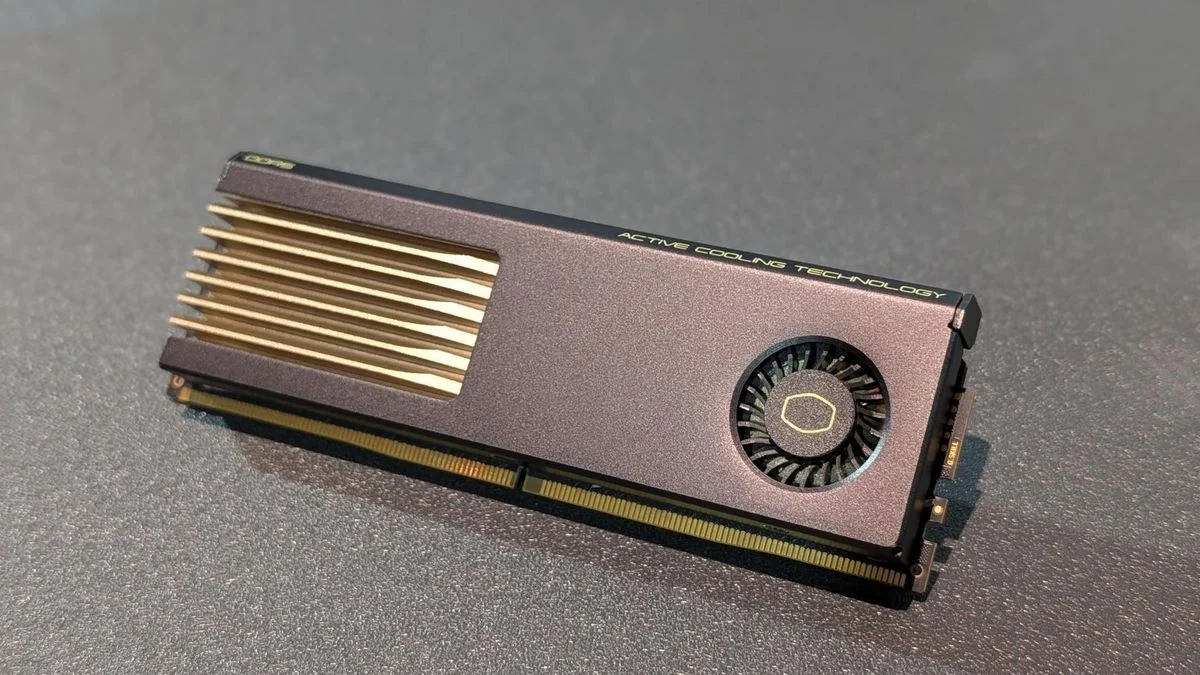
Cooler Master and G.Skill, two titans of the PC component industry, have announced a strategic partnership to launch "MasterDIMM," a groundbreaking line of DDR5 memory kits that integrate active cooling directly onto the memory modules. By incorporating a blower-style fan into a high-end heatsink assembly, the manufacturers promise a temperature reduction of up to 15 degrees Celsius. This innovation, destined to be a centerpiece at Computex 2026, represents a bold attempt to push the envelope for next-generation, high-performance systems.
The Genesis of MasterDIMM: A Collaborative Vision
The conceptualization of MasterDIMM stems from the increasingly high power demands of high-frequency DDR5 memory. As manufacturers push data transfer rates into the stratosphere—reaching up to 8,400 MT/s on Intel platforms—the voltage required to maintain stability generates significant heat. Passive cooling, which relies on ambient case airflow, is increasingly struggling to keep pace with these thermal loads.
The partnership leverages the unique strengths of both companies: G.Skill provides the high-binning, premium-grade DRAM modules known for their overclocking prowess, while Cooler Master contributes its decades of expertise in thermal engineering. The result is a hybrid design that mimics the blower-style cooling seen in workstation-grade GPUs, condensed into a DIMM form factor.
Technical Specifications and Performance Metrics
At the heart of the MasterDIMM initiative is the pursuit of stability at extreme speeds. The kits are designed to support a tiered performance structure tailored to the two major desktop ecosystems:
- AMD Platforms: Featuring AMD EXPO support, these kits are expected to hit speeds of 6,000 MT/s with tight CL26 latency, prioritizing sub-millisecond response times.
- Intel Platforms: Utilizing XMP 3.0, the kits are rated for high-bandwidth operations reaching up to 8,400 MT/s.
- Capacity: High-end configurations will offer up to 128GB total capacity, utilizing 64GBx2 dual-channel kits, aimed at professional workstation users and content creators.
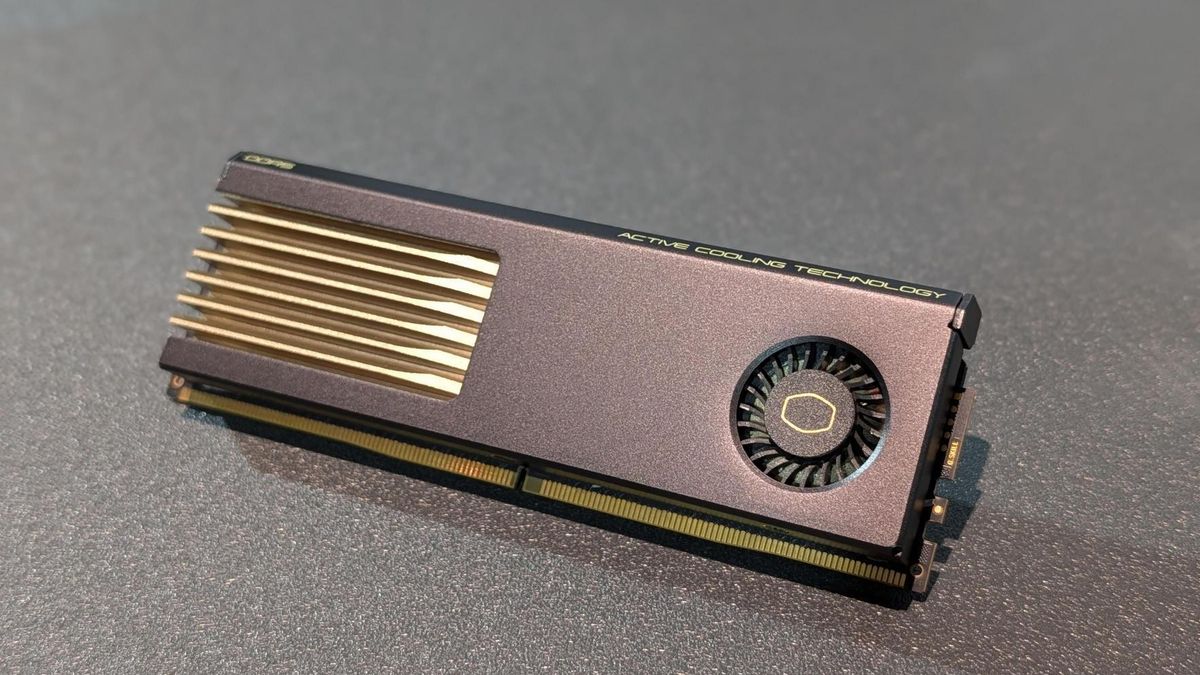
The cooling mechanism is where the hardware truly diverges from the norm. The modules feature a sophisticated copper heatsink, chosen for its superior thermal conductivity, paired with an integrated micro-fan. The companies state that the fan operates at a noise floor of 35 decibels—comparable to the ambient silence of a library—ensuring that the performance gains do not come at the cost of acoustic comfort. By actively dissipating heat, the system aims to keep modules well below the 70–80°C range typically observed during heavy load, providing a significant buffer before the 95°C thermal throttle point of DDR5.
Chronology of Memory Cooling Innovations
The quest to actively cool system memory is not a new ambition, though previous attempts have struggled to achieve mainstream adoption.
- The Early Days (2010–2014): Corsair famously introduced the Vengeance Airflow, an external fan shroud that sat above the memory modules. While effective, it was bulky and required specific clearance above the RAM, limiting its compatibility with large air-cooled CPU heatsinks.
- The "Creative" Era (2015–2022): During this period, various boutique manufacturers experimented with eccentric designs, including RAM modules with embedded LED-lit fans or, in some cases, custom-designed LEGO-integrated heatsinks for aesthetics rather than pure thermal performance.
- The Rise of Hybrid Cooling (2023–2025): The industry began to lean toward integrated solutions. Silverstone’s recent AIO liquid cooling systems, which allow for the attachment of optional fans specifically oriented toward the DIMM slots, signaled a growing awareness that passive memory cooling was reaching its limit.
- The Present (2026): With the introduction of the MasterDIMM, the industry moves from "add-on" accessories to "integrated" solutions. By building the fan into the DIMM itself, Cooler Master and G.Skill are addressing the issue at the source, eliminating the need for external brackets or specialized case airflow setups.
Supporting Data: Why Active Cooling Matters
To understand the significance of the MasterDIMM, one must look at the physics of DDR5. Unlike its predecessor, DDR4, the DDR5 standard moved the Power Management Integrated Circuit (PMIC) directly onto the memory module. This was done to improve signal integrity and power delivery, but it effectively turned every stick of RAM into a mini-heat generator.
Current thermal testing indicates that while DDR5 is rated to operate safely up to 95°C, performance instability—often manifesting as "bit flips" or system crashes—can begin to occur much earlier if the PMIC experiences thermal saturation. A 15-degree Celsius drop, as claimed by the developers, is not merely a marketing metric; it is a functional threshold that could allow users to tighten secondary and tertiary memory timings that would otherwise remain unstable.
Official Perspectives and Industry Implications
While official pricing has yet to be disclosed, industry analysts anticipate that these kits will occupy the "ultra-premium" segment of the market. The complexity of manufacturing a PCB with an integrated, active cooling component suggests a price premium over standard, passive-heatsinked DDR5.
"We aren’t just selling memory; we are selling the headroom for the next decade of computing," said a representative close to the development of the project. While the companies are tight-lipped about specific release dates, the unveiling at Computex 2026 is expected to include live demonstrations showing the performance delta between standard memory and the MasterDIMM units under sustained stress tests.
Potential Challenges: Size and Compatibility
Despite the technical brilliance of the design, the MasterDIMM faces the perennial challenge of the "Form Factor Constraint." Because these modules are thicker than standard DIMMs, compatibility with large-scale air coolers (like the Noctua NH-D15 or similar dual-tower designs) remains an open question.
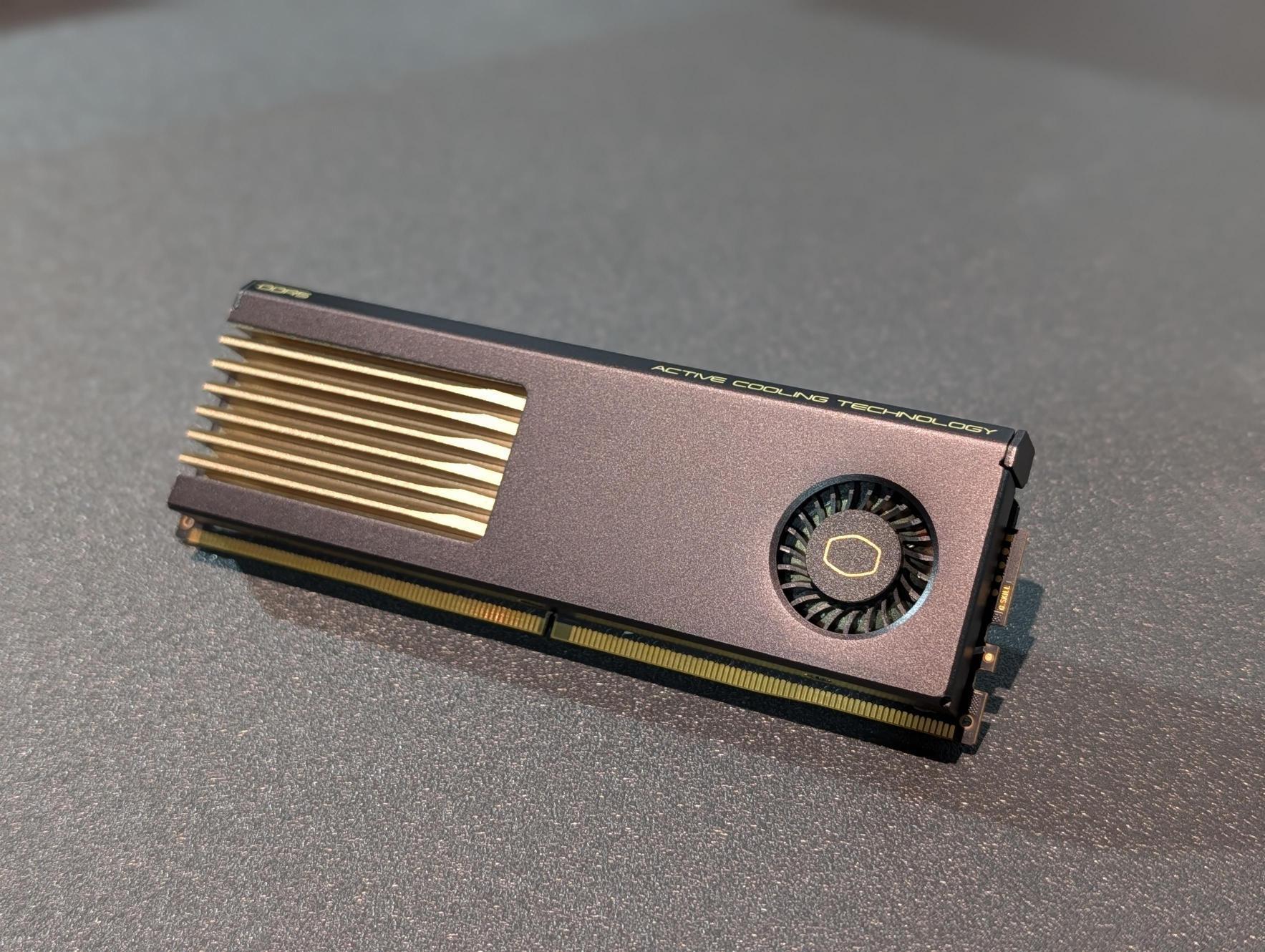
If the MasterDIMM sticks are too tall or too wide, they may force users to abandon air cooling for their CPUs in favor of AIOs, effectively limiting the target market. However, for users already utilizing liquid cooling, the MasterDIMM may provide the final piece of the thermal puzzle, ensuring that the RAM, like the CPU and GPU, can operate at peak efficiency indefinitely.
Conclusion: A New Standard or a Niche Curiosity?
The MasterDIMM represents a pivotal moment in PC hardware. It acknowledges that as we push the boundaries of data throughput and clock speeds, the passive cooling methods of the last thirty years are no longer sufficient. Whether this technology becomes the industry standard or remains a high-end specialty item depends on two factors: price and real-world thermal performance.
If the 15-degree temperature reduction proves consistent in independent lab testing, and if the noise levels remain as whisper-quiet as advertised, the MasterDIMM could set a new benchmark for what constitutes "high-performance" memory. For now, the hardware community awaits the official debut at Computex, where the true capabilities of this collaborative effort will finally be put to the test. As the industry moves forward, one thing is clear: the era of "set-and-forget" memory cooling is rapidly coming to an end.










No comments yet. Be the first to join the conversation!