

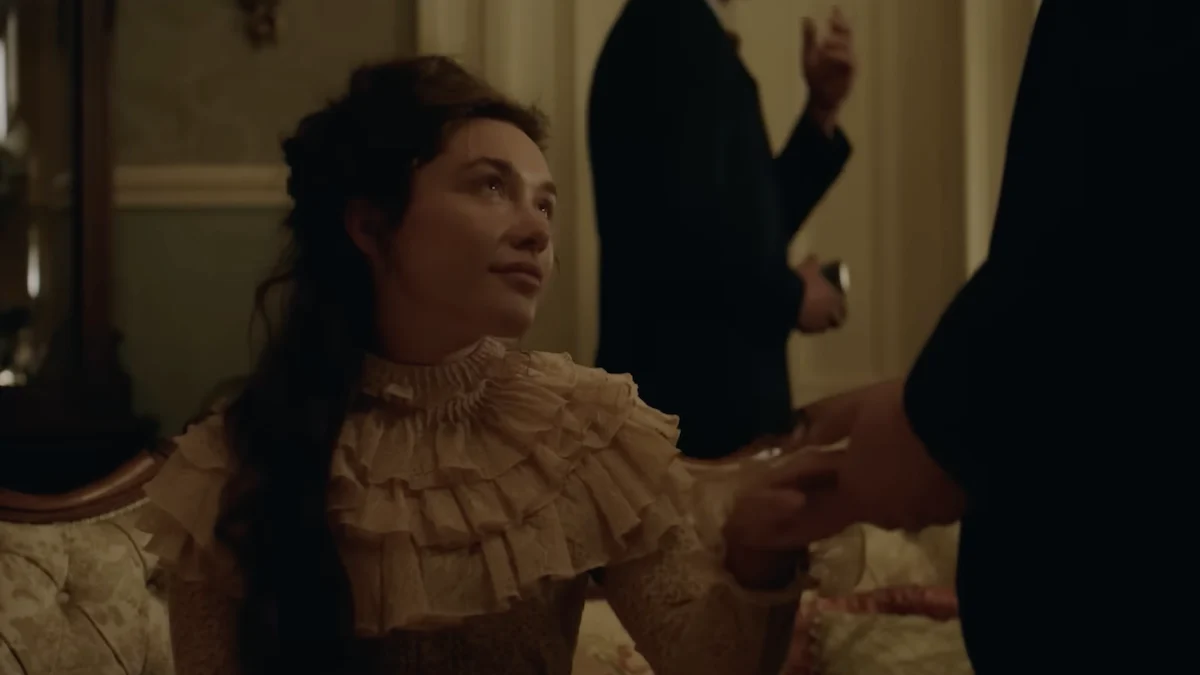
John Steinbeck’s 1952 masterpiece East of Eden has long been regarded as the definitive American epic. Spanning the tumultuous decades between the American Civil War and the end of World War I, the novel is a sweeping, multi-generational saga of the Trask and Hamilton families, serving as a complex retelling of the biblical Cain and Abel narrative. Yet, at the heart of this sprawling exploration of good, evil, and free will lies Cathy Ames—a character so profoundly malevolent that she has been cemented in the literary canon as a literal manifestation of Satan.
However, the upcoming Netflix limited series is poised to shatter that perception. With Florence Pugh stepping into the role of the infamous matriarch, the first trailer suggests a radical departure from tradition: a pivot from monstrous caricature to nuanced, sympathetic antihero. As the production approaches its anticipated fall release, audiences are left to wonder whether this humanization of a sociopath is a necessary modernization or a fundamental betrayal of Steinbeck’s original vision.
The Trask Dynasty: A Chronology of Conflict
To understand the weight of this adaptation, one must first appreciate the rigid structure of Steinbeck’s original text. The novel is fundamentally an examination of inherited trauma. It begins with the fraught relationship between Adam Trask and his half-brother, Charles. Their father’s blatant favoritism sows the seeds of a toxic rivalry that acts as a catalyst for the suffering of the next generation.
When Adam marries Cathy Ames—who assumes the name "Kate" upon their union—the story takes a dark, psychological turn. Cathy is not merely a "bad" person; she is a born sociopath. After giving birth to twin boys, Aron and Cal, she abandons her family, fleeing to Salinas, California. There, she constructs a life as a powerful madam, utilizing her femininity as a weapon to subvert the restrictive gender roles of the era.
In the 1955 film adaptation directed by Elia Kazan, Jo Van Fleet’s portrayal of Cathy reinforced her role as a figure of irredeemable darkness. She is relegated to the shadows of a dim, claustrophobic brothel, acting as an immovable obstacle for a young, yearning Cal Trask (played by James Dean). In the source material, Steinbeck doubles down on this, providing Cathy with increasingly sinister, devil-like physical descriptions as her beauty fades, signaling the internal rot that defines her entire existence.
The Antihero Rewrite: A New Narrative Lens
The Netflix adaptation, spearheaded by Zoe Kazan—the granddaughter of the 1955 film’s director—is intentionally recalibrating the lens through which we view the Trask matriarch. The recently released teaser offers a glimpse into this evolution, replacing the cold, calculated silence of the original character with an emotionally resonant, vulnerable monologue.
"When I was a little girl, I imagined I could grow smaller," the voiceover whispers, as the screen cuts to haunting, ethereal images of a young girl’s trauma. "So small that the bad things couldn’t find me. And I could disappear. Because the world is so full of evil."
This shift is seismic. By providing Cathy with an origin story rooted in fear and victimization, the series strips away the "born evil" trope that defined the novel. Where Steinbeck’s Cathy was a cipher of malice, Florence Pugh’s portrayal hints at a woman who survived a cruel world by becoming the cruelest thing in it. The trailer avoids the "unabashed arrogance" traditionally associated with the character, replacing it with a melancholy weight that suggests her crimes were perhaps a defensive mechanism against a world that offered her no other agency.
Supporting Data: Why Change a Classic?
The debate surrounding this adaptation touches on the broader cultural conversation regarding "villain redemption arcs." In contemporary storytelling, audiences have grown weary of one-dimensional antagonists. We crave the "why" behind the "what."
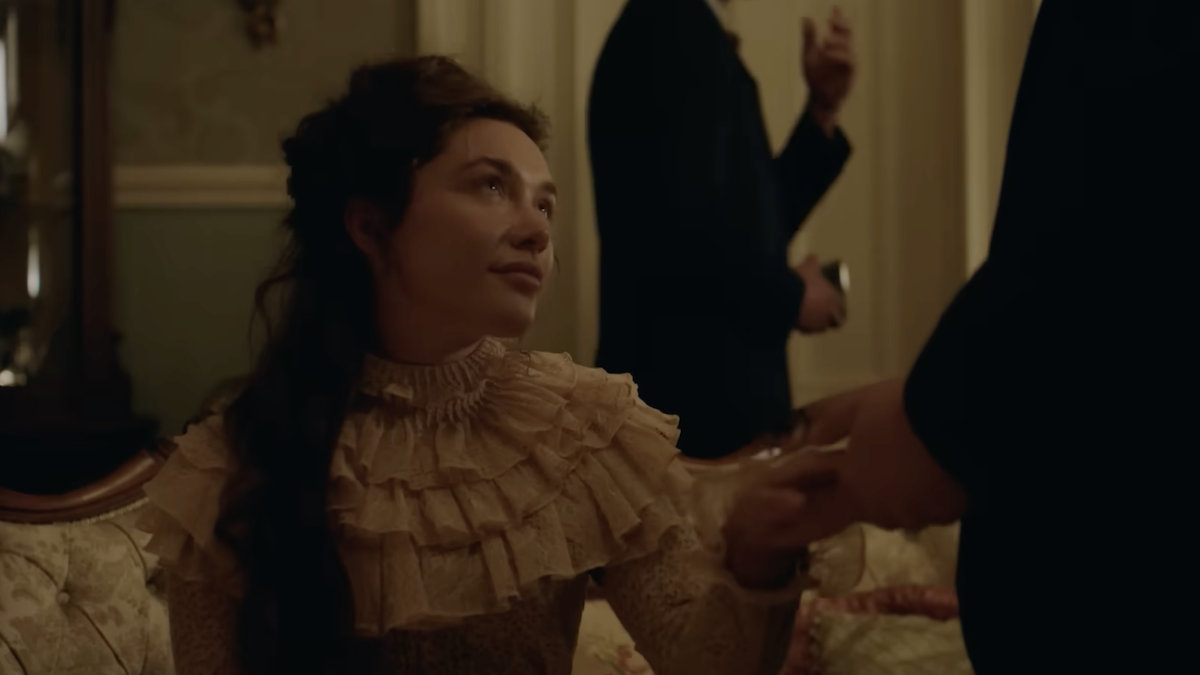
According to literary critics, Steinbeck’s Cathy was designed to challenge the reader’s belief in redemption. By making her a "born sociopath," Steinbeck argued that some individuals are simply beyond the reach of human empathy. If Netflix chooses to humanize her, they are effectively dismantling the theological framework of the book—the idea that "Timshel" (the Hebrew concept of "thou mayest," implying the choice between good and evil) is available to everyone.
If Cathy Ames is no longer a manifestation of the devil, but a victim of circumstance, the series moves from a parable about morality to a tragedy about institutional neglect. It is a risky pivot. By humanizing her, the series invites us to empathize with a character who, in the pages of the book, commits murder, extortion, and psychological torture. The success of the series will depend entirely on whether Florence Pugh can sell this internal conflict without rendering the character’s documented atrocities unbelievable.
Official Responses and Creative Direction
Zoe Kazan, serving as the primary architect of this new iteration, has been vocal about her desire to treat the character as an "indelible antihero." In interviews surrounding the project, it is clear that the goal is not to excuse Cathy’s behavior, but to contextualize it.
The production team has emphasized that they are not looking to "fix" Steinbeck, but to interrogate the missing pieces of his narrative. By giving the "devil" a voice, they are asking a provocative question: What if the evil we attribute to others is merely a reflection of the systemic violence they were subjected to in their formative years?
However, the production has been careful to maintain the atmosphere of the era. The visuals in the trailer are saturated with a sense of dread, and the cinematography suggests a gothic, claustrophobic environment that pays homage to the original novel’s oppressive setting. The intent seems to be to keep the aesthetic of the classic intact while radically altering the soul of the character.
Implications: The Legacy of Steinbeck in 2026
The decision to modernize East of Eden raises a significant question for the streaming era: Should classic literature be adapted to reflect modern sensibilities, or should it remain a frozen artifact of its time?
If the show succeeds, it could redefine the way we look at literary villains. It would suggest that there is no such thing as a "born monster," only a series of choices made in a world that offers no safety. If it fails, it risks being labeled as a shallow revisionist project that prioritized trending "antihero" tropes over the complex, challenging philosophy of one of America’s greatest writers.
As the fall release date approaches, the excitement is palpable. The involvement of Florence Pugh, arguably one of the most talented performers of her generation, guarantees that the performance will be captivating, regardless of the script’s philosophical direction.
Ultimately, East of Eden remains a story about the weight of our choices. Whether the Netflix version frames those choices as inherent or reactive will define its legacy. One thing is certain: when the Trask family hits our screens this autumn, the conversation will be dominated by the woman who refused to stay in the shadows. Whether you view her as a victim of a cruel world or the very architect of its cruelty, Cathy Ames is finally, irrevocably, taking center stage.









No comments yet. Be the first to join the conversation!