Siti Muinah
The entertainment industry lost a distinct, larger-than-life presence this week with the passing of Donald Gibb at the age of 71. To the casual observer, Gibb was the towering, shaggy-haired archetype of the 1980s “heavy”—a man whose physical stature made him a natural fit for roles as bullies, bouncers, and brawlers. However, for those who grew up in the golden age of VHS and arcade culture, Gibb was something far more essential: he was the heart and soul of the “tough guy” trope, an actor who managed to inject genuine humanity and humor into roles that could have easily been one-dimensional.
From the raucous hallways of Adams College in Revenge of the Nerds to the sweat-drenched, high-stakes arenas of the Kumite in Bloodsport, Gibb’s career serves as a roadmap of the 80s pop culture zeitgeist. His passing marks not just the loss of a character actor, but the fading of an era where cinema relied on distinct, tangible physicality to build its legends.
A Career Defined by Physicality and Charisma
Donald Gibb’s journey into the limelight began long before he graced the silver screen. His imposing 6’4” frame was once destined for the gridiron; he played football at the University of New Mexico and had a brief stint in the NFL with the San Diego Chargers. This background provided him with the raw, athletic base that would define his screen presence.
His breakout role came in 1984’s Revenge of the Nerds as Fred “Ogre” Palowakski. It is a role that has achieved immortality in the cultural lexicon, primarily due to Gibb’s delivery of the iconic command: “NERDS!” Gibb played Ogre not merely as a villain, but as a force of nature—a frat-boy juggernaut who embodied the anxieties of the era’s collegiate hierarchy. The film’s success catapulted him into a string of roles that leaned into his intimidating exterior, but it was his work in the martial arts genre that truly cemented his legacy.
In 1988’s Bloodsport, Gibb portrayed Ray Jackson, an American martial artist entering the underground tournament known as the Kumite. While the film is ostensibly a showcase for the acrobatic prowess of Jean-Claude Van Damme, Gibb provided the emotional grounding. Jackson was the quintessential “big friend”—the man who enters the arena with a smile, takes a brutal beating from the villainous Chong Li, and ultimately serves as the catalyst for the protagonist’s quest for justice. It was a performance defined by a lack of ego; Gibb played Jackson with a vulnerability that endeared him to audiences, proving that even the biggest man in the room could be the most likable.

The Intersection of Cinema and Digital Combat
Perhaps the most enduring, if indirect, legacy of Donald Gibb’s work is his profound impact on the evolution of fighting games. The connection between Bloodsport and the Mortal Kombat franchise is well-documented, yet it remains a fascinating study of how pop culture evolves through inspiration and iteration.
In the early 1990s, when Midway Games developers Ed Boon and John Tobias were conceptualizing what would become Mortal Kombat, their primary vision was an arcade game centered around the image of Jean-Claude Van Damme. The goal was to translate the kinetic, cinematic violence of Bloodsport into a digital format. While the deal to feature Van Damme eventually fell through, the DNA of the film remained deeply embedded in the project.
The character of Johnny Cage, now a cornerstone of the Mortal Kombat cinematic and gaming universe, was born directly from this initial ambition. Cage’s “butterfly split” punch, his cocky, sunglasses-wearing demeanor, and his Hollywood action-star persona were all intentional nods to Van Damme. However, the influence of Bloodsport went deeper than just the protagonist.
The “Kano” Connection and the Archetype of the Brute
If Johnny Cage represents the refined, martial-arts-centric influence of Bloodsport, then the character of Kano represents the raw, brawling essence of Donald Gibb’s Ray Jackson. In the Mortal Kombat lore, Kano is a mercenary, a survivalist, and a man who fights with a dirty, street-brawling efficiency.
When observers note the similarities between Kano and Gibb’s portrayal of Jackson, they are highlighting a specific type of cinematic energy: the “Western brute.” Unlike the disciplined masters like Liu Kang or the mystical sorcerers like Shang Tsung, Jackson and Kano represent the grit of the street. They are characters who thrive on trash talk, intimidation, and the sheer audacity of being the most physically dominant person in the room.

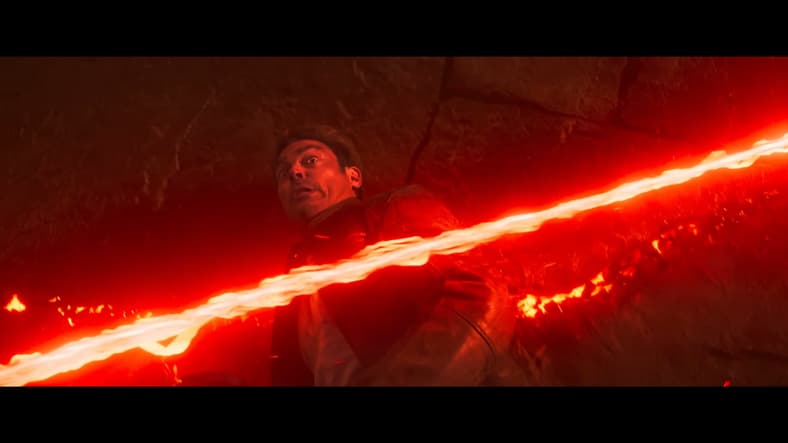
Gibb’s ability to imbue his characters with a smirking, dangerous charm—the kind that says, “I know I’m going to win, and I’m going to enjoy every second of it”—became the blueprint for the charismatic, villainous anti-heroes that populate modern fighting games. Even as we see the Mortal Kombat franchise continue to thrive on the big screen today, with actors like Karl Urban stepping into the role of Johnny Cage, the stylistic foundations laid by performers like Gibb remain visible beneath the high-budget visual effects.
Implications for Modern Action Cinema
The passing of Donald Gibb forces a reflection on how the "heavy" has changed in modern cinema. In the 1980s, the "big guy" was often a practical effect in himself. He was a person who took up space, who moved with a weight that felt real, and who existed within the same physical reality as the hero.
Today, much of this archetypal role has been replaced by CGI, motion capture, or wire-fu. While these advancements have allowed for more spectacular choreography, there is an argument to be made that the "human" element—the sense of a real person taking a punch—has been diminished. Gibb was the quintessential "human anvil." He made his opponents look better by being a formidable, immovable object, and he made the audience feel the impact of every blow.
As we look at the current state of action cinema, we see a longing for this kind of grounded intensity. Films that prioritize practical stunts and character-driven conflict, even within the fantastical worlds of video game adaptations, often find more success with audiences than those that rely solely on digital spectacle. The "Gibb" style—the mix of humor, toughness, and unwavering loyalty—is a template that directors and actors would do well to study.
A Legacy of "Flawless Victory"
Donald Gibb’s filmography is a testament to the importance of character actors. Without the Ogre, the nerds would have no foil; without Ray Jackson, the Kumite would have no heart. He lived his career with a commitment to his craft that never required him to be the lead to be the most memorable person on screen.
As the industry continues to evolve, the icons of the 80s—the actors who defined the aesthetic of a generation—are slowly departing. We are losing the people who built the sandbox in which modern blockbusters play. To remember Donald Gibb is to acknowledge that the "big guy" was never just a prop; he was the anchor of the narrative.
In the world of Mortal Kombat, a "flawless victory" is the ultimate achievement. Donald Gibb, through his career of memorable performances, his impact on the cultural landscape, and the warmth he reportedly brought to his craft, achieved a version of that in his own life. He leaves behind a body of work that continues to influence creators, delight fans, and remind us all of a time when the action was hard-hitting, the villains were larger than life, and the friend in the corner was always there to take a punch for the sake of the story.
Rest in peace, Donald Gibb. Your presence was the backbone of our favorite cinematic battles, and your legacy, much like the legend of the Kumite, will continue to echo through the halls of pop culture history.

 Sagoh
Sagoh
 Ammar Sabilarrohman