Iffa Jayyana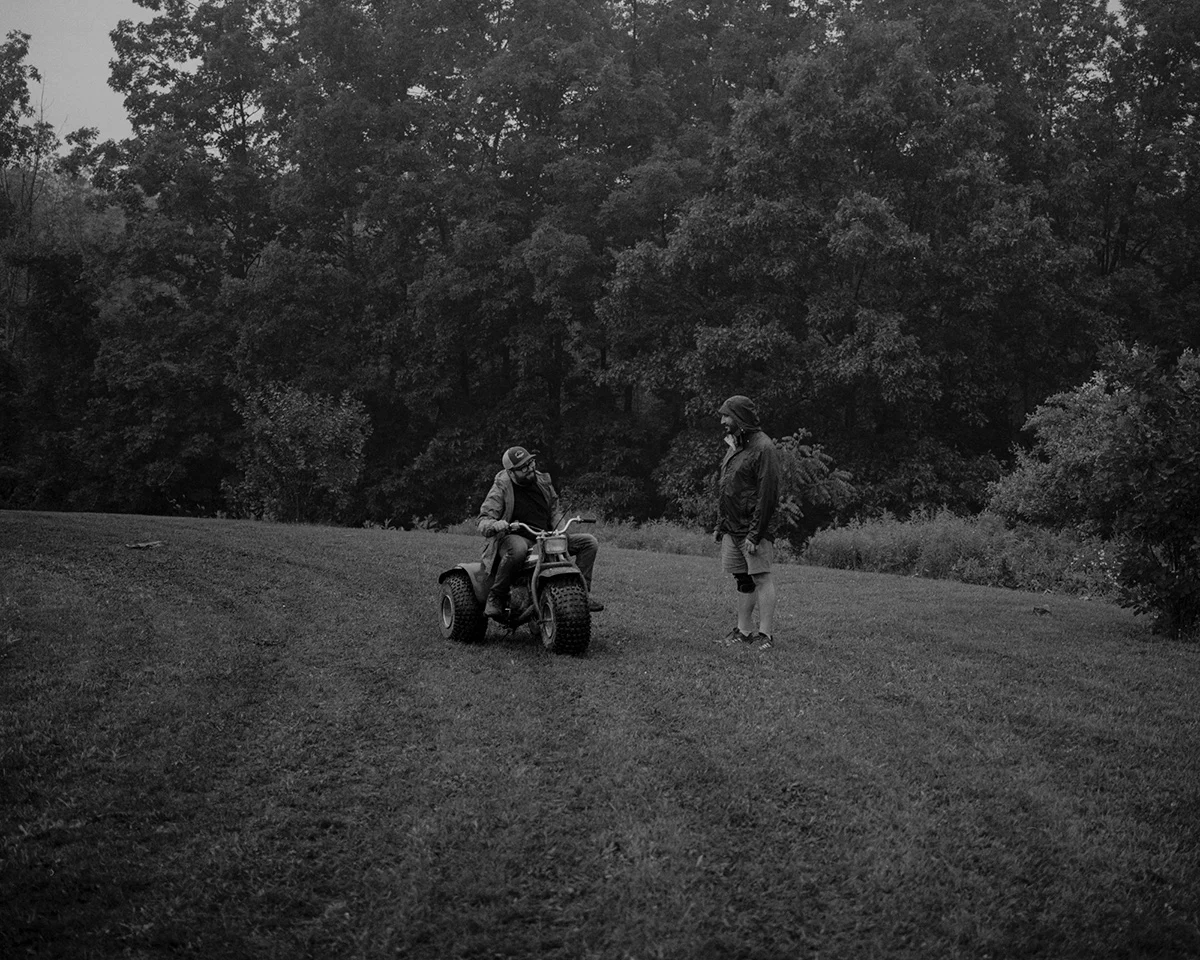
Main Facts: The Lens of Displacement
In the sprawling, often fractured landscape of contemporary American identity, photographer Orpheus Acosta has emerged as a vital cartographer of the unseen. Based in New York City, Acosta’s practice is defined by a haunting, atmospheric investigation into what he terms "American dysphoria"—a condition not of medical pathology, but of existential misalignment. His latest body of work, Long Time Caller, First Time Listener, serves as a visual inquiry into the persistent friction between the human desire for connection and the systemic isolation inherent in modern life.
Acosta, a graduate of SUNY Purchase with a BFA in Photography, approaches his medium as both a witness and a participant. His work is deeply personal, stemming from his own biography: adopted at two months old by a Puerto Rican family, Acosta’s search for origin at age 16 catalyzed a lifetime of documenting the "in-between." His images do not seek to provide answers; rather, they map the geography of longing. Through photography and video, he captures the mundane spaces of New York—the subway platforms, the desolate domestic interiors, the liminal hours of dusk—transforming them into theaters of emotional suspension. In Acosta’s frame, the act of reaching out is constant, yet the response is never guaranteed, rendering his photography a meditation on the instability of communication in an era that promises total connectivity.
Chronology: A Life Spent Searching
To understand the gravity of Long Time Caller, First Time Listener, one must trace the arc of Acosta’s personal and artistic development, which has been inexorably linked since his mid-teens.
- The Early Search (Age 2 Months – 16 Years): Acosta was adopted into a Puerto Rican family in New York, a formative experience that placed him in a unique position of navigating cultural belonging. The internal question of "origin" remained dormant until age 16, when he began the formal process of seeking information regarding his adoption. This period marked the beginning of his archival impulse—the need to document environments as a means of anchoring the self.
- The Academic Foundation (University Years): During his tenure at SUNY Purchase, Acosta transitioned from amateur documentation to a rigorous aesthetic inquiry. His BFA studies allowed him to refine his technical language, moving away from purely documentary styles toward the conceptual, atmospheric photography that characterizes his current work.
- The Emergence of a Signature Aesthetic (2018–2022): Following his graduation, Acosta began formalizing his exploration of "dysphoria as atmosphere." He moved through various projects that examined how identity is mediated through social and political systems. It was during this period that he began to conceptualize the themes that would eventually define Long Time Caller, First Time Listener.
- The Current Project (2023–Present): Long Time Caller, First Time Listener represents the culmination of this decade-long trajectory. Drawing inspiration from the tropes of late-night radio call-in culture, Acosta began capturing images that suggest a "call" into the void—a message sent with no assurance of an audience.
Supporting Data: The Sociology of Disconnection
While Acosta’s work is grounded in the subjective, it exists within a larger sociological framework. Data regarding social isolation in the United States provides a stark backdrop to his artistic output. According to reports from the U.S. Surgeon General, the country has been grappling with an "epidemic of loneliness," with studies indicating that nearly half of American adults report experiencing measurable levels of social isolation.
Acosta’s work functions as a visual interpretation of this data. In his images, the "gaps between people" are not merely metaphorical; they are rendered in the harsh, flat light of a subway car or the lonely silhouettes of urban architecture. When Acosta notes that "expression is constant but understanding remains unstable," he is touching upon the digital paradox of the 21st century: we are more capable of reaching one another than at any point in history, yet the quality of that connection has become increasingly brittle.
His photographic series utilizes a specific color palette—muted tones, deep shadows, and high-contrast highlights—that echoes the technical limitations of broadcast technology, grounding the viewer in the feeling of a late-night transmission. By framing his project through the lens of radio, Acosta highlights a historical form of communication that was fundamentally one-sided, a perfect analogy for the modern experience of broadcasting one’s life into the digital ether.
Official Responses and Critical Reception
The critical response to Acosta’s work has been characterized by an appreciation for his restraint. Curatorially, the work is often cited for its refusal to turn trauma into "spectacle." Unlike contemporary photographers who might focus on the gritty realism of urban poverty or the overt markers of identity politics, Acosta focuses on the quiet, internal residue of those forces.
Critics have noted that Acosta’s work effectively bridges the gap between the personal and the universal. By removing the specific markers of his own history—the names of family members, the specific location of his search—he allows the viewer to project their own sense of displacement onto the images. One prominent reviewer noted, "Acosta does not ask us to pity the subject; he asks us to recognize the silence in our own lives."
The use of "dysphoria" in his artist statement has sparked significant discourse within academic circles, with scholars of visual culture noting that he reclaims the term from purely psychiatric usage. Instead, he treats it as a phenomenological experience—a state of being "out of sync" with the culture that surrounds you.
Implications: The Unresolved Conversation
The implications of Long Time Caller, First Time Listener extend far beyond the gallery walls. Acosta is essentially arguing that the current American condition is defined by a lack of reciprocity. We are a nation of "callers"—broadcasting our identities, our political stances, and our grievances—but we are rarely "listeners."
The Fragility of Connection
Acosta’s work suggests that connection is not a static achievement, but an ongoing, often failing, performance. His images capture people in moments of quiet isolation: waiting, looking, or simply existing in spaces that feel too large for the individual. The implication is that our systems—social, digital, and familial—promise us a sense of belonging that they are inherently incapable of delivering. This creates a state of perpetual "reaching out," where the effort to connect becomes the identity itself, rather than the connection being the result.
The Future of Visual Identity
As AI-generated imagery and hyper-curated social media feeds threaten to standardize the human experience, Acosta’s commitment to the "unresolved conversation" is a radical act of defiance. He insists on the beauty of the gap. His work suggests that if we can acknowledge the dissonance—if we can admit that we are all, in some sense, calling into a void—we might finally begin to hear one another.
A Legacy of Seeking
Ultimately, Long Time Caller, First Time Listener is a project about the dignity of the attempt. By documenting his own environment with such surgical care, Acosta validates the experience of those who feel displaced by the rapid, often cold, pace of modern life. He provides a vocabulary for the quiet, internal recognition that while connection is never guaranteed, the act of seeking it is what defines us.
Acosta’s work will continue to resonate because it addresses the foundational human anxiety: Am I heard? By transforming this anxiety into an atmospheric aesthetic, he has created a body of work that acts as both a mirror for the viewer and a testament to the endurance of the human spirit. In the silence of his photographs, there is a profound, albeit fragile, sense of hope—a quiet insistence that even in the absence of a reply, the call is still worth making.
As he continues his career, Acosta remains a photographer of the threshold. He sits at the intersection of the personal search for home and the public search for meaning. His work does not aim to resolve the "dysphoria" of the American experience, but rather to give it a face, a shape, and a place to reside. In doing so, he ensures that the "long time caller" is finally, undeniably, present.


 Jia Lissa
 Muslim