

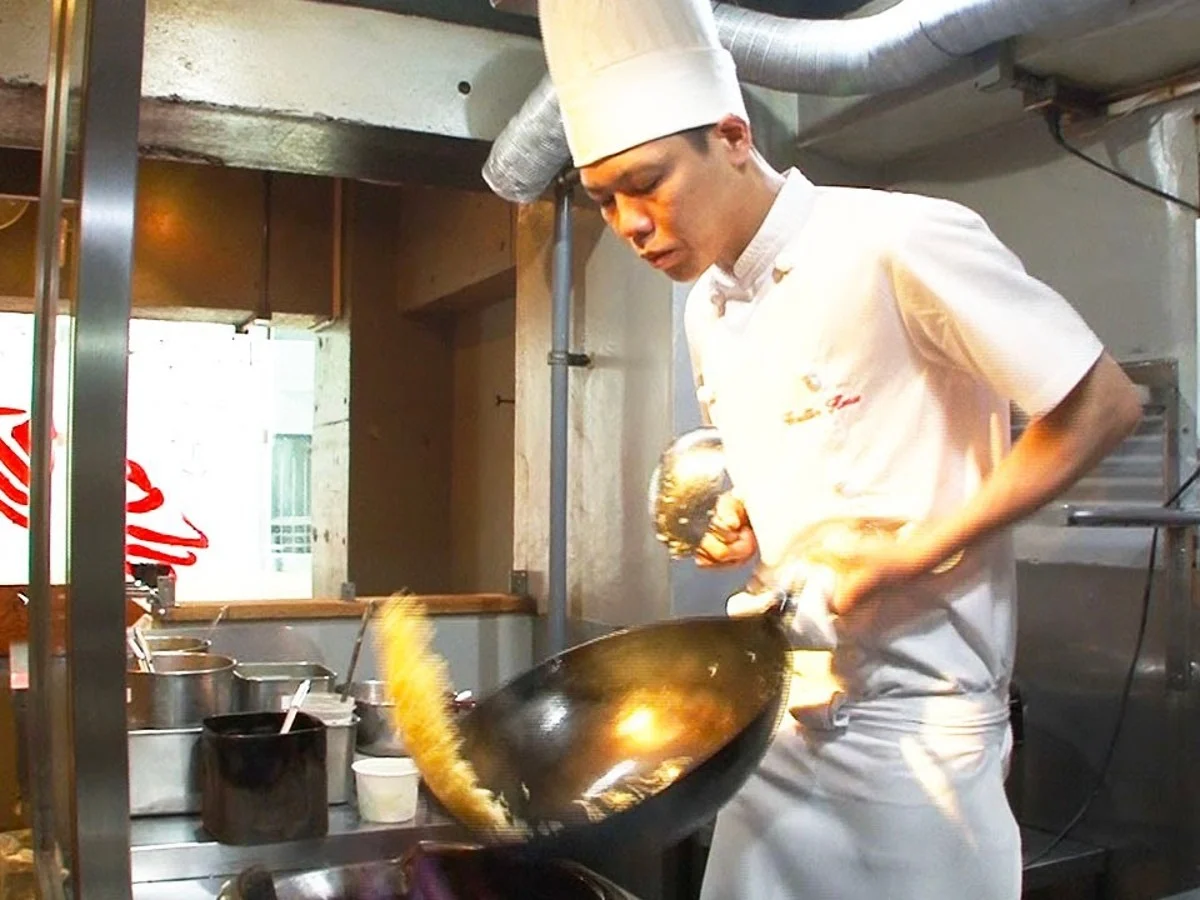
There is a profound distinction between the domestic act of cooking—a necessity born of sustenance—and the performative, high-octane artistry of a master chef. While the home kitchen is often a place of comfort and leisurely preparation, the professional culinary theater demands precision, speed, and a rhythmic harmony that borders on the symphonic. In Japan, this phenomenon has been elevated to an aesthetic pursuit, with chefs like those at Yokohama’s Tachibana garnering international fame for their transformative approach to simple staples like omurice.
However, in the bustling heart of Tokyo, a new benchmark for speed and technical perfection has emerged. Takumi Murakami, a chef at the Shibuya branch of Kani Chahan no Mise (The Crab Fried Rice Restaurant), has captured the global imagination. Often referred to by patrons and internet enthusiasts as the "God of Fried Rice," Murakami’s ability to manipulate a wok with blistering velocity while maintaining an aura of serene control has turned a simple lunch rush into a viral sensation.
Main Facts: The Anatomy of a Fifty-Second Masterpiece
The core of the phenomenon surrounding Takumi Murakami lies in his signature preparation of crab fried rice. In the high-pressure environment of a Tokyo lunchtime, Murakami operates with a mechanical efficiency that defies the common image of a chaotic kitchen.
The process is deceptively simple in description but daunting in execution: raw ingredients—specifically premium crab meat, seasoned rice, eggs, and a secret blend of aromatics—are transformed into a steaming, perfectly aerated dish in under 50 seconds. This is not merely "fast food" in the derogatory sense; it is a display of culinary athletics. The heat of the wok is intense, requiring constant movement to prevent burning while ensuring the rice grains are individually coated in oil and seasoning.
Murakami’s technique relies on the "breath of the wok" (wok hei), a Cantonese culinary concept that implies the dish has absorbed the essence of the flame. By managing the weight of the steel vessel and the kinetic energy of the ingredients, he ensures that the rice retains its texture—firm yet supple—while the crab remains succulent.
Chronology: From the Shibuya Kitchen to Global Virality
The rise of Takumi Murakami’s reputation can be traced through a series of tactical shifts in how culinary culture is consumed in the digital age.
- Pre-2023: Murakami establishes himself as a fixture at the Shibuya Kani Chahan no Mise. His reputation remains localized, primarily within the Japanese domestic sphere, known to office workers and culinary aficionados who frequent the Shibuya district.
- Early 2024: The production team for the popular TV Tokyo program Uchimura no Tsuboru Douga identifies Murakami as a subject of interest. Recognizing that his process is not just functional but visually hypnotic, they film his workflow during peak operational hours.
- The Viral Pivot: Upon the release of the footage on the program’s YouTube channel, the clip transcends regional boundaries. Within days, the video accumulates hundreds of thousands of views. Comments begin to pour in from across the globe, with viewers describing his movements as "the work of a god" and "technique beyond compare."
- Current Status: Murakami has become a brand ambassador of sorts for the fast-casual dining experience, with his Shibuya location seeing a marked increase in international tourism from those eager to witness the "fifty-second performance" in person.
Supporting Data: The Mechanics of Efficiency
To understand why Murakami’s performance resonates so deeply, one must look at the data behind the efficiency of a high-end wok station. In a professional kitchen, time is the ultimate currency.
The Physics of the Wok
The wok is designed for high-thermal conductivity. Murakami utilizes a gas burner capable of outputting a significantly higher BTU (British Thermal Unit) than a standard home range. The "dance" he performs—a rhythmic oscillation of the pan—serves three distinct purposes:
- Thermal Distribution: By constantly shifting the rice, he prevents hot spots, ensuring the entire batch reaches the required temperature simultaneously.
- Moisture Control: The rapid movement allows excess steam to escape, which is critical for preventing the rice from becoming mushy or clumpy.
- Ingredient Integration: The elliptical motion of the wok creates a vortex, folding the crab meat into the rice without breaking the delicate fibers of the protein.
The Temporal Metric
In the restaurant industry, the "ticket time"—the duration between an order being placed and the dish hitting the window—is a key performance indicator. Murakami’s ability to plate in under 50 seconds places him in the top echelon of line cooks worldwide. For context, the average high-end stir-fry station typically averages two to three minutes for a single portion. Murakami’s reduction of this time by 60% without sacrificing quality is a feat of ergonomics and muscle memory.
Official Responses and Culinary Critique
The response from the culinary community has been one of professional reverence. While some purists argue that slow-cooked food often carries more depth of flavor, the consensus regarding Murakami is that he has mastered a specific, difficult niche.
"What Murakami-san is doing is the culmination of thousands of hours of repetition," says a spokesperson for the Japanese Culinary Arts Association. "It is not just speed; it is the total elimination of wasted motion. Every flick of the wrist, every reach for a ladle, is optimized. In a professional kitchen, this is the highest form of professional discipline."
The management of Kani Chahan no Mise has noted the impact of the viral video with both pride and caution. While they are pleased with the increased foot traffic to the Shibuya location, they emphasize that Murakami’s technique is a standard they strive to uphold across all their branches, even if he remains the unique face of their viral success. They have confirmed that despite the high volume of interest, the quality of the crab and the integrity of the recipe remain unchanged.
Implications: The Future of "Performance Cooking"
The viral success of Takumi Murakami has broader implications for the hospitality industry, particularly in the era of social media-driven dining.
The Rise of the "Culinary Spectacle"
As dining becomes increasingly digitized, the "theatre" of the kitchen is becoming as valuable as the meal itself. Establishments that feature open kitchens—where the chef is visible to the patron—are seeing higher engagement rates. Murakami’s success suggests that consumers are no longer satisfied with just a high-quality product; they are looking for a high-quality process.
The De-stigmatization of Fast-Casual
For years, there has been a divide between "fine dining" and "fast-casual." Murakami bridges this gap. By applying the rigor and discipline typically associated with Michelin-starred sushi masters to a humble bowl of crab fried rice, he is effectively elevating the status of fast-casual dining. He proves that artistry is not defined by the price of the ingredients, but by the intent and skill of the practitioner.
Tourism and the Local Economy
Finally, the "Murakami Effect" has turned a standard Shibuya eatery into a destination for culinary pilgrims. This demonstrates the power of social media to revitalize local businesses. As travelers seek out "authentic" experiences that go beyond the typical tourist traps, chefs like Murakami become cultural anchors, helping to define the modern image of Tokyo as a city where even the most mundane daily task is performed with extraordinary care.
Conclusion
Takumi Murakami’s fifty-second stir-fry is a microcosm of the Japanese philosophy of shokunin—the artisan’s spirit. It is the dedication to mastering a singular craft to the point of transcendence. Whether he is viewed as a "god of fried rice" or simply a highly efficient professional, his impact on the modern culinary landscape is undeniable.
For those traveling to Tokyo, the Shibuya location of Kani Chahan no Mise offers more than just a meal; it offers a front-row seat to a masterclass in kinetic energy and culinary precision. While patrons may be drawn in by the viral fame of the fifty-second performance, they stay for the result: a dish that is as perfectly executed as the technique required to create it. As the world continues to watch, Murakami remains at his station, his wok in hand, proving that even in the rush of the modern world, there is always time to achieve perfection.












No comments yet. Be the first to join the conversation!