

Introduction: A Curatorial Milestone in Durham
At the Nasher Museum of Art at Duke University, the current exhibition, Everything Now All At Once, serves as more than a collection of aesthetic objects; it is a profound declaration of intent. The exhibition title—a frantic, breathless phrase—belies the deliberate, contemplative nature of the work on display. By curating dozens of pieces from global luminaries such as Nick Cave, Ai Weiwei, Nina Chanel Abney, and Wangechi Mutu, the Nasher has effectively constructed a map of the contemporary art world where the boundaries of geography, medium, and history collide.
This exhibition acts as a testament to the museum’s rigorous accession strategy over the past two decades. Rather than merely filling gallery space, the museum has prioritized the acquisition of works that challenge the traditional Western canon—a canon that has, for centuries, systematically marginalized the contributions of global cultures and artists of color. Everything Now All At Once is a vital, breathing dialogue between the weight of history and the infinite possibilities of the future.

The Core Narrative: The Analog Counter-Revolution
In an era defined by the rapid, often dizzying acceleration of digital technology and artificial intelligence, the Nasher Museum’s decision to center Everything Now All At Once on decidedly analog works is a subversive and highly intentional choice.
While the digital sphere continues to reshape our visual landscape, painting and sculpture remain the traditional cornerstones of "high art" in the Western tradition. By focusing on these tactile, labor-intensive mediums, the Nasher forces a conversation about human endurance and the physical mark of the artist. Whether it is the textured, visceral weight of a bronze sculpture by Barbara Chase-Riboud or the meticulously applied beads on a repurposed punching bag by Jeffrey Gibson, the works in this exhibition demand a physical presence.

These artists are not rejecting the modern world; they are anchoring it. By utilizing age-old methods to grapple with contemporary themes of globalism, systemic inequality, and identity, these creators argue that the human hand—and the human story—remains the primary technology of meaning.
Chronology and Evolution of the Collection
The exhibition’s genesis is rooted in the Nasher’s long-term commitment to broadening its institutional reach. Since the early 2000s, the museum has moved with deliberate speed to address the "missing chapters" of art history.

- 2005–2015: The foundational decade of this shift saw the Nasher prioritize the acquisition of contemporary works by artists of color, laying the groundwork for a more representative collection.
- 2010: The acquisition of works like Xaviera Simmons’s Session Six: Kitty Hawk began to signal a departure from traditional portraiture toward complex, site-specific explorations of history and landscape.
- 2015–2020: During this period, the museum solidified its focus on "iconic" contemporary pieces, such as Jeffrey Gibson’s beaded punching bags, which blend Indigenous craft with urban athletic iconography.
- August 2025: The grand opening of Everything Now All At Once brought these disparate threads together, creating a cohesive narrative that spans two decades of collecting.
- May 2026 and Beyond: The exhibition continues its dynamic life cycle with planned rotations of new works, ensuring that the dialogue between the past and present remains fluid and responsive through the exhibition’s close on November 1, 2026.
Supporting Data: An Inventory of Resilience
The strength of Everything Now All At Once lies in its diversity—not only of the artists involved but of the mediums they employ. The exhibition serves as a microcosm of global artistic output.
Key Highlights and Their Significance
- Alfredo Jaar, Lagos 2002 (1991): A powerful lightbox installation that confronts the viewer with the geopolitical imbalances of the early 21st century. It acts as a visual sidebar to the exhibition, reminding us that globalism is not a monolith but a collection of specific, often unequal, experiences.
- Jeffrey Gibson, I PUT A SPELL ON YOU (2015): A seminal work that utilizes the iconography of the boxing ring to discuss resilience, trauma, and cultural memory. Gibson’s transformation of the "masculine" punching bag into a piece of intricate, feminine-coded textile art challenges viewers to reconsider the intersection of identity and physical struggle.
- Amy Sherald’s Portraits: Renowned for her use of monochromatic skin tones against vibrant, non-representational backgrounds, Sherald’s works in the collection function as psychological portraits that insist on the interiority of her subjects—a space frequently denied to Black individuals in Western art history.
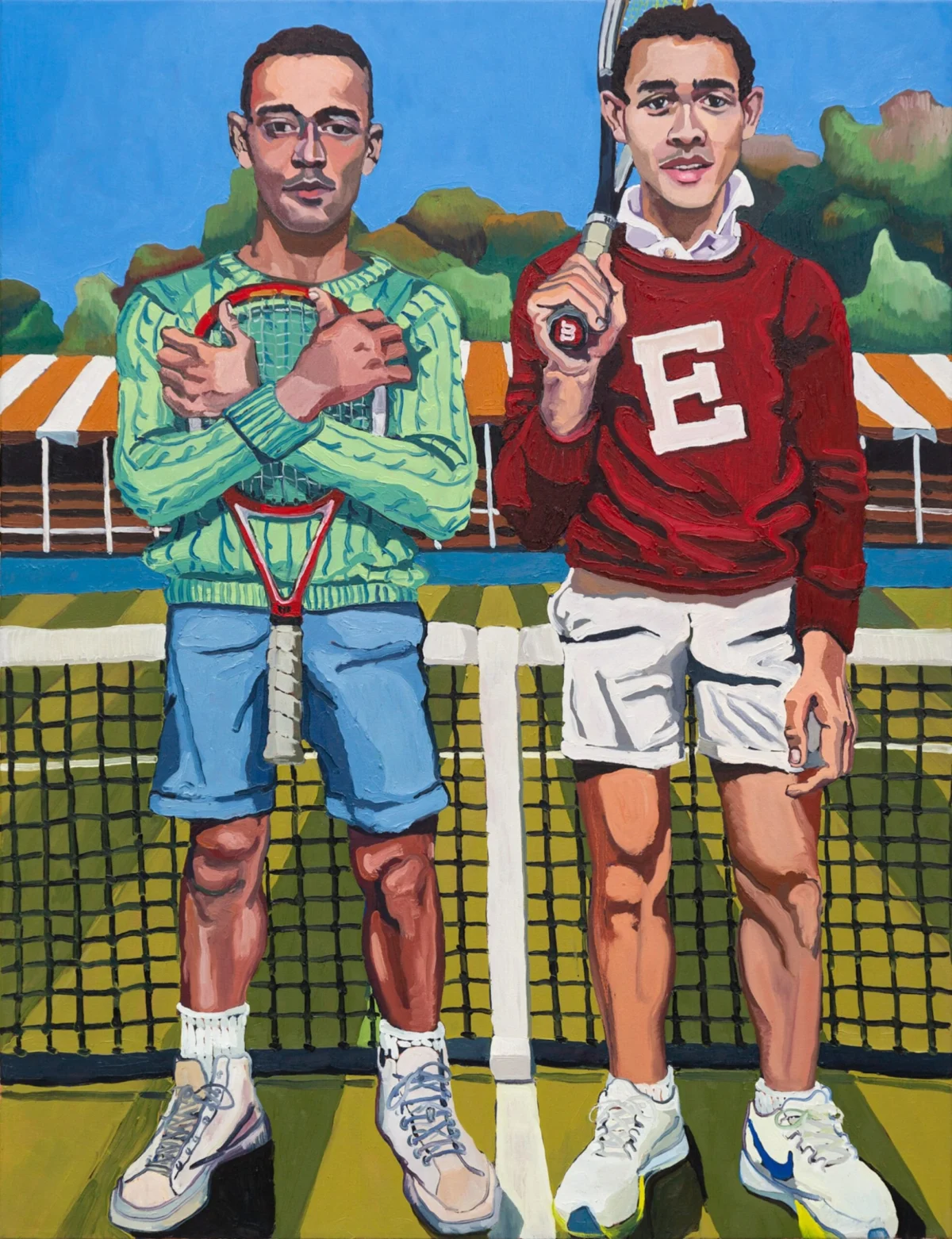
- Nicolas Lambelet Coleman, We Don’t Sweat in These Clothes (2024): A fresh addition that highlights the museum’s commitment to supporting emerging contemporary voices. The work’s title and subject matter offer a commentary on the performance of leisure and the subversion of athletic tropes.
Official Institutional Perspectives
The Nasher Museum, under its current leadership, has consistently framed these acquisitions not as "political gestures" but as "historical corrections."

In institutional statements regarding the exhibition, curators have emphasized that the inclusion of these works is a matter of accuracy. "Art history is a record of who we value," notes one curatorial representative. "By expanding our collection to include artists who were historically omitted from the canon, we are not changing history; we are finally telling the full version of it."
The museum’s board and acquisition committees have faced the challenge of balancing the "iconic" with the "emerging." The goal of Everything Now All At Once is to demonstrate that joy, resilience, and individuality are not peripheral to the human experience—they are, in fact, the driving forces of contemporary culture.

The Implications: What This Means for the Future
The implications of Everything Now All At Once extend far beyond the walls of the Nasher Museum in Durham. The exhibition challenges other mid-sized and large institutions to audit their own holdings.
1. The Decentralization of the Canon
For decades, the art market and major museums focused on a narrow, Eurocentric path of development. The Nasher’s exhibition proves that a collection can be both "high art" and "deeply diverse." It provides a blueprint for how institutions can shift their focus toward artists from historically marginalized backgrounds without sacrificing aesthetic quality or historical significance.

2. The Persistence of the Analog
In an age of digital saturation, the success of this exhibition highlights a growing public hunger for the physical. There is an inherent, irreplaceable power in standing before an 85-inch oil painting by Wangari Mathenge or a bronze sculpture by Barbara Chase-Riboud. The exhibition suggests that as our lives move further into the ether, the importance of the physical object as a site of communion will only grow.
3. A Focus on Joy and Resilience
Perhaps the most significant takeaway from the exhibition is its tonal shift. While much of the art addressing systemic oppression is often expected to be didactic or purely mournful, the artists in this exhibition—such as Mathenge and Abney—frequently center themes of vibrant life, agency, and joy. This is a critical evolution in the discourse of social justice art; it suggests that resilience is not merely the ability to survive trauma, but the ability to thrive and create in spite of it.

Conclusion: A Call to Witness
As Everything Now All At Once continues its run in Durham, it stands as a mandatory stop for anyone interested in the trajectory of 21st-century art. The exhibition is a complex, layered, and deeply human achievement.
By rotating new pieces into the show in the coming month, the Nasher ensures that the exhibition remains a living entity rather than a static display. Whether you are a scholar of art history or a casual visitor, the works within these galleries offer a chance to engage with a version of the future that is inclusive, global, and profoundly, beautifully human.

The exhibition remains on view at the Nasher Museum of Art through November 1, 2026. For those traveling to North Carolina, it serves as a powerful reminder: the history of art is still being written, and for the first time in a long time, the pen is in many hands.











No comments yet. Be the first to join the conversation!