Lina Hope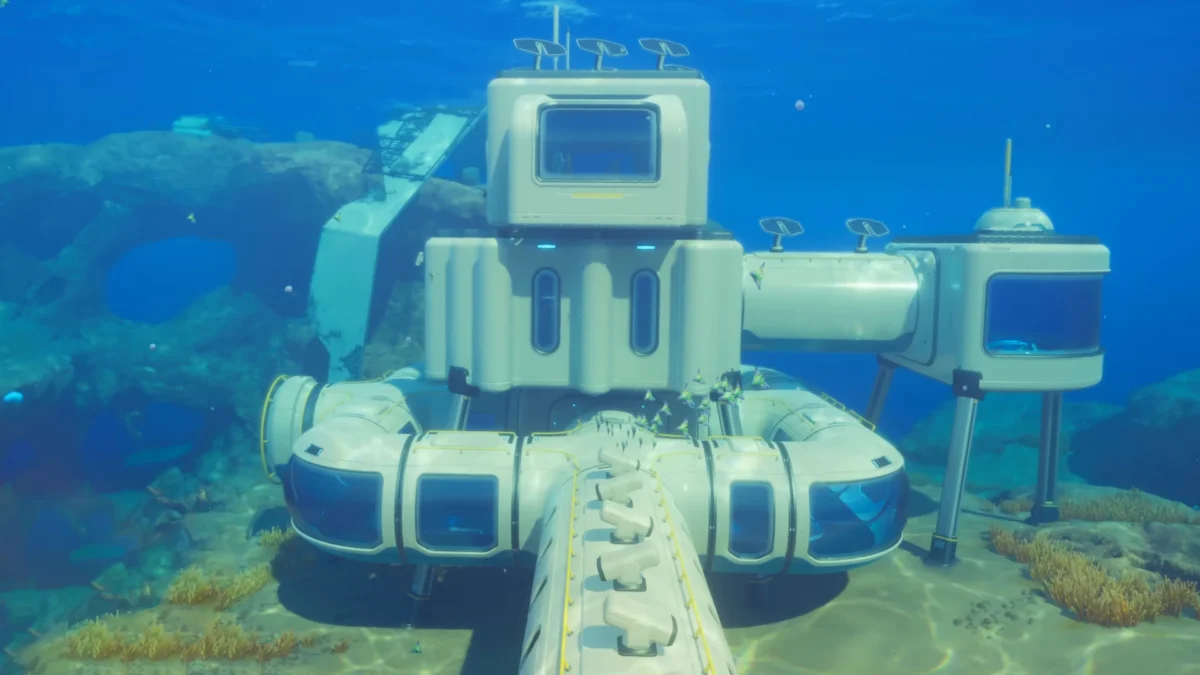
Surviving the alien oceans of a hostile planet requires more than just oxygen tanks and a sharp knife; it requires a sanctuary. In the vast, treacherous depths of Subnautica 2, establishing a network of well-fortified habitats is not merely a convenience—it is an absolute necessity for long-term survival. As players venture deeper into the mysterious waters of the planet Zerzura, the importance of having a "home away from home" becomes clear. With the sequel, developer Unknown Worlds has overhauled the construction mechanics, aiming to make the creative process more fluid, intuitive, and accessible than ever before.
The Foundations: Getting Started with Habitat Construction
The path to building your first underwater base begins with the acquisition of the essential tool of the trade: the Habitat Builder. In the early stages of Subnautica 2, this tool is not simply given to the player. Instead, you must first construct a Scanner at a standard Fabricator. Once equipped, you must scour the immediate vicinity of your initial lifepod to locate and scan scattered Habitat Builder fragments.

It is vital to temper expectations early on; your initial blueprints will be limited. The most critical component for any burgeoning base is the "Room" module. Without this, your facility lacks the structural integrity required to house life-support systems or storage. During these initial hours, players are advised to adopt a minimalist approach. Survival mode, in particular, demands strict resource management. Building a sprawling, opulent base before you have secured a consistent supply of titanium and glass is a recipe for disaster. Focus on a single, efficient "box room" containing the absolute essentials—a bed for resting, a locker for overflow inventory, and a power source—to provide a safe haven while you explore.
Tactical Site Selection
One of the most common pitfalls for new players is poor site selection. When choosing where to plant your first base, prioritize level terrain. Attempting to build on jagged, uneven slopes often leads to frustrating structural issues and alignment errors. Furthermore, consider the future of your expansion. If you intend to scale up, ensure there is sufficient clearance for both horizontal extensions and the eventual construction of larger specialized units, such as vehicle bays for your Tadpole.

The Evolution of Construction: From Grids to Sculpture
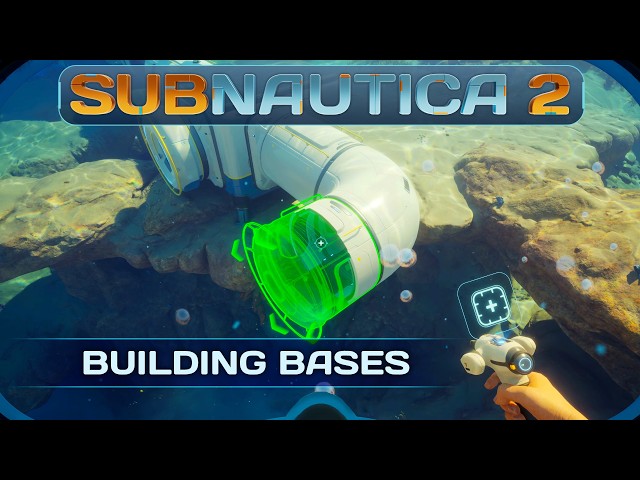
The base-building mechanics in Subnautica 2 represent a significant departure from the original title. According to insights shared by Milan Singh, Senior Gameplay Engineer at Unknown Worlds, the team has implemented a "sculptural" system that moves away from the rigid, modular grid constraints of the first game. This new approach, detailed in the Building Bases development vlog, allows for a more organic construction process.
Instead of navigating complex menus to find specific pre-formed windows or connectors, players can now mold and place structural components with a degree of freedom that was previously impossible. This procedural system allows for custom-shaped windows and varied room configurations, enabling players to tailor their bases to the unique topography of Zerzura’s ocean floor.

The Return of Circular Modules
Despite the move toward more versatile, procedural building, there has been significant community apprehension regarding the potential loss of the iconic circular base pieces from the original Subnautica. During recent developer showcases, fans were relieved to catch glimpses of circular rooms in development. However, these assets appear to be in the early stages of implementation. Because the new procedural engine is optimized for linear, sculptural builds, integrating perfectly circular modules presents unique technical challenges. It is highly likely that these rounded aesthetic options will be rolled out closer to the game’s official 1.0 release, once the engine’s stability is fully verified.
Official Perspectives and Community Dynamics
The development team at Unknown Worlds has been remarkably transparent regarding the shift in design philosophy. Lead Hard Surface Artist Ben Henry has emphasized that the design goals for Subnautica 2 are centered on player agency and collaborative potential.

"The introduction of multiplayer is the biggest factor in how we approached base building this time around," Henry noted in a recent briefing. With the ability to share a base with friends, the stakes have been raised. "We want players to feel a sense of ownership, but we also want them to be mindful of their neighbors. If you invite someone into your base, you are granting them access to your inventory. In a survival environment, that trust is a resource in itself."
This shift has profound implications for base security and layout design. Players are now incentivized to create "airlocks" or restricted zones within their bases to prevent unauthorized looting, a dynamic that was entirely absent in the single-player-only original.

Chronology of Infrastructure: Power and Upkeep
A base is only as effective as its power supply. The progression of energy management in Subnautica 2 follows a clear, logical arc:
- Early Game (Solar Reliance): Most players will start with Solar Panels. These are efficient and cheap but suffer from a critical flaw—they provide zero power during the night or in deep, light-starved biomes.
- Mid-Game (Storage Integration): As you venture into darker waters, the necessity for Power Storage becomes apparent. This allows for the accumulation of excess solar energy during the day to sustain life support and charging stations during the night.
- Late Game (Advanced Energy): While specific advanced power sources are currently under wraps, the roadmap suggests that late-game bases will rely on geothermal or bio-reactor equivalents to sustain massive, multi-level complexes.
The "Refund" Mechanism
Currently, in the early access build, there exists a specialized function that allows players to reclaim materials from their constructed pieces. This is a crucial "quality of life" feature meant to assist players as the game undergoes balance patches. By dismantling structures, the game refunds the core resources used to build them. However, it is important to note that this is a stop-gap measure. The developers have indicated that this feature may be restricted or removed upon the full launch of the game, as they want to encourage deliberate, permanent architectural choices rather than disposable, temporary structures.

Implications for Exploration and Survival
The ability to build multiple, interconnected bases across the map has massive implications for exploration. In the original Subnautica, players were often tethered to their primary base by the need for specific resources or vehicle docking. In Subnautica 2, the ease of construction encourages a "nomadic" lifestyle. You can build a small, functional "outpost" near the entrance to a hazardous biome, such as the heat-intensive zones mentioned in our guide to surviving high-temperature areas, and use it as a staging ground.
This decentralized approach to survival is supported by the new procedural building engine. Because you can quickly assemble a functional, albeit small, habitat, you are no longer discouraged from pushing into the deep, dark corners of the map.
Future-Proofing Your Design
As you expand, remember the golden rule of Subnautica 2 engineering: Always build with connectivity in mind. If you construct a secondary base too far from your main hub without accounting for the structural height differences between the two, you may find yourself unable to link them with corridors. A base that is not connected is a logistical nightmare, requiring you to manually transport resources between sites.
Final Thoughts: The Horizon of Zerzura
Subnautica 2 is shaping up to be a more expansive, collaborative, and architecturally expressive experience than its predecessor. By prioritizing a fluid, procedural building system and integrating the complexities of multiplayer cooperation, Unknown Worlds is redefining what it means to survive on an alien world.

Whether you are a minimalist builder looking for a quick, efficient shelter to weather a storm, or a master architect aiming to construct an underwater metropolis, the tools are now at your disposal. Remember to keep an eye on your oxygen levels, stay wary of who you invite into your home, and always scan every piece of debris you encounter. Your survival depends on your ability to adapt to the environment—and in Subnautica 2, the best way to adapt is to build a home that is as resilient as the spirit of the survivor living within it.
As we await further updates on the full release, continue to experiment with the procedural system. The secrets of Zerzura are vast, and the only way to uncover them all is to ensure you have a warm, well-lit, and well-powered place to call home at the end of every dive.


 Lina Irawan
 Raul Delapena Setiawan