


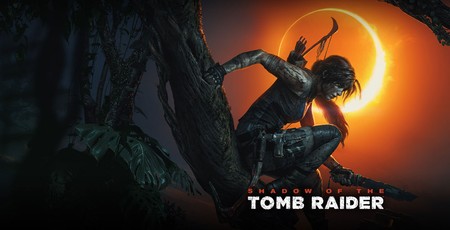
In the digital landscape of modern PC gaming, few subjects incite as much debate as Denuvo Anti-Tamper (DAT) technology. Positioned by publishers as a vital shield against piracy during the critical "launch window" of a title, the software has long been a source of contention within the gaming community. Critics frequently cite performance degradation, CPU overhead, and authentication reliability as major drawbacks. Now, with the aging Shadow of the Tomb Raider (SOTTR) serving as a case study, empirical data has emerged to quantify exactly what "protection" costs the end-user in terms of raw frame rates.
Main Facts: The Exorcism of Anti-Tamper
Square Enix and Crystal Dynamics have recently taken the quiet but significant step of removing Denuvo Anti-Tamper from Shadow of the Tomb Raider. While the title is now several years removed from its initial 2018 release, its lifecycle remains a pertinent example of how AAA publishers manage the transition from "protected product" to "legacy software."
Denuvo’s business model is notoriously opaque, often involving licensing fees that scale over time. For publishers, there is a clear, albeit cold, financial calculus: the cost of renewing the Denuvo subscription eventually eclipses the projected revenue from preventing piracy on a game that has already peaked in market saturation. When that pivot point is reached, the "protection" is stripped away.
The recent discovery by Dark Side of Gaming (DSOG) confirmed that the latest update to Shadow of the Tomb Raider—initially rolled out to the public branch before being relegated to the Steam "Beta" build section—functions entirely without the Denuvo wrapper. This provided a rare, controlled environment to conduct an A/B test: comparing the identical game engine code with and without the presence of the controversial DRM.
Chronology: A Timeline of the SOTTR Denuvo Patch
The saga of Denuvo’s removal from Shadow of the Tomb Raider unfolded over several days, highlighting the often-cautious nature of corporate software deployment:
- Initial Discovery: Last week, eagle-eyed players noticed that the game’s executable file size had changed significantly, and the standard Denuvo authentication handshake was absent upon launch.
- The Rollback: Shortly after the silent update, Square Enix reverted the main Steam branch to the previous Denuvo-protected version. This suggested the update may have been released prematurely or contained unintended bugs.
- The Beta Alternative: Currently, the Denuvo-free version remains accessible to players via the "Beta" branch on Steam. This allows users to opt-in to the cleaner build, providing a sandbox for performance testing.
- The Analysis Phase: Following the discovery, independent tech analysts at DSOG initiated a comprehensive benchmarking project to determine if the performance claims of the "anti-Denuvo" lobby held any factual merit.
Supporting Data: Benchmarking the Performance Gap
To eliminate variables, DSOG conducted tests using a dedicated PC setup. The methodology focused on removing external performance factors; for instance, DLSS (Deep Learning Super Sampling) was excluded from the testing because the patch notes indicated that DLSS optimizations were implemented simultaneously, which would have muddied the data regarding the DRM’s impact.
The Testing Parameters
The benchmarks were run under two distinct configurations:
- 1080p/Highest Settings: To observe the impact on high-end hardware.
- 1080p/Lowest Settings: To isolate CPU bottlenecks and highlight the "tax" Denuvo imposes on processor cycles.
The Results
The findings were telling. While high-end systems running at maximum graphical fidelity saw marginal gains, the impact became increasingly pronounced as the graphical load decreased—shifting the bottleneck squarely onto the CPU.
- Low Settings Gains: When the game was pushed to its lowest settings, the removal of Denuvo resulted in an average frame rate increase of 17 FPS.
- The Hyper-Threading (HT) Variable: The most staggering discrepancy appeared when Hyper-Threading (HT) was disabled. In this configuration, the Denuvo-free version saw a massive jump of 30 FPS.
This data strongly suggests that Denuvo’s background processes act as a persistent tax on CPU resources. When a system has plenty of overhead (high-end CPUs), the impact is negligible. However, for users with older processors, fewer cores, or systems where thread management is vital, the presence of Denuvo manifests as a tangible, stutter-inducing penalty.
Official Responses and the Industry Stance
The response from publishers regarding Denuvo’s impact has historically been one of denial. Most major studios and Denuvo’s parent company, Irdeto, maintain that the software has "no significant impact" on performance. They often frame the technology as a series of lightweight checks that do not consume meaningful CPU cycles.
However, the "truth" is rarely found in PR statements. The gaming community has long pointed to the discrepancy between developer claims and real-world results. Because publishers are rarely willing to provide a "Denuvo-free" version of a current, full-priced title for testing, independent testers are left to wait for these late-stage removals to prove their point.
Square Enix has remained silent on the specific reasons for the removal, following the standard corporate practice of avoiding public comments on DRM-related technical decisions. By labeling the version a "Beta" release, they mitigate potential risks while allowing the community to satisfy their curiosity regarding performance.

Implications: The Future of DRM
The implications of this performance analysis are two-fold: they impact the consumer experience today and raise questions about the longevity of digital media.
1. The "CPU Tax" is Real
The data proves that Denuvo is not a "free" service; it is a resource-heavy security layer. For users on mid-range or aging hardware, DRM is not just an inconvenience—it is a barrier to entry. If a game is coded to be CPU-intensive, adding an extra layer of encryption-decryption checks creates a performance ceiling that players cannot overcome, even with hardware upgrades. This is particularly relevant in an era where we see an increasing trend of "driver overhead," where background software (like Nvidia’s telemetry or background DRM) consumes resources that could otherwise be dedicated to rendering frames.
2. The Lifecycle of Games
The removal of Denuvo from Shadow of the Tomb Raider highlights the importance of "DRM-free" movements. As games move from "active products" to "archival software," the presence of DRM becomes a liability. If a publisher goes bankrupt or a server goes offline, games tied to active authentication services can become unplayable. By stripping the protection away, publishers are effectively ensuring the long-term viability of the product.
3. The Ethical Tradeoff
Publishers are caught in a classic prisoner’s dilemma. Protecting the initial launch window is essential to curb piracy, which can impact day-one sales. However, the cumulative weight of DRM-related negative sentiment and the tangible performance costs on the player base can damage brand loyalty. The case of Shadow of the Tomb Raider suggests that there is a "sunset" period for DRM. Once the game has been thoroughly exploited by the piracy community and the sales tail has flattened, the publisher eventually cuts their losses and removes the protection.
Conclusion
The performance tests on Shadow of the Tomb Raider serve as a vital piece of evidence in the ongoing war over digital rights management. It validates the long-standing complaints of the PC gaming community: Denuvo carries a cost. While it may be a necessary evil for the protection of quarterly earnings, it remains an objectively detrimental piece of code for the player’s machine.
As we look toward the future, the industry must grapple with these findings. If publishers continue to insist on DRM, they must ensure that the optimization is seamless. If they cannot achieve that, they should follow the lead of Square Enix and commit to a clear, predictable timeline for the removal of such barriers. Gamers deserve to know that the hardware they paid for is being utilized to play the game, not to run the security software protecting it. For now, those playing Shadow of the Tomb Raider on the Beta branch have a smoother, more efficient experience—a subtle, yet significant, victory for the performance-conscious player.










No comments yet. Be the first to join the conversation!