

By Matthew Wilson | Featured Tech News
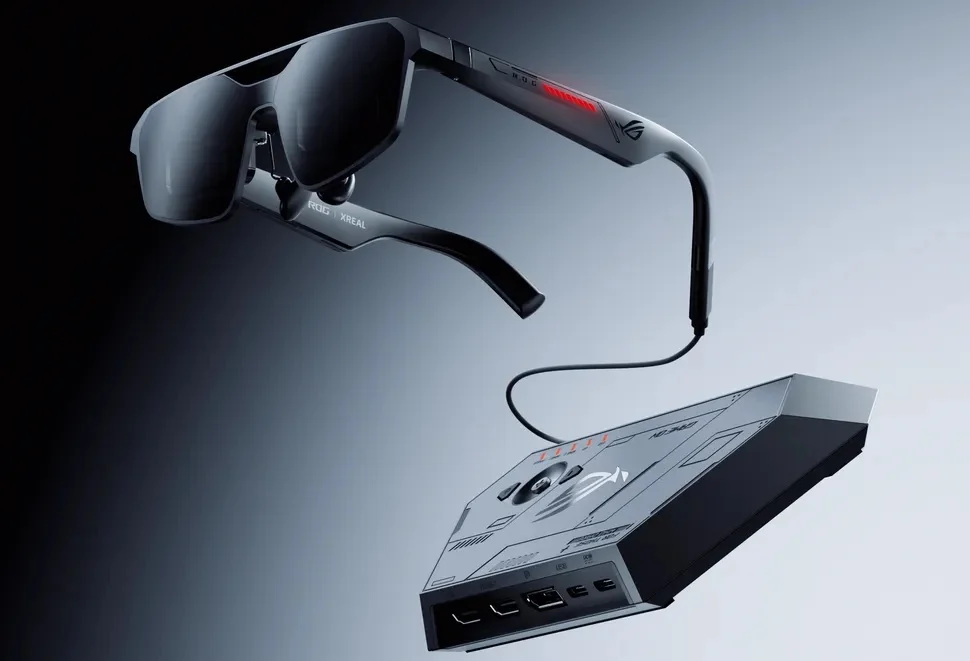
The landscape of personal gaming is undergoing a radical shift. Following months of speculation and a highly anticipated reveal at CES 2026, the collaboration between ASUS ROG and XREAL has officially transitioned from a promising prototype to a tangible retail product. The ROG XREAL R1, a high-performance pair of augmented reality (AR) glasses designed to bridge the gap between portable handheld gaming and cinematic immersion, is now available for pre-order. With worldwide shipping slated to commence in June, the industry is closely watching to see if this marriage of ASUS’s gaming pedigree and XREAL’s optics technology will finally make "wearable monitors" a mainstream necessity.
Main Facts: The ROG XREAL R1 at a Glance
The ROG XREAL R1 represents a sophisticated fusion of hardware intended to replace the traditional monitor for the mobile gamer. At its core, the device is designed to project a 171-inch virtual display that remains tethered to the user’s field of vision or fixed in space via sophisticated spatial tracking.
The technical specifications are aggressive, targeting competitive gamers who demand fluidity. By utilizing state-of-the-art Micro-OLED panels, the R1 achieves a 240Hz refresh rate—a standard previously reserved for high-end desktop gaming monitors. This is complemented by an ultra-low 0.01ms response time, effectively eliminating ghosting and motion blur, which are often the primary complaints regarding VR and AR headsets.
The device is priced at $849 in the United States, positioning it as a premium peripheral. It features automatic tint adjustment, which shifts the lens opacity based on ambient light levels, ensuring that the virtual screen remains legible whether the user is in a dimly lit living room or a brightly lit office. Furthermore, for PC power users, the integration of the ROG Control Dock and the proprietary DisplayWidget Center software allows for granular control over the virtual workspace, enabling users to arrange their desktop environments with mouse-and-keyboard precision.
Chronology: From Concept to Consumer
The journey of the R1 began long before the current pre-order window. The development cycle can be categorized into three distinct phases:
- The Incubation Phase (Mid-2025): ASUS and XREAL first entered into a strategic partnership, identifying a market gap for high-refresh-rate AR hardware that could seamlessly integrate with the ROG Ally series and other gaming handhelds.
- The CES 2026 Reveal: The R1 made its grand debut in Las Vegas earlier this year. Attendees were treated to early demonstrations showing the glasses connected to an ROG Ally, displaying high-fidelity titles on a massive virtual canvas. The feedback at the time centered on the device’s lightweight profile and the clarity of the Micro-OLED optics.
- The Refinement Period (Q1-Q2 2026): Following the initial reveal, the engineering teams at both ASUS and XREAL spent the subsequent months focusing on "ecosystem tuning." This involved optimizing firmware to ensure that the transition between handheld devices and the R1 was plug-and-play, as well as refining the spatial anchoring software to ensure the virtual screen did not "drift" during intense movement.
Supporting Data: Why the Specs Matter
To understand the appeal of the R1, one must look at the hardware limitations of existing mobile gaming. Handheld consoles like the Steam Deck or ROG Ally provide incredible power, but their screens are physically restricted by size.
- The Micro-OLED Advantage: Micro-OLED technology allows for higher pixel density than traditional OLEDs. By packing millions of pixels into a display that sits inches from the eye, the R1 achieves a "Retina-like" clarity that makes text and UI elements in complex strategy games readable—a common failure point for earlier AR glasses.
- The Latency Equation: In competitive gaming, input lag is the enemy. By achieving a 0.01ms response time, the R1 removes the "input-to-display" delay that often plagues wireless casting solutions. This creates a near-instantaneous feedback loop between the user’s input and the visual result on the screen.
- Spatial Anchoring: Unlike "head-locked" displays where the screen follows your gaze like a sticker on your eyes (which can induce motion sickness), the R1’s spatial anchoring allows the user to pin the screen in a fixed position. If the user turns their head to the left, the screen stays in the center of their field of view, mimicking the experience of sitting in front of a giant wall-mounted television.
Official Responses and Strategic Vision
ASUS has positioned the R1 not merely as a headset, but as a core pillar of the "ROG Ecosystem." An ASUS spokesperson noted during the press briefing:
"Our goal with the R1 was to decouple the gaming experience from the physical monitor. Players should be able to experience the scale of a 171-inch display whether they are on a flight, in a hotel, or simply looking to clear their desk of hardware clutter. The collaboration with XREAL allowed us to leverage their industry-leading optical clarity while applying the ASUS ROG standard for performance and software accessibility."
XREAL’s leadership highlighted the synergy of the two brands, emphasizing that while XREAL provided the foundational AR display technology, the "gaming-first" features—such as the DisplayWidget Center and the aggressive refresh rate tuning—were direct results of the ASUS engineering influence.
Implications for the Gaming Industry
The launch of the ROG XREAL R1 carries significant implications for the future of the gaming industry.
1. The Decline of the Physical Display
If wearable AR displays continue to drop in price and increase in fidelity, the necessity of owning a large, expensive gaming monitor may be questioned by a new generation of gamers. If a user can carry a 171-inch screen in their backpack, the incentive to invest in a bulky desktop monitor setup decreases, potentially shifting peripheral spending toward high-performance glasses.
2. Handheld Gaming as a Desktop Replacement
The R1 effectively turns a handheld gaming device into a full desktop-class experience. With the ROG Control Dock enabling mouse and keyboard support within the virtual environment, the R1 becomes a bridge between casual handheld play and hardcore productivity or competitive gaming.
3. The "Work-from-Anywhere" Gaming Hybrid
The features of the R1 are not limited to gaming. By allowing users to anchor multiple virtual windows in their environment, the device serves as a massive multi-monitor setup for productivity. This hybrid utility makes the $849 price point easier to justify for consumers who can use the device for both professional work and leisure, potentially accelerating the mass adoption of AR hardware.
Looking Ahead: The Road to June
As pre-orders begin, the tech community remains curious about how the R1 will handle long-term comfort and compatibility with non-ASUS devices. While the integration with the ROG ecosystem is a selling point, the broad compatibility promised by the developers suggests that the R1 could become a universal standard for mobile display technology.
For those who have been waiting for the "perfect" AR gaming experience, the ROG XREAL R1 appears to be the most serious contender to date. It is a device that does not try to be a standalone computer, but rather an elite window into the hardware you already own. As we approach the June shipping date, the question remains: are gamers ready to trade their physical monitors for a virtual reality that is faster, larger, and infinitely more portable?
KitGuru Says: The ROG XREAL R1 represents a bold gamble by ASUS and XREAL. By prioritizing high-end specs like the 240Hz refresh rate, they are clearly targeting the enthusiast crowd rather than the casual observer. If the spatial tracking and software integration perform as promised, this could be the device that finally brings AR out of the realm of niche prototypes and into the hands of the mainstream gamer. Would you be willing to ditch your monitor for a pair of glasses? Let us know in the comments.










No comments yet. Be the first to join the conversation!