Sagoh
Sagoh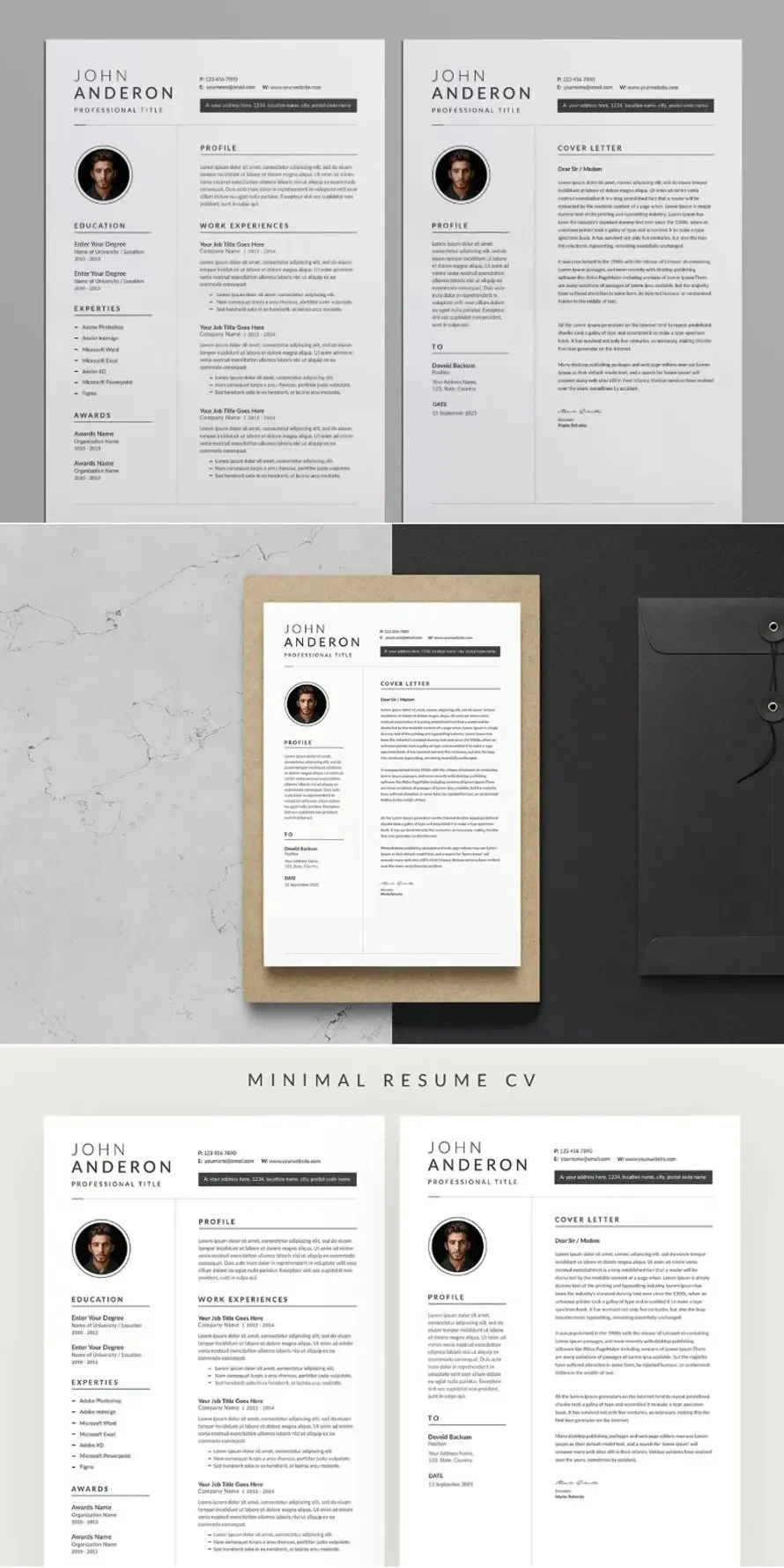
In the hyper-competitive landscape of modern recruitment, the adage "less is more" has never been more relevant. As hiring managers and automated Applicant Tracking Systems (ATS) sift through hundreds of applications for a single vacancy, the visual and structural integrity of your resume has become the primary gatekeeper of your professional success. Far from being a mere document of record, your resume is a marketing collateral piece, and its design dictates how quickly—and effectively—your qualifications are digested.

Main Facts: The Strategic Advantage of Clean Design
The primary challenge for any job seeker is the "six-second rule." Studies in recruitment behavior consistently show that hiring managers spend an average of only six seconds scanning a resume before deciding whether to move it to the "yes" or "no" pile. This narrow window leaves no room for cluttered graphics, distracting color palettes, or overly ornamental fonts.

Minimalist resume templates have emerged as the industry standard for several critical reasons:

- Cognitive Ease: A clean layout reduces the cognitive load on the recruiter. By utilizing balanced white space, logical hierarchies, and standard typography, you guide the reader’s eye exactly where you want it: to your accomplishments and core competencies.
- ATS Compatibility: Sophisticated hiring software often struggles to parse complex files filled with text boxes, icons, and non-standard imagery. Minimalist designs are typically built on clean, text-based structures that ensure your data is accurately indexed by HR software.
- Cross-Platform Performance: Whether a recruiter is viewing your file on a high-resolution desktop monitor, a tablet, or a mobile device, a well-structured PDF with a minimalist design remains readable and aesthetically consistent.
- Professional Perception: A minimalist aesthetic signals confidence. It suggests that your experience is substantial enough to stand on its own without the need for visual "noise" to hide gaps or lack of depth.
Chronology: The Evolution of the Professional CV
The history of the resume reflects the history of the modern workplace. In the mid-20th century, resumes were utilitarian, typed documents—essentially biographical logs. As desktop publishing emerged in the 1990s, the trend shifted toward "creative" resumes, often cluttered with clip art and varied font styles that aimed to stand out in a stack of paper.

However, the dawn of the digital age—and specifically the rise of the digital recruitment funnel—forced a pendulum swing back toward simplicity.

- 2000–2010: The rise of digital submissions led to the dominance of Word documents. Designers began experimenting with complex layouts that often broke when exported to PDF.
- 2010–2018: The introduction of ATS optimization made "design" a secondary concern to "keywords." Many candidates abandoned aesthetics entirely, leading to sterile, uninspired documents.
- 2019–Present: We are currently in the era of "Functional Minimalism." Modern templates now balance the need for high-density, searchable text with a sophisticated, high-end design aesthetic. This era recognizes that a resume must be both a machine-readable data set and a visually compelling brand statement.
Supporting Data: Why Design Impacts Hiring Outcomes
Data-driven recruitment analysis reveals that candidates who utilize professionally designed, minimalist templates see a marked increase in interview requests compared to those using default word processor templates.

- Readability Metrics: Eye-tracking software indicates that recruiters follow an "F-pattern" when reading resumes. Minimalist templates leverage this by placing essential information in the top-left and middle columns, ensuring that the most impactful data points are hit within the first two seconds of the scan.
- Conversion Rates: Professional templates with matching cover letters have shown a higher "call-back" conversion rate. The consistency of branding—matching fonts, headers, and color schemes between the resume and the cover letter—subconsciously signals to a recruiter that the candidate is organized, detail-oriented, and serious about the application.
- Accessibility: By adhering to clean, sans-serif, or high-legibility serif fonts, minimalist templates ensure that your resume is accessible to recruiters with visual impairments or those viewing files under poor lighting conditions, further widening your professional reach.
The Professional Standard: Integrating Your Personal Brand
A common misconception is that "minimalist" implies "generic." On the contrary, true minimalism allows the candidate’s personality to shine through the quality of their content.

When selecting a template, the goal is to find a structure that accommodates your specific career narrative. Whether you are a full-stack developer requiring sections for technical proficiency and project links, or a creative director needing to highlight portfolio highlights, the template should act as a frame, not the painting.

The Role of the Matching Cover Letter
The cover letter is the final piece of your narrative puzzle. A disjointed application—where the resume uses one style and the cover letter another—creates friction. By using a template suite that includes both, you present a unified professional identity. This synchronization is often the deciding factor in competitive hiring scenarios where candidates have similar experience levels.

Implementation: How to Customize Effectively
Once you have downloaded a clean, minimalist template, the customization process must be handled with precision:

- Typography: Stick to a maximum of two fonts—one for headers and one for body text. Ensure the body text is at least 10–11pt for optimal readability.
- White Space: Never fear the empty space. White space is a tool used by designers to separate sections and prevent the page from feeling claustrophobic.
- File Integrity: When editing in Adobe Illustrator, Photoshop, or Microsoft Word, always export to a high-quality PDF. This locks your design elements in place, ensuring the recruiter sees exactly what you intended, regardless of their operating system.
- Content Prioritization: Use the minimalist structure to group your information logically. Start with a strong "Professional Summary," followed by "Key Skills," and then your "Work History" in reverse chronological order.
Implications: The Future of Job Applications
As artificial intelligence becomes more integrated into the hiring process, the resume is undergoing a fundamental transformation. We are moving toward a future where "human-readable" and "machine-readable" must exist in perfect harmony.

Minimalist design is the bridge to this future. By stripping away non-essential design elements, you are not just making your document look better—you are making it more functional. You are removing the barriers that prevent your skills from being identified by AI scanners and the eyes of human recruiters.

Furthermore, the rise of remote work has made the "virtual" first impression the only impression. Your resume is now a digital asset that lives on servers and is passed through Slack channels and email threads. A file that is lightweight, perfectly formatted, and visually clean will always outperform a bulky, over-designed document that risks formatting errors or slow load times.

Final Recommendations for Candidates
If you are currently at a crossroads in your career—whether you are a student preparing for your first entry-level role or a seasoned professional looking to pivot into a new industry—the investment in a high-quality, minimal template is a low-cost, high-return strategy.

Browse through curated collections of minimalist templates, focusing on those that provide:

- Clean, responsive layouts.
- Matching cover letter documentation.
- Editable formats (Word, PSD, AI).
Remember, your resume is the key to the door. While it cannot land the job for you, a professional, clean, and well-designed document ensures that you are invited to the table. By removing the clutter, you are giving your career the space it needs to be seen, understood, and appreciated.

The market for talent is vast, but the market for clear communication is small. Set yourself apart by mastering the minimalist aesthetic—a small change in layout that results in a significant shift in your career trajectory.

 Siti Muinah
 Nana
Nana