Neng Nana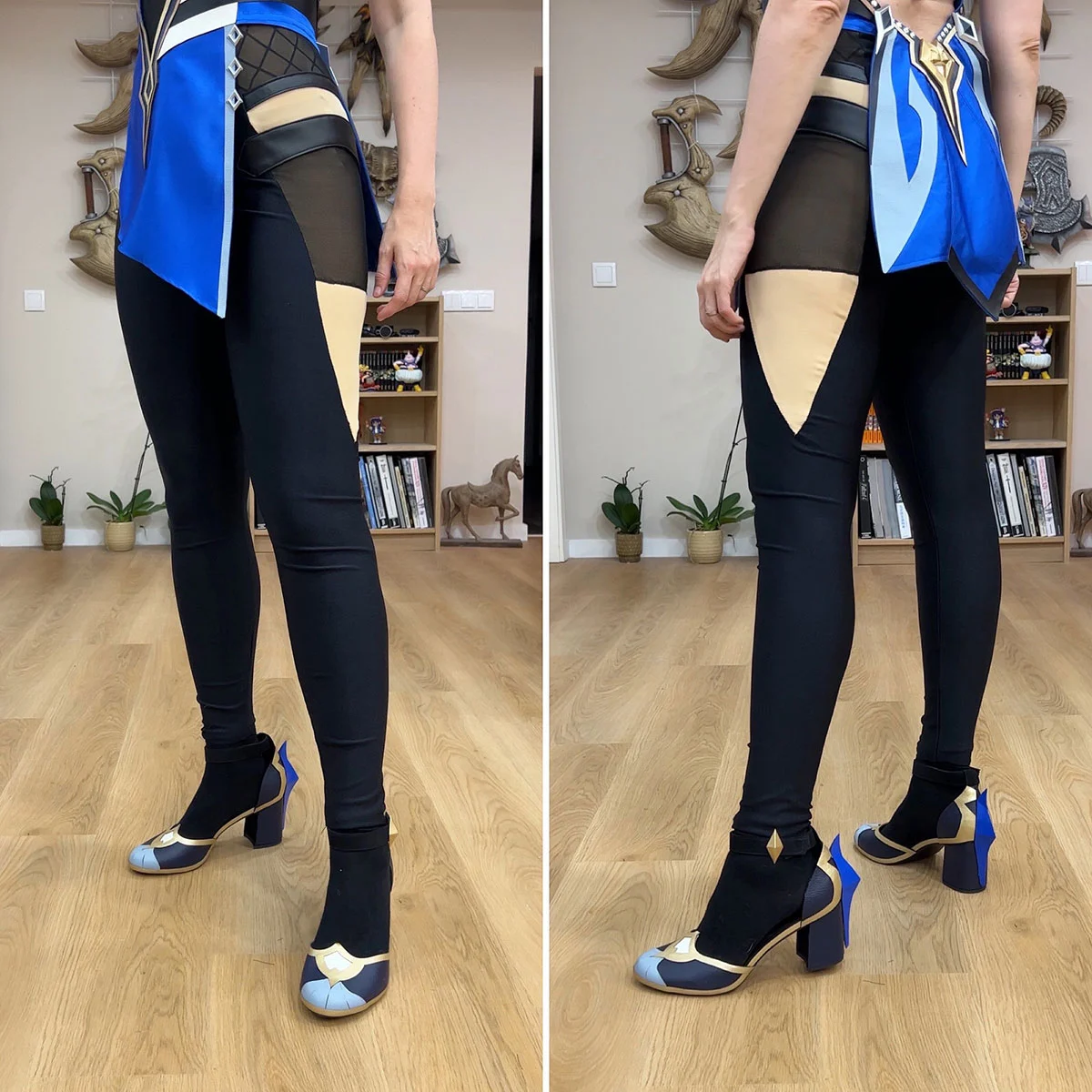
For the dedicated cosplayer, the challenge of bringing a digital character to life is a journey of translation. It is a process of converting textures that exist only in a game engine into physical fabric, and 3D models into tangible props. In the gaming world, few characters are as visually arresting as Yelan from Genshin Impact. With her sleek, asymmetrical silhouette, mysterious aura, and the ethereal Aqua Simulacra bow, she represents a masterclass in character design.
Recently, professional cosplayer Kamui Cosplay took on the monumental task of recreating Yelan for Gamescom 2023. Following a successful collaboration on the character Beidou, this second partnership with HoYoverse proved to be one of the most complex, labor-intensive projects in the creator’s career. Spanning five weeks of non-stop fabrication, the project serves as a definitive case study in the intersection of modern 3D printing technology and traditional haute couture construction.

The Foundation: Leveraging Digital Assets
The modern era of cosplay has been revolutionized by the accessibility of game assets. While many creators rely on screenshots, the most precise approach involves utilizing the actual 3D models provided by developers. HoYoverse, recognizing the passion of their community, has set a high standard for developer-player relations by hosting official character 3D models on platforms like aplaybox.com.
By accessing these files, Kamui Cosplay was able to study Yelan’s geometry with architectural precision. This digital blueprinting is not just a shortcut; it is a necessity when dealing with the high-concept designs favored by modern gaming. Whether it is a character from Honkai: Star Rail or Zenless Zone Zero, these resources allow for a level of accuracy that was impossible a decade ago. For the Yelan build, these files were not just references for the costume; they were the essential foundation for 3D-printed armor and the intricate Aqua Simulacra bow.

Chronology of Construction: A Five-Week Marathon
The project was defined by a strict timeline and a "piece-by-piece" philosophy. To manage the psychological weight of such an intricate build, the team broke the work into distinct, compartmentalized phases.
Phase 1: The Anatomy of the Dress
The primary challenge was the dress. Because the garment features an open-back design that must remain secure, the construction required a mix of engineering and tailoring. The team employed a classic "duct tape dummy" technique—wrapping the body in tape to create a perfect mannequin, drawing the patterns directly onto the tape, and then cutting the mold free to serve as a sewing template.

The choice of fabric was critical. Heavy royal blue satin provided the necessary luster and elegance but posed significant structural challenges due to its lack of stretch and tendency to fray. To solve the issue of support, the design incorporated a hidden internal structure, using a modified bra strap system to ensure the garment held its shape without relying on visible, immersion-breaking straps.
Phase 2: The Jacket and Asymmetry
Yelan’s white jacket is deceptively simple. In-game, it appears to float on her back, defying the laws of gravity. To replicate this, the team used white brocade with subtle floral patterns, chosen to add texture that would make the garment feel "real" rather than like a flat costume piece.

The weight of the jacket became a significant hurdle as the team added details. By incorporating laser-cut faux leather via the Flux Beambox Pro and attaching 3D-printed resin components, the garment gained substantial heft. The solution for the "floating" effect was a series of hand-sewn, heavy-duty press-on buttons that allowed the jacket to sit precisely on the frame while maintaining a seamless aesthetic.
Phase 3: The Leggings and Accessory Architecture
The leggings presented an engineering nightmare. Because each leg features a unique, asymmetrical design—one with complex cut-outs and gold filigree, the other incorporating mesh—they could not be mirrored. The team had to treat each leg as a distinct project. Utilizing over 20 different types of fabric, from delicate netting to thick, resilient faux leather, the team navigated a labyrinth of material compatibility.

The Aqua Simulacra: A Technical Triumph
The bow, known as the Aqua Simulacra, was the centerpiece of the project’s hardware. Led by Benni and Jakob, the prop-making phase involved a week of intensive 3D modeling in Blender. To ensure the prop was both durable and portable, the team printed the weapon in segments, reinforcing the internal structure with a PVC pipe.
The painting process, executed with a Master Airbrush kit and Vallejo metallic paints, was arguably the most difficult artistic challenge. Achieving the specific gradients and the signature "glow" of the in-game weapon required dozens of layers of paint, meticulous masking, and a high degree of artistic finesse to ensure the finish looked like polished metal rather than plastic.

The Role of Community and Developer Support
The success of this project highlights a shift in the gaming industry. Developers are increasingly viewing cosplayers as integral ambassadors of their brand. By providing 3D models and fostering an environment where community creation is encouraged, companies like HoYoverse are effectively creating a secondary market for their IP that is fueled by high-end fan craftsmanship.
This collaboration wasn’t just about marketing; it was about technical excellence. When asked about the importance of making costumes from scratch, the creator emphasized the value of the process: "It takes an incredible amount of time, skill, and dedication. Kudos to all cosplayers who decide to make their costumes on their own, even though they could easily buy a ready-to-wear version online."

Implications for the Future of Cosplay
The Yelan project serves as a bridge between the physical and digital worlds. It illustrates that the future of cosplay is not just about sewing—it is about a hybrid skill set. Successful creators today must be proficient in:
- 3D Modeling: Translating raw game files into print-ready objects.
- Additive Manufacturing: Managing the nuances of resin and filament printing.
- Traditional Tailoring: Understanding how fabrics move and behave under tension.
- Vector Programming: Mastering laser cutting for complex patterns and motifs.
For those looking to replicate this level of work, the takeaway is clear: organization and patience are the most important tools in the workshop. By treating the project as a series of manageable, distinct tasks rather than one overwhelming whole, even the most complex character designs become attainable.

Conclusion
The finished Yelan cosplay, debuted at Gamescom 2023, was more than just a costume; it was a testament to the power of cross-disciplinary collaboration. From the resin-printed accessories to the hand-sewn satin garments, the project stands as a high-water mark for what is possible when professional expertise meets a deep, genuine love for gaming culture. As technology continues to evolve, the barrier between the virtual characters we admire and the physical world continues to thin, driven by the tireless work of creators who refuse to settle for anything less than perfection.
For those interested in the minute details of the process, the full documentation—from the initial 3D model cleanup to the final assembly of the Aqua Simulacra—is available on the Kamui Cosplay YouTube channel, providing a roadmap for the next generation of cosplayers ready to bring Teyvat to life.

 Siti Muinah
 Azzam Bilal Chamdy