

In the digital marketing landscape, the corporate blog has long been a staple—a fundamental pillar for SEO, brand authority, and audience engagement. However, as the digital ecosystem undergoes seismic shifts driven by AI, changing search behaviors, and evolving platform algorithms, the "business as usual" approach to blogging is no longer yielding the results it once did.
To understand how to navigate this volatile environment, we turn to the 11th Annual Blogger Survey by Orbit Media. This authoritative research, which has tracked the habits and results of thousands of content creators for over a decade, offers a reality check for marketers. The data reveals a sobering truth: while the tools have changed, the fundamental requirement for high-impact content remains rooted in effort, strategy, and a departure from vanity metrics.
The Persistent Reality: Time vs. Results
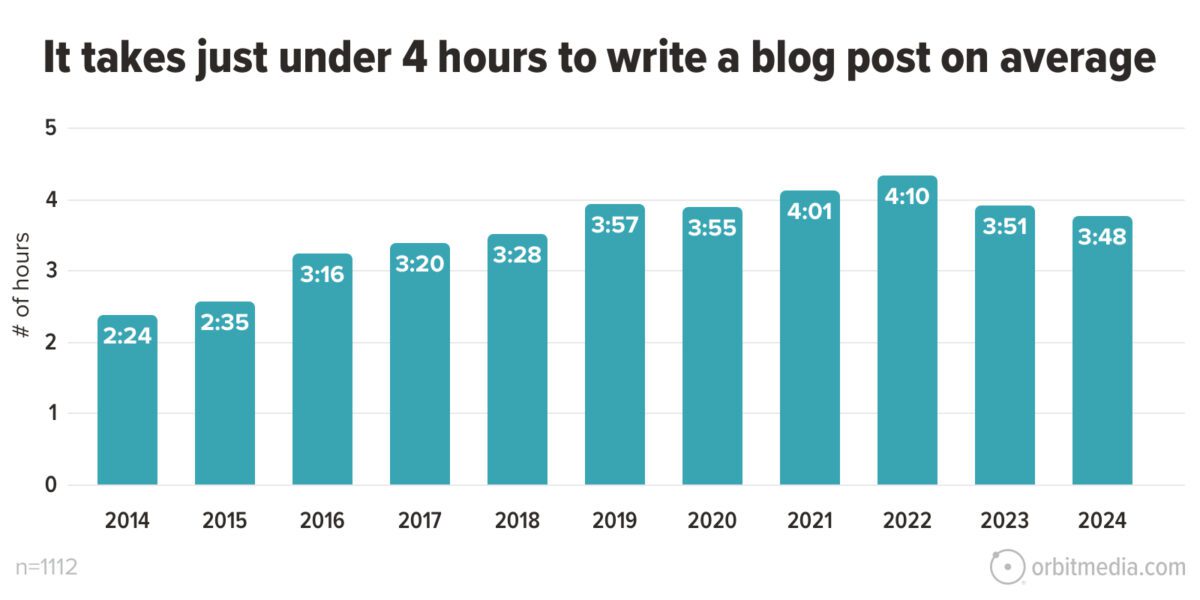
One of the most burning questions in the marketing community this year was whether the surge of generative AI tools would drastically shorten the production cycle of a blog post. With tools now capable of drafting, outlining, and even suggesting visuals, many expected a significant reduction in the average time spent on content creation.

The data, however, tells a different story. The average time spent on a single blog post is three hours and forty-eight minutes—a mere three-minute decrease from the previous year.
This statistic is a critical indicator for content leaders: AI is not a "magic button" for performance. While it is being used extensively for brainstorming and drafting, it cannot replace the strategic oversight, accuracy checks, and creative nuance required to produce content that truly stands out. The industry has reached a plateau where efficiency is not being traded for speed, but rather for depth.
The Anatomy of High-Performance Content
The survey underscores a clear, non-negotiable correlation: higher effort leads to higher results. For brands wondering why their blog is failing to move the needle, the answer often lies in the "low-effort trap."
The 2,000-Word Benchmark
The research indicates that bloggers who produce articles of 2,000 words or more are significantly more likely to report "strong results." This depth allows for comprehensive coverage of a topic, which satisfies both user intent and search engine requirements for "E-E-A-T" (Experience, Expertise, Authoritativeness, and Trustworthiness).
The Bi-Weekly Cadence
Consistency remains king, but the bar has been raised. The data suggests that a bi-weekly posting schedule is the minimum threshold for maintaining audience interest and platform visibility. In an era where users are bombarded with information, brands that post sporadically or settle for subpar, short-form content are quickly forgotten.
Treating the Blog Like a Social Feed
Perhaps the most transformative takeaway is the recommendation to treat your blog feed with the same rigor as a social media stream. Social platforms invest millions in user engagement, testing, and feedback loops. By adopting these principles—such as prioritizing visual storytelling, creating a distinct "voice," and focusing on community-driven topics—brands can bridge the gap between static blog posts and dynamic, high-engagement media.

AI: The Tool vs. The Solution
While AI adoption has skyrocketed from near-zero in 2022 to over 80% in 2024, the survey reveals a lack of direct correlation between AI usage and improved performance.
The implication is clear: AI is a co-pilot, not the captain. Content marketing leaders must focus on using AI to augment human creativity rather than replacing it. The most successful teams use AI to handle the heavy lifting of research and structure, freeing up human creators to add the unique, personal, or brand-specific insights that AI cannot replicate.
Expert Insights: A Q&A with Andy Crestodina
To peel back the layers of this research, we spoke with Andy Crestodina, CMO and Co-Founder of Orbit Media, whose expertise in SEO and website optimization spans over two decades.

Q: What research findings were the most surprising to you personally?
Andy Crestodina: "The data consistently shows that big efforts drive big outcomes. What surprises me is the sheer number of content programs that persist with low-effort tactics—short, thin posts, no original research, no collaboration, no video. It is clear from the data that if you put in low effort, you should expect low results. The most successful marketers are the ones who lean into the hard work: interviews, original data collection, and collaborative content."
Q: Why do podcasters report higher "strong result" rates?
Andy Crestodina: "While the sample size for podcasters in the survey is smaller, the correlation is strong. Podcasters aren’t just ‘typing on keyboards.’ They are collaborating, engaging in conversations, and building relationships. That act of ‘hitting record’ and involving others naturally leads to higher-quality output and better distribution channels."
Q: How should marketers measure success in a post-traffic world?
Andy Crestodina: "Traffic is the most visible metric, but it is often the least important. We are seeing a decline in organic search traffic across the board. Marketers need to stop obsessing over page views and start measuring bottom-of-funnel impact: lead quality, sales conversions, and brand affinity. The most important outcomes—word-of-mouth and top-of-mind awareness—are the hardest to track, yet they are the ones that actually sustain a business."

Implications: Navigating the Future of Content
For content leaders, the findings necessitate a strategic pivot. As search traffic becomes increasingly volatile, the traditional model of "write, publish, pray for traffic" is obsolete.
1. Diversify Distribution (The "Rented Land" Strategy)
Crestodina advocates for a balanced approach to platform distribution. Years ago, the mantra was "never build on rented land." Today, that is a recipe for irrelevance. By embracing platforms like LinkedIn Newsletters, brands can meet their audience where they already spend their time. "We have less traffic than four years ago, but we have much more visibility," Crestodina notes.
2. Prioritize Depth Over Frequency
Stop the "content mill" approach. If your team is struggling to hit a weekly cadence with high-quality content, cut back to bi-weekly and double the time spent on research, design, and promotion. One comprehensive, data-backed piece of content will consistently outperform five generic, AI-generated blog posts.

3. Redefine Success Metrics
Move beyond vanity metrics. Start tracking:
- Assisted Conversions: How many leads interacted with a blog post before signing up?
- Engagement Quality: Are readers staying long enough to consume the full message?
- Repurposing Velocity: How many assets (social clips, newsletters, slide decks) were created from a single core piece of content?
Final Thoughts: The Path Forward
The 11th Annual Blogger Survey is a clarion call for maturity in content marketing. The "easy era" of SEO-driven traffic is behind us, replaced by a more competitive, nuanced landscape.
Success in 2025 will belong to the brands that treat their blog as a professional media entity. This requires a shift in mindset: from seeing content as a tactical checkbox to seeing it as a strategic asset that requires investment, collaboration, and courage. By ignoring the vanity of traffic and focusing on the substance of their audience relationships, marketers can ensure their content remains a source of sustainable growth, regardless of how the digital winds shift.

For those ready to evolve, the blueprint is simple: increase your effort, diversify your reach, and focus on the metrics that actually drive the bottom line.











No comments yet. Be the first to join the conversation!